
Technology
WhatsApp New Password Feature: Secret Chats to Get Stronger Protection, Know How It Could Work
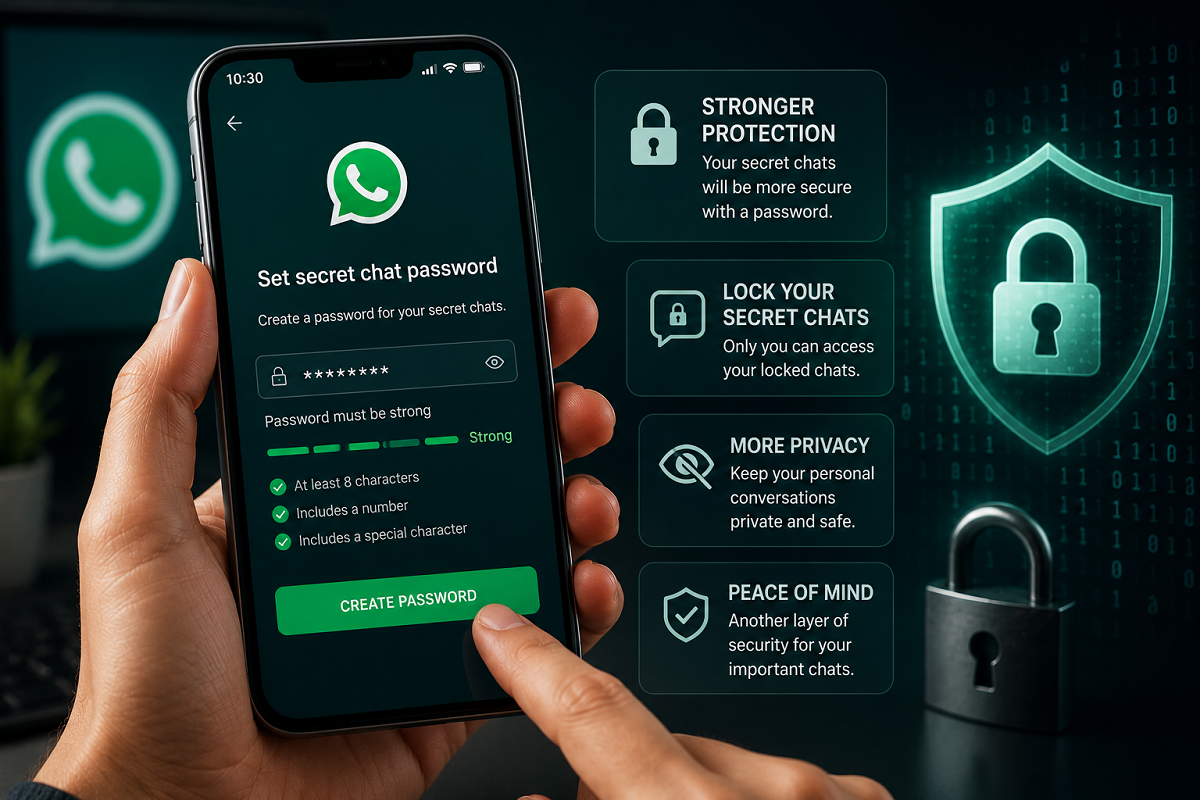
WhatsApp New Security Feature 2026: WhatsApp is reportedly working on another security upgrade that could make private conversations more difficult for others to access. The messaging platform is developing a new password-based protection feature under which users may be required to create a stronger password containing at least eight characters.
The feature is expected to strengthen account security while helping users keep sensitive and private conversations protected. It is reportedly being developed as an alternative to the PIN currently associated with WhatsApp's two-step verification system.
Here is what users need to know about the upcoming feature.
WhatsApp Is Working on a New Password System
At present, WhatsApp offers several layers of security, including device authentication, two-step verification, passkeys and Chat Lock.
According to information about the feature under development, WhatsApp is now testing a password system that could change how users protect their accounts.
Instead of relying on the existing six-digit two-step verification PIN, users could be asked to create a stronger password.
The biggest difference would be the complexity of the security credential. A longer password can support combinations that are considerably harder to guess than a simple numeric PIN.
Password Will Need at Least 8 Characters
The new security system is reportedly expected to require a password of at least eight characters.
Unlike a PIN consisting only of numbers, the new password could allow or require a combination of characters and digits, depending on the final implementation.
This can provide stronger protection because users have significantly more possible combinations to choose from.
However, users should avoid predictable passwords such as their name, mobile number, birth date or combinations like “12345678”.
A unique password that is not being used for another online account is the safer choice.
Could Replace the Current Two-Step Verification PIN
One of the most significant reported changes is that the new password system could replace WhatsApp's existing two-step verification PIN mechanism.
Currently, users can enable two-step verification and create a six-digit PIN. WhatsApp can request this PIN when the phone number is registered again, providing an additional barrier against account takeover.
The password-based approach is intended to make this security layer stronger.
However, users should note that a feature being tested or developed can change before its wider rollout. Until WhatsApp officially releases it to all users, the existing two-step verification system should remain enabled where available.
What Does This Have to Do With Secret Chats?
WhatsApp already offers Chat Lock, which lets users place sensitive conversations in a protected section.
Locked chats are separated from the regular chat list and can be protected using the phone's authentication methods. WhatsApp has also introduced a Secret Code option that gives users additional control over how locked chats appear.
The new password feature could complement WhatsApp's broader privacy architecture by making unauthorized access to an account more difficult.
This can be particularly useful when a person temporarily gets access to someone else's phone or when criminals attempt to hijack an account.
However, account passwords and Chat Lock should be understood as different security layers rather than assuming that one password automatically replaces every existing chat-protection mechanism.
Will Someone With Your Phone Be Able to Read Locked Chats?
WhatsApp's locked-chat features are specifically designed to add another barrier between sensitive conversations and anyone who gains access to the device.
For stronger privacy, users can use Chat Lock along with biometric or device authentication where supported.
This means handing someone an unlocked phone does not necessarily have to expose every sensitive WhatsApp conversation.
Users should still keep the phone itself protected with a strong screen lock, fingerprint or facial authentication.
Why Is WhatsApp Moving Beyond Simple PINs?
A six-digit PIN has a limited number of possible combinations and can become vulnerable if users choose predictable numbers.
People frequently use birthdays, repeated digits or other memorable combinations.
A longer password gives users greater flexibility to create a credential that is more difficult to guess.
The change also reflects a broader trend among digital services toward stronger authentication methods, including passkeys, biometrics and multi-layer account protection.
Password, Passkey and Chat Lock Are Not the Same
WhatsApp users may encounter several security terms, and they perform different functions.
Password or two-step verification is primarily associated with protecting account registration and unauthorized access.
Passkeys use device-based authentication such as a fingerprint, face recognition or screen lock to verify the user without relying solely on traditional passwords.
Chat Lock is designed to protect selected conversations from being easily viewed on the device.
Using multiple layers together can provide stronger security than depending on only one feature.
What Should WhatsApp Users Do Right Now?
Because the new password feature may initially be limited to beta testers or roll out gradually, users do not need to disable their existing security settings.
For now, keep two-step verification enabled, use a secure phone screen lock and activate Chat Lock for conversations that require additional privacy.
Users should also regularly review Linked Devices and immediately log out any computer, browser or device they do not recognize.
Most importantly, never share WhatsApp verification codes, PINs or passwords with another person.
Beware of Fake Messages About the New Feature
Whenever WhatsApp introduces a major security update, scammers may attempt to exploit the news.
Users could receive messages such as:
“Create your new WhatsApp password immediately or your account will be blocked.”
A link accompanying such a message could lead to a phishing page designed to steal login or financial information.
WhatsApp security settings should be changed from within the official app rather than through unsolicited WhatsApp messages, SMS links or third-party websites.
When Will the New Feature Be Available?
Features spotted during development do not necessarily become available to every WhatsApp user immediately.
WhatsApp frequently tests new capabilities with a limited group before gradually expanding availability. The final design, password requirements and relationship with existing two-step verification may therefore change before a stable release.
Users should keep WhatsApp updated through the official Google Play Store or Apple App Store to receive new security features when they become available.
Bottom Line
WhatsApp's reported new password feature could provide another important upgrade to account security by moving beyond a simple numeric PIN toward a stronger password of at least eight characters.
Combined with features such as Chat Lock, Secret Code, passkeys, biometric authentication and Linked Devices controls, it can make unauthorized access considerably more difficult.
But users should remember that technology alone cannot prevent every account takeover. Strong passwords, secure device locks, careful handling of OTPs and regular checks of linked devices remain essential for keeping WhatsApp conversations private.