Business
RBI Retail Direct Scheme 2026: Invest Directly in Government Securities; Know Returns, Safety and Eligibility
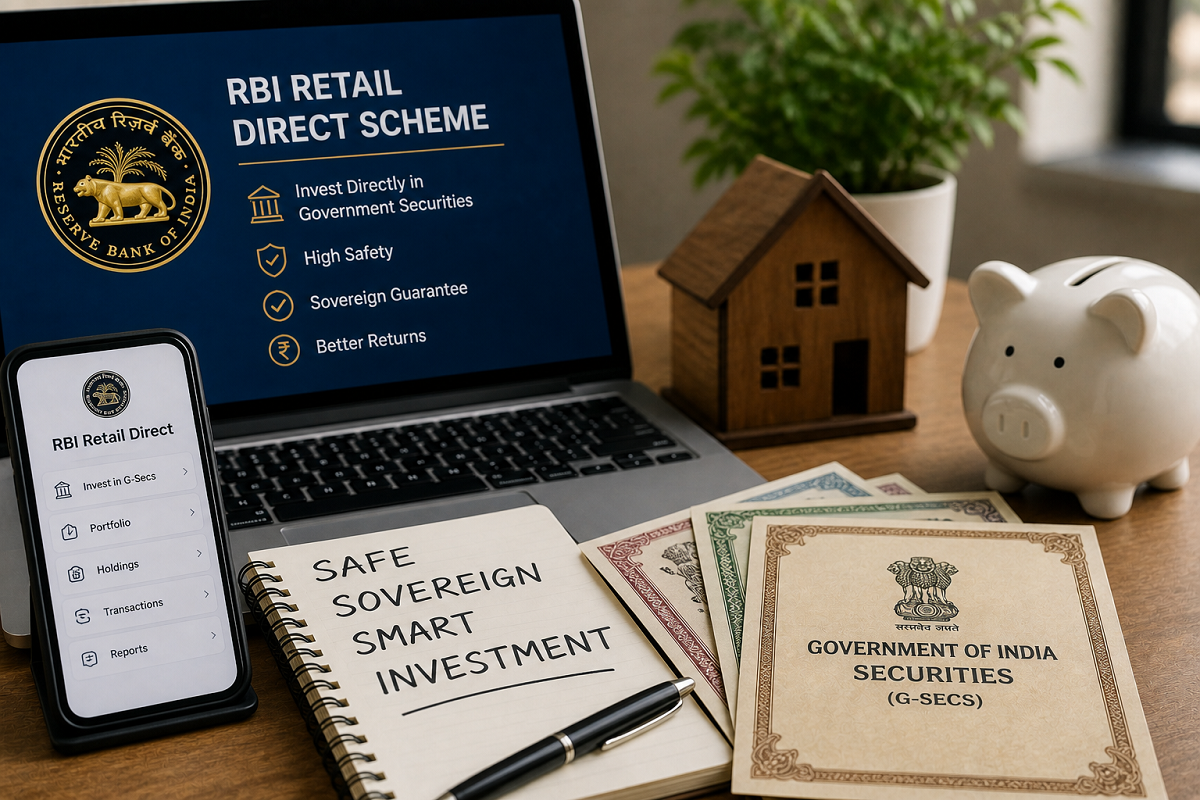
Investors looking for relatively safe fixed-income options often turn to bank fixed deposits. However, another route is available for retail investors who want direct access to Government Securities (G-Secs). Through the RBI Retail Direct portal, eligible individuals can open a Retail Direct Gilt (RDG) account and buy eligible government securities without going through a traditional broker.
The scheme provides access to securities issued by the Central and State governments, but investors should understand an important point: RBI Retail Direct is an investment platform, not a single investment product promising a fixed interest rate higher than every bank FD.
Returns vary according to the security, maturity, purchase price and prevailing market yields.
What Is the RBI Retail Direct Scheme?
The Reserve Bank of India introduced the Retail Direct Scheme to make the government securities market more accessible to individual investors.
Through an RDG account, retail investors can participate in the primary market, where government securities are issued, as well as access eligible securities in the secondary market.
The account can be opened online, allowing investors to hold government securities directly in electronic form.
Unlike an FD, where money is deposited with a bank for a specified period, investors here purchase securities issued by the government.
What Can You Invest In Through RBI Retail Direct?
The platform provides retail investors access to different categories of government securities. Depending on availability and applicable RBI rules, these can include:
- Government of India dated securities or Central Government Securities
- Treasury Bills (T-Bills)
- State Government Securities, commonly known as State Development Loans (SDLs)
- Sovereign Gold Bonds (SGBs), subject to issuance/availability and applicable trading facilities
Different instruments serve different purposes.
Treasury Bills are short-term instruments and do not work like conventional interest-paying FDs. They are generally issued at a discount and redeemed at face value.
Dated government securities, on the other hand, may carry a coupon and can have much longer maturities.
Are Government Securities Safer Than Bank FDs?
Government securities issued by the Central Government carry sovereign credit backing, which makes their credit/default risk extremely low.
However, describing every investment available through Retail Direct as "100% risk-free" can be misleading.
Government bonds can carry interest-rate or market risk if they are sold before maturity. When market interest rates rise, the market value of an existing fixed-rate bond can fall.
Therefore, an investor who buys a government security and holds it until maturity faces a very different risk profile from someone who may need to sell it early in the secondary market.
What About the ₹5 Lakh FD Insurance Limit?
Bank deposits and government securities have different protection structures.
Eligible deposits with an insured bank are covered by the Deposit Insurance and Credit Guarantee Corporation (DICGC) up to ₹5 lakh per depositor per bank, including principal and interest, subject to applicable rules.
Government securities purchased through Retail Direct are not bank deposits requiring DICGC protection. Their repayment obligations arise from the government issuer concerned.
This distinction is one of the reasons investors should not compare G-Secs and FDs solely on the basis of their headline interest rates.
Do RBI Government Securities Always Give Higher Returns Than FDs?
No.
Government securities do not automatically offer higher returns than every bank FD.
The return depends on the security selected, its coupon, maturity, acquisition price and prevailing yield. Meanwhile, bank FD rates differ across banks and tenures and can also include additional rates for eligible senior citizens.
An investor should therefore compare the yield to maturity (YTM) of the relevant government security with the applicable FD rate rather than assuming that a G-Sec will always pay more.
How Do Treasury Bills Work?
Treasury Bills are short-term Government of India securities. Common maturities include 91 days, 182 days and 364 days.
Unlike conventional bonds, T-Bills generally do not make periodic interest payments.
For example, an investor may purchase a Treasury Bill for less than its face value. At maturity, the government pays the face value, and the difference represents the investor's return.
This can make T-Bills useful for investors looking at relatively short investment periods.
Can Government Bonds Provide Regular Income?
Certain dated government securities carry a coupon that is generally paid periodically, commonly on a half-yearly basis according to the terms of the security.
This can make them relevant to investors looking for predictable cash flows.
However, investors should check the coupon schedule before purchasing because not every security available through Retail Direct makes half-yearly interest payments. Treasury Bills, for instance, operate differently.
Can You Sell a Government Security Before Maturity?
Eligible government securities can be traded in the secondary market, providing investors an avenue to exit before maturity.
But liquidity does not mean that the investor is guaranteed to receive the original purchase amount.
Bond prices fluctuate with market interest rates, demand, remaining maturity and other factors. Selling before maturity could therefore result in either a capital gain or capital loss.
Investors who know that they may need the money soon should consider this risk before purchasing a long-duration bond.
Who Can Open an RBI Retail Direct Account?
Eligible retail investors can open an RDG account subject to the requirements specified by RBI.
Applicants generally need the prescribed KYC documents and information, including PAN, registered contact details and a rupee savings bank account maintained in India.
The exact eligibility requirements and onboarding process should be checked on the official RBI Retail Direct platform before applying.
Joint accounts are also supported subject to applicable conditions.
How to Open an RBI Retail Direct Gilt Account
The account-opening process is online.
Visit the official RBI Retail Direct portal and choose the registration option. Enter the required personal and bank details, complete the prescribed KYC and verification process and follow the instructions provided on the portal.
Once the RDG account becomes operational, eligible investors can participate in government-security transactions available through the platform.
RBI states that opening and maintaining the Retail Direct Gilt account itself is free, although payment gateways or other service providers may levy applicable charges for certain transactions.
RBI Retail Direct vs Bank FD: Understand the Difference
| Feature | RBI Retail Direct G-Secs | Bank Fixed Deposit |
|---|---|---|
| Investment | Government securities | Deposit with a bank |
| Return | Depends on security and yield | FD rate fixed by bank for chosen tenure |
| Credit risk | Very low for Central Govt securities | Depends on bank; eligible deposits have DICGC cover |
| Market-price risk | Yes, if sold before maturity | Generally not market-linked |
| Premature exit | Through applicable secondary-market facility | Subject to bank's premature-withdrawal rules |
| Regular income | Available on certain coupon securities | Depends on FD payout option |
| Account platform | RBI Retail Direct | Bank |
Is RBI Retail Direct Suitable for You?
The platform can be useful for investors who want direct exposure to government securities and understand how bond yields, maturities and prices work.
It may particularly appeal to investors who want to diversify their fixed-income portfolio beyond bank deposits.
However, Retail Direct should not be marketed as a scheme that guarantees returns higher than bank FDs. It is a platform giving retail investors direct access to different government securities, each carrying its own maturity, yield and market-price characteristics.
For investors who intend to hold an appropriate government security until maturity, it can offer a relatively predictable investment structure with strong sovereign credit quality. Those who may need to exit early should also account for interest-rate and liquidity risks.
Disclaimer: This article is for informational purposes only and does not constitute investment advice. Interest rates, government-security yields, taxation and platform rules may change. Investors should check the latest terms on the official RBI Retail Direct portal and consider their liquidity needs, tax position and risk profile before investing.