Technology
UPI Payment Rules Change: Will Transactions Above ₹2,000 Cost More? Here’s What Users Should Know
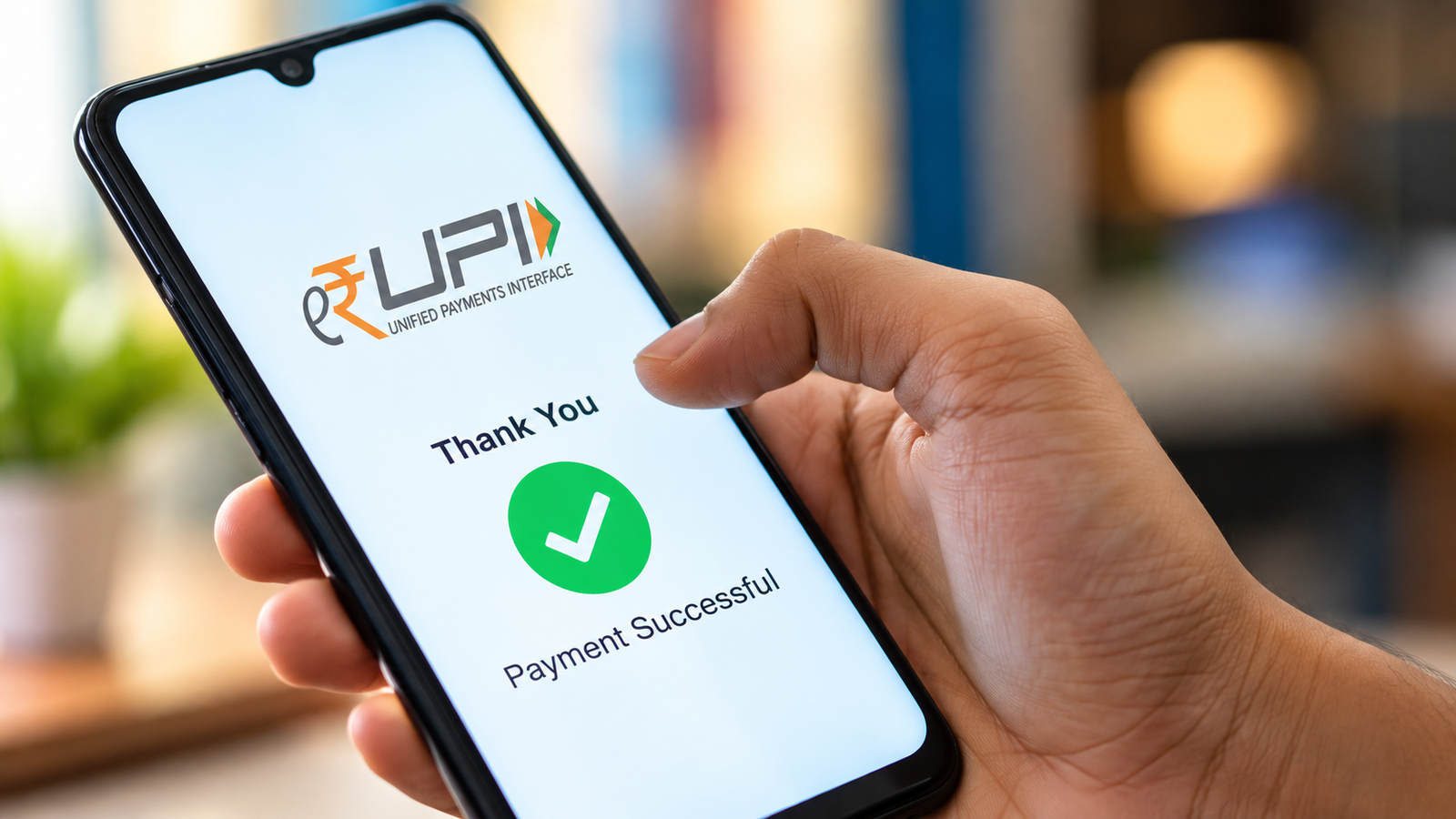
UPI users do not need to worry about suddenly paying a fee every time they send money above ₹2,000. The latest changes discussed around digital payments primarily concern the legal protection for zero charges on certain transactions and the possibility of Merchant Discount Rate (MDR) being considered for some merchant payments.
According to the supplied information, UPI transactions of up to ₹2,000 and payments made using RuPay debit cards cannot attract direct or indirect charges from banks or payment system providers under the notified framework.
The important distinction is between payments made by ordinary users and merchant-related transactions.
Person-to-person UPI transfers are expected to remain free regardless of the amount, according to the details provided. No final decision has yet been announced to impose an MDR on UPI payments above ₹2,000.
Here is what the latest change means for UPI users.
What Has Changed for UPI Payments?
The earlier framework introduced in 2019 did not have the ₹2,000 threshold described in the latest notification.
UPI operated under a zero-MDR framework without such an amount-based distinction.
The new framework specifically provides protection against direct or indirect charges for UPI transactions up to ₹2,000.
Transactions above ₹2,000 are outside this particular statutory protection, according to the supplied report.
That does not mean a fee has automatically been imposed on every UPI transaction above ₹2,000.
This distinction is crucial because users could otherwise interpret the ₹2,000 threshold as a new transaction fee limit.
Will You Pay a Fee for Sending More Than ₹2,000?
For ordinary users, the answer based on the supplied information is no.
If one individual sends money to another individual through UPI, the transaction is expected to remain free even when the amount exceeds ₹2,000.
For example, sending ₹3,000, ₹5,000 or another amount to a friend or family member does not automatically mean the sender will have to pay an additional UPI charge.
The government has indicated that the burden of any proposed MDR arrangement is not intended to be placed on ordinary buyers.
Therefore, users should not assume that crossing the ₹2,000 mark will immediately result in a deduction from their bank account.
What Does the ₹2,000 Threshold Actually Mean?
The ₹2,000 figure becomes relevant when looking at merchant-related payment rules.
The notification protects UPI transactions up to this amount from direct and indirect charges by banks and payment system providers.
For transactions above ₹2,000, this specific legal protection does not apply in the same way.
This creates room for a different charging framework to potentially be considered for certain merchant transactions in the future.
However, according to the supplied report, no final decision to impose such a charge on UPI payments above ₹2,000 has been announced yet.
Could Merchants Face MDR on Larger UPI Payments?
A Merchant Discount Rate is a charge associated with payment acceptance that can apply within the merchant-payment ecosystem.
The possibility of introducing MDR for certain UPI merchant transactions above ₹2,000 is reportedly under consideration.
The supplied information indicates that the proposal is focused on merchants rather than customers making purchases.
This means the issue should not be interpreted as a plan to directly charge every consumer who pays more than ₹2,000 through UPI.
The final structure will depend on what is formally decided by the authorities responsible for the payment framework.
Has the MDR Rate Been Decided?
No final rate has been officially announced in the information supplied.
The report says the National Payments Corporation of India (NPCI) would have a role in determining the applicable structure.
Some estimates cited in the report suggest a possible MDR in the range of 0.3% to 0.5%.
However, these figures should not be treated as an officially notified rate because NPCI had not issued an official announcement confirming them at the time of the report.
For example, applying 0.5% to a ₹5,000 payment would mathematically equal ₹25.
That calculation does not mean a consumer making a ₹5,000 UPI payment is currently required to pay ₹25.
It is simply an illustration of what 0.5% of ₹5,000 represents.
What About Person-to-Person UPI Transfers?
This is one of the most important points for everyday users.
Person-to-person transfers are expected to continue without a fee, regardless of the transaction amount, according to the supplied information.
So, if you transfer money through UPI to a friend, relative or another individual, the new ₹2,000 threshold should not be interpreted as a point after which a transaction fee automatically applies.
The debate around possible MDR changes is centred on merchant payments rather than ordinary transfers between individuals.
RuPay Debit Card Payments Also Covered
The notification discussed in the supplied information also covers RuPay debit card payments.
Banks and payment system providers cannot impose direct or indirect charges on the protected transactions described under the new framework.
The broader objective is to continue supporting low-cost digital payments while also considering the long-term economics of India's rapidly expanding payment infrastructure.
Why Is MDR Being Discussed?
India's UPI ecosystem handles a massive volume of digital transactions.
Running this infrastructure requires banks, payment companies and other participants to maintain technology, security systems and transaction-processing capacity.
Experts cited in the supplied report view the possible merchant-focused MDR framework as a way of making the digital payment ecosystem financially sustainable over the long term.
At the same time, keeping smaller everyday payments protected from charges can help ensure that UPI remains convenient for ordinary consumers and small-value transactions.
The challenge is therefore to balance affordability for users with the cost of maintaining the digital payment infrastructure.
What UPI Users Need to Remember
The biggest takeaway is that UPI has not suddenly become a paid service for ordinary users making transactions above ₹2,000.
UPI transactions up to ₹2,000 have specific protection against direct or indirect charges under the framework described in the report.
Transactions above ₹2,000 fall outside that particular protection, but this does not itself create an automatic consumer fee.
Person-to-person UPI transfers are expected to remain free irrespective of the amount.
A possible MDR on certain merchant payments above ₹2,000 is being discussed, but the supplied information says no final decision or officially confirmed MDR rate has yet been announced.
Therefore, users should distinguish between an approved rule and a proposal still under consideration before assuming that a ₹3,000, ₹5,000 or larger UPI payment will attract a new charge.