Technology
TRAI Spam Call Rules: A2P Calls May Face Per-Minute Charges as AI-Based Detection Gets Stronger
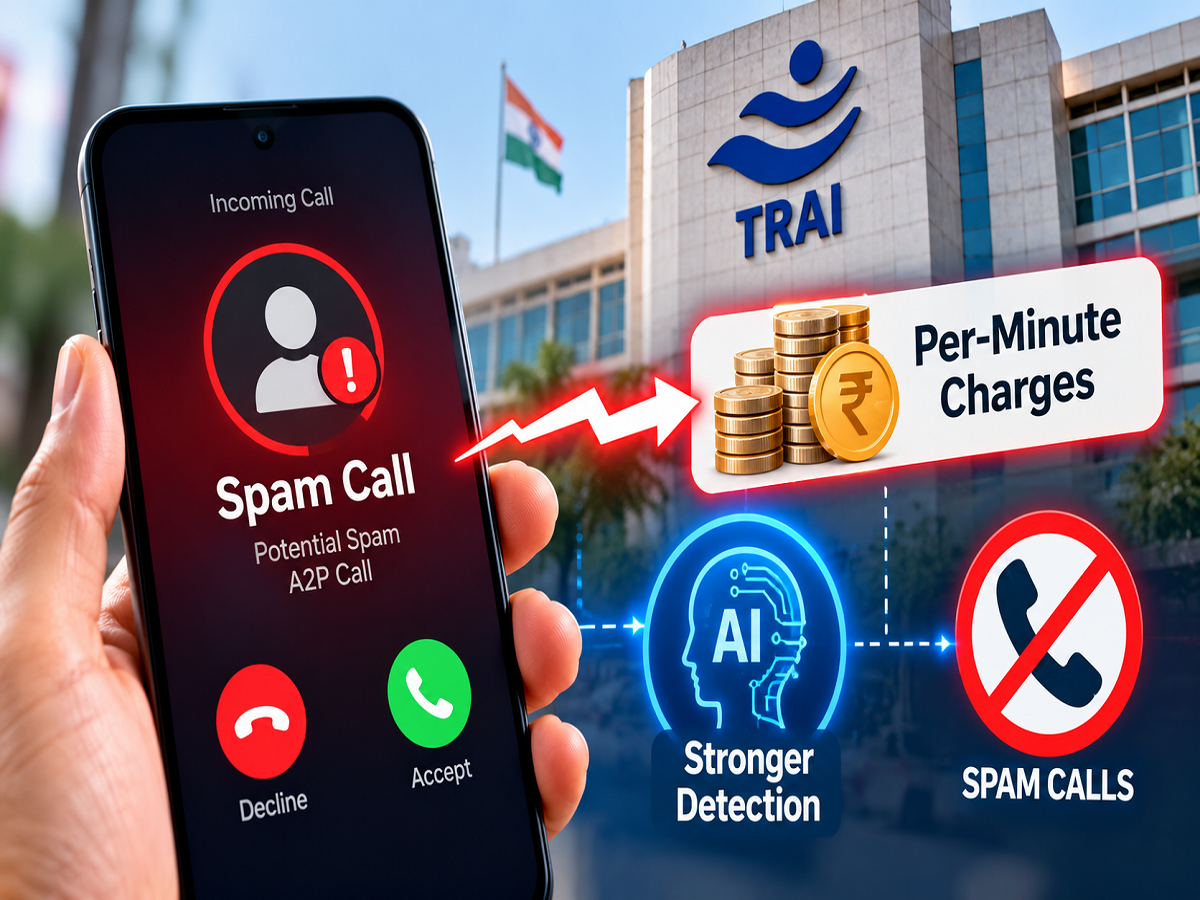
Unwanted calls promoting loans, credit cards, insurance products or asking people to complete KYC have become a common problem for mobile users. Blocking one number does not always solve the issue because similar promotional or automated calls may arrive from different numbers.
The Telecom Regulatory Authority of India (TRAI) is now moving toward measures designed to make such communications easier to identify and potentially more expensive for entities generating large volumes of automated calls.
According to the reported regulatory changes, Application-to-Person (A2P) voice calls could attract a termination charge, while telecom operators are also expected to increasingly use technologies such as artificial intelligence and machine learning to detect suspicious calling patterns.
For ordinary mobile subscribers, however, an important distinction needs to be understood: the reported charge is associated with A2P traffic between service providers and businesses. It should not be interpreted as a ₹0.05-per-minute fee that consumers must pay whenever they receive a spam call.
What Are A2P Calls?
A2P stands for Application-to-Person communication.
Unlike a normal person-to-person phone call, an A2P call is initiated through an application, automated platform or software-based system and delivered to an individual.
These systems can be used for legitimate purposes as well. Banks, airlines, delivery companies, healthcare providers and other organisations may use automated calls for alerts, reminders or customer communication.
The problem arises when automated calling infrastructure is used for unsolicited commercial communication or large-scale spam campaigns.
What Is the Reported 5-Paise Charge?
According to the reported framework, A2P calls may attract a termination charge of at least 5 paise per minute.
A termination charge generally relates to the payment associated with carrying and completing traffic on another telecom network.
The final commercial charge may depend on agreements between the telecom service providers involved.
Therefore, mobile users should not assume that receiving an A2P or promotional call will automatically result in 5 paise being deducted from their own mobile balance.
The measure is instead intended to change the economics of large-scale automated calling within the telecom ecosystem.
Why Could Charging A2P Calls Help Reduce Spam?
Automated calling technology allows businesses and other entities to make a very large number of calls efficiently.
When the cost of generating such traffic is extremely low, it can also make indiscriminate mass calling easier.
Introducing a charge for A2P voice traffic could increase the cost of making calls at very large scale. In theory, this may discourage organisations from making unnecessary or poorly targeted automated calls.
At the same time, pricing alone cannot eliminate spam. Identifying who is making a call, whether the communication is legitimate and whether the recipient has consented remain important parts of controlling unwanted commercial communication.
AI and Machine Learning to Help Detect Suspicious Calls
Technology is also expected to play a bigger role in tackling spam.
Telecom operators can use artificial intelligence and machine-learning systems to examine calling patterns and identify behaviour that may indicate suspicious or unusually high-volume activity.
For example, systems can look for patterns involving very large numbers of outgoing calls, repeated short-duration calls or other behaviour associated with bulk communication.
Automated detection can help telecom operators identify potentially problematic traffic faster than relying entirely on individual customer complaints.
However, AI-based detection does not mean every unwanted call will automatically be blocked. Legitimate organisations also use high-volume communication systems, so telecom networks need mechanisms that can distinguish authorised communication from abusive activity.
Will Spam Calls Completely Stop?
Consumers should not expect unwanted calls to disappear overnight.
The new measures are intended to make spam detection, identification and enforcement more effective, but spammers may continue trying different methods to reach users.
Some fraudulent callers may also use ordinary mobile numbers rather than clearly identifiable automated calling systems.
As a result, consumers should continue treating unexpected calls cautiously, especially those asking for sensitive personal or financial information.
Be Careful With Calls Asking for KYC, OTP or Banking Details
Spam calls are annoying, but fraudulent calls can be financially dangerous.
A caller may claim that your bank account, SIM card, credit card or digital wallet will be suspended unless you immediately complete KYC or provide certain information.
Never disclose an OTP, UPI PIN, debit or credit card PIN, CVV, internet-banking password or other confidential financial credentials over an unsolicited phone call.
Similarly, avoid installing an application or clicking a link sent by an unknown caller claiming to represent a bank, telecom company or government agency.
If a caller says urgent action is required, disconnect the call and independently contact the organisation through its official website, mobile application or verified customer-care number.
What the New Framework Means for Mobile Users
The biggest potential change for consumers is not that they will have to start paying for incoming spam calls.
Instead, the measures are designed to put greater accountability and potential cost on automated commercial calling while giving telecom companies more tools to identify suspicious traffic.
A combination of A2P call charges, AI-powered monitoring and stronger identification mechanisms could make indiscriminate mass calling less attractive.
However, consumers should continue using spam-reporting and blocking tools and remain cautious about unknown callers.
Ultimately, reducing spam calls will require a combination of regulation, telecom-network enforcement, better technology and responsible commercial communication practices.
Note: The reported 5-paise-per-minute figure relates to the A2P termination-charge framework and should not be interpreted as a direct charge imposed on ordinary consumers simply for receiving a spam call. Commercial arrangements and implementation details can vary, so users and businesses should refer to the latest official TRAI directions for final rules.