Business
Bank Strike September 28-30: Will UPI and ATMs Work? Check Dates, Demands and Services Affected
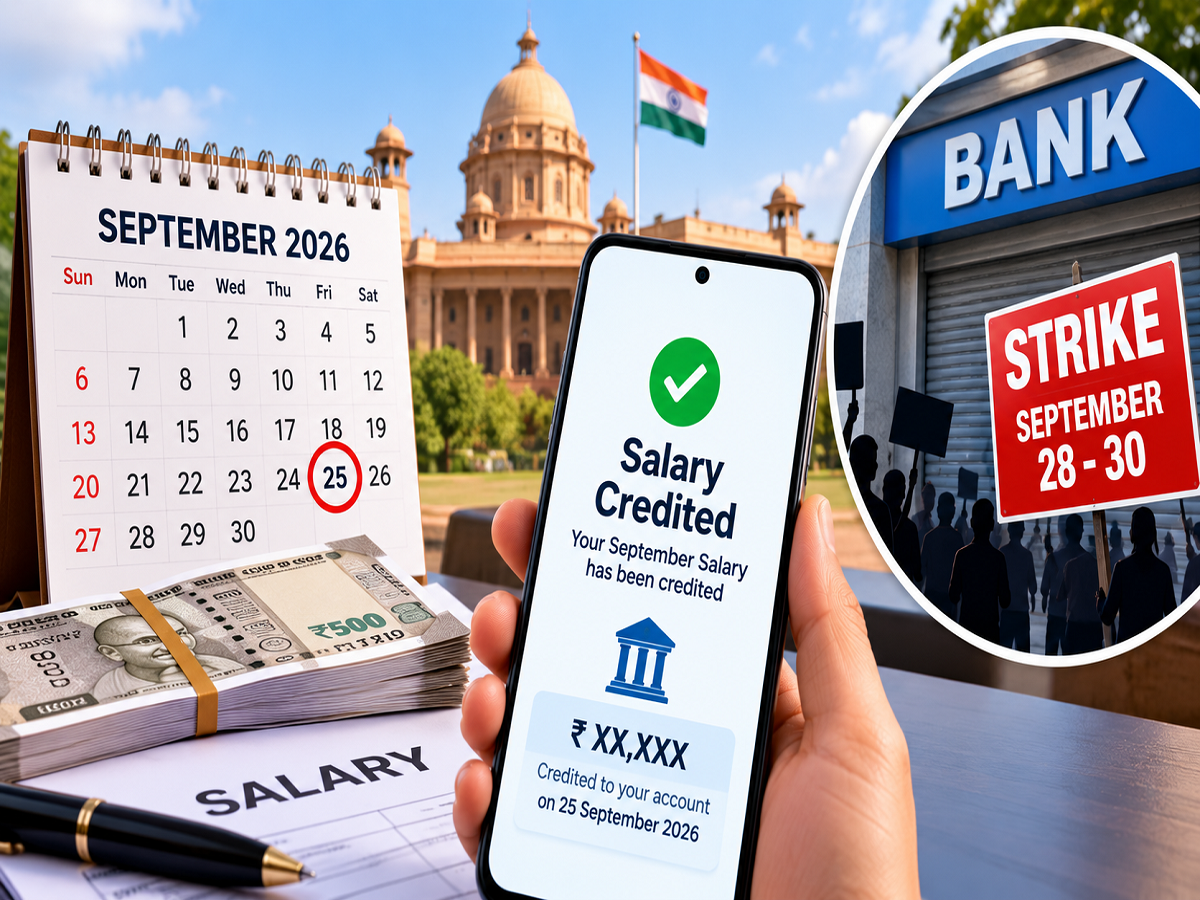
Bank customers may need to plan branch-related work carefully during the final week of September 2026. The United Forum of Bank Unions (UFBU) has called for a three-day nationwide bank strike from September 28 to September 30, 2026, raising the possibility of disruption to several branch-based banking services.
The proposed industrial action comes after discussions involving bank unions, the Indian Banks' Association (IBA), bank managements and the Department of Financial Services (DFS). Unions say sufficient progress has not been made on key demands, including implementation of a five-day working week.
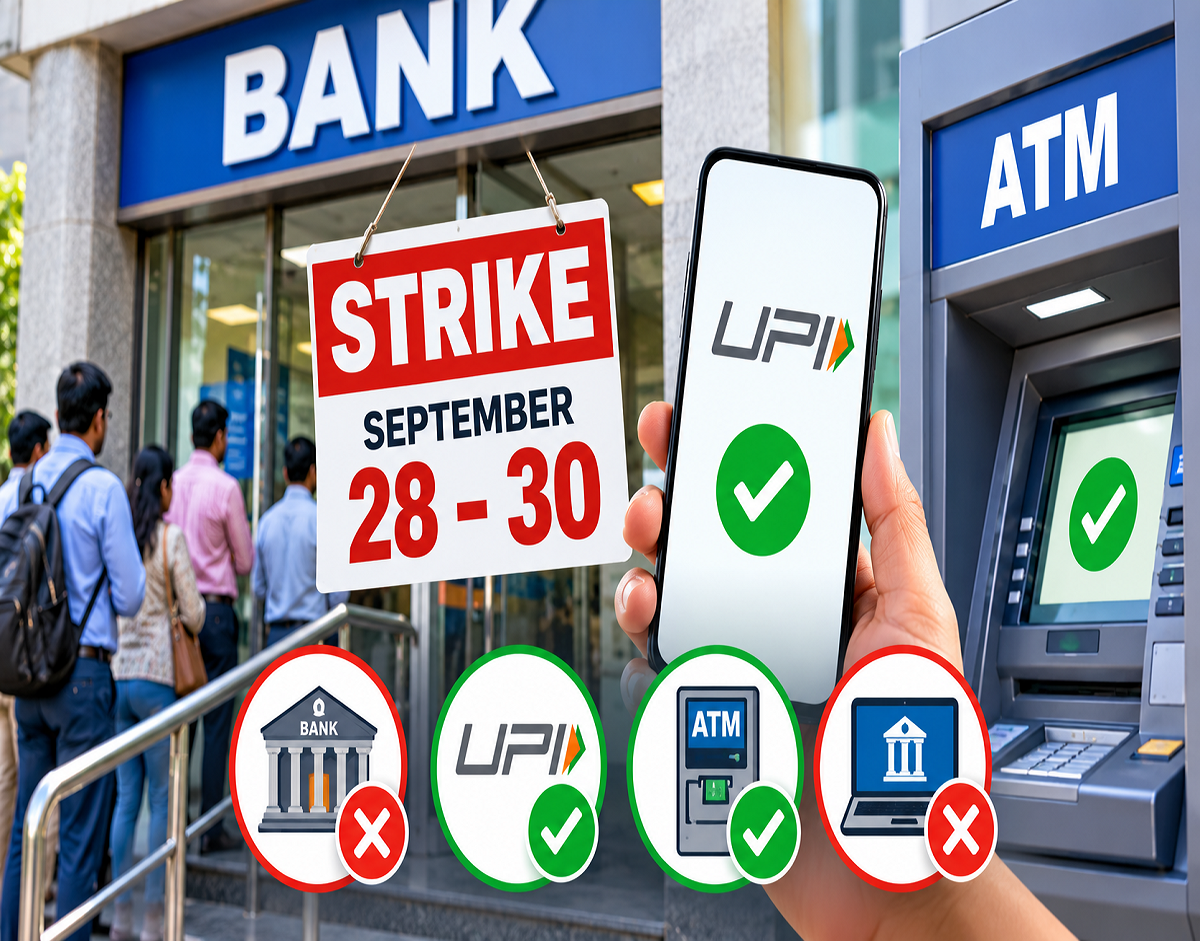
The strike is scheduled immediately after a fourth Saturday and Sunday, making the calendar particularly important for customers. However, this does not mean that every banking service will remain unavailable for five days. Digital banking systems, UPI and ATMs are expected to provide alternatives, although individual service interruptions cannot be completely ruled out.
When Is the Bank Strike?
UFBU has called on members to participate in the nationwide strike on Monday, September 28; Tuesday, September 29; and Wednesday, September 30, 2026.
The timing comes immediately after the weekend:
| Date | Day | Status | Expected Impact |
|---|---|---|---|
| September 26 | Saturday | Fourth Saturday | Regular bank branch holiday |
| September 27 | Sunday | Weekly holiday | Regular bank branch holiday |
| September 28 | Monday | Proposed bank strike | Branch services may be affected |
| September 29 | Tuesday | Proposed bank strike | Branch services may be affected |
| September 30 | Wednesday | Proposed bank strike | Branch services may be affected |
This creates the possibility of significant disruption to physical branch operations over the five-day period from September 26 to September 30.
Customers with time-sensitive branch work should consider completing it before the strike period where possible.
Why Have Bank Unions Called the Strike?
One of the major demands highlighted by the unions is the implementation of a five-day working week for bank employees.
Under the existing system, banks generally remain closed on the second and fourth Saturdays of the month, while the first, third and, where applicable, fifth Saturdays are normally working days unless another holiday applies.
Bank unions have been seeking a system under which all Saturdays would become holidays.
According to the unions, an understanding regarding the five-day working week had been reached with the Indian Banks' Association as part of the wage settlement process, but the required government notification has not yet followed.
This delay has become one of the major issues behind the strike call.
Performance-Linked Incentive Is Another Issue
The unions have also raised objections to a performance-linked incentive, or PLI, framework.
According to the union position described in the report, concerns include the criteria used for performance evaluation and the possibility that the system could create additional competition and workplace pressure among employees.
These are union claims and demands rather than an independent assessment of the scheme.
Will Bank Branches Be Closed During the Strike?
Branch operations are among the services most likely to face disruption if the strike proceeds with significant employee participation.
Customers who need staff assistance for activities such as document submission, certain account-related requests, cheque-related work or other services requiring an in-person visit could face delays.
Banks including SBI and Canara Bank have reportedly advised customers about the possibility of disruption and encouraged greater use of alternative banking channels.
The exact impact can vary between banks and locations depending on employee participation and contingency arrangements.
Will ATMs Work During the Bank Strike?
ATMs are expected to remain available.
Customers should generally be able to withdraw cash through ATMs even when branch operations are affected. SBI has also pointed customers toward ATMs and Automated Deposit and Withdrawal Machines (ADWMs), while Canara Bank has highlighted ATMs and BNAs as alternative channels.
However, an extended period of branch disruption can sometimes place additional pressure on ATM cash availability in individual locations.
Customers who expect to need cash during the period may therefore prefer to plan ahead rather than wait until the final moment.
Will UPI Stop Working From September 28 to 30?
The proposed strike does not automatically mean UPI will stop working.
UPI transactions are largely processed through digital banking infrastructure and do not require customers to visit a branch for routine payments.
Customers are therefore expected to continue using UPI apps for everyday digital transactions during the strike period.
Banks have also encouraged customers to use online alternatives such as mobile banking and internet banking.
As with any digital service, temporary technical failures can occur independently, so it would be inaccurate to guarantee that every transaction will work without interruption. But the strike itself is primarily expected to affect staff-dependent and branch-based services rather than automatically shutting down UPI.
What About Mobile and Internet Banking?
Mobile banking and internet banking are also expected to remain accessible.
Customers can generally use these services for activities such as checking balances, transferring funds and performing many routine banking transactions without visiting a physical branch.
SBI has advised customers to use channels including internet banking, YONO, mobile banking and UPI during the proposed strike.
Canara Bank has similarly highlighted mobile banking, internet banking and UPI as alternatives.
Which Services Could Face the Most Disruption?
Services requiring physical branch staff are more vulnerable during a strike.
These can include some cash-counter transactions, document verification, account-related paperwork, certain cheque services and requests that cannot be completed digitally.
Businesses that depend heavily on branch-based banking operations may also want to make arrangements in advance.
Customers should check directly with their bank if they have a transaction that must be completed by a particular deadline.
What Have Major Banks Said?
Several public-sector banks have taken steps to prepare customers and employees for the proposed strike.
SBI and Canara Bank have indicated that branch operations could be affected and have highlighted digital alternatives.
Punjab National Bank has reportedly appealed to employees not to participate in the strike, while Bank of Baroda has stressed the importance of maintaining uninterrupted services for customers, including families, pensioners, entrepreneurs and businesses.
These appeals do not necessarily mean the strike has been withdrawn.
What Is the Government's Position?
The Department of Financial Services has held discussions with public-sector bank leadership regarding preparations for the strike.
According to the government's stated position, banks have been asked to remain prepared and take steps to minimise disruption for customers.
The government has also appealed to employees to avoid industrial action and continue resolving outstanding issues through discussions.
The ministry's position is that many concerns raised by unions have already been addressed to a significant extent, while remaining issues continue to be considered.
The unions, on the other hand, maintain that sufficient progress has not been achieved on their key demands.
What Should Bank Customers Do?
Customers who have important branch-based work should consider completing it before the proposed strike begins.
It may also be useful to keep sufficient cash for essential expenses, ensure mobile banking is working, remember necessary banking credentials and verify that the mobile number linked to the bank account is active.
For routine payments, UPI, debit cards, mobile banking and internet banking are expected to remain important alternatives.
Customers should also avoid panic withdrawals. The strike call does not mean the banking system or digital payment network will shut down.
Check for Last-Minute Changes
The strike is currently scheduled for September 28, 29 and 30, 2026, but industrial action can be postponed, withdrawn or modified following negotiations.
Customers should therefore check announcements from their own bank and official government or banking channels closer to the dates.
If the strike proceeds as announced, branch-based services are likely to face the greatest disruption, while UPI, ATMs, mobile banking and internet banking are expected to remain available as alternative channels.
Note: The September 28-30 action is a proposed strike call. Its final impact will depend on employee participation, negotiations and individual banks' contingency arrangements. Customers should check the latest official update from their bank before planning important transactions.