Business
Digital Life Certificate 2026: Pensioners Can Submit Jeevan Pramaan From Home Using Aadhaar Face Authentication
Digital Life Certificate 2026: Pensioners can submit their Digital Life Certificate (DLC) without visiting a bank or pension office by using Aadhaar-based face authentication. The facility allows eligible pensioners to complete identity verification through a compatible smartphone, making the annual life certificate submission process more convenient.
The Aadhaar Face Authentication facility is particularly useful for senior citizens, people with mobility difficulties and pensioners living far from their pension-disbursing bank branches.
Through the government's Jeevan Pramaan system, pensioners can generate a Digital Life Certificate electronically and reduce their dependence on physical documentation and branch visits.
What Is a Digital Life Certificate?
A Digital Life Certificate, commonly known as Jeevan Pramaan, is an electronic document used to confirm that a pension beneficiary is alive.
Pension-disbursing authorities generally require periodic life certificate verification to ensure that pension payments continue to reach eligible beneficiaries.
Traditionally, pensioners had to visit a bank, government office or designated verification centre to submit their life certificates.
This could be inconvenient for elderly pensioners, particularly those dealing with health or mobility challenges.
The Digital Life Certificate system simplifies the process by enabling electronic identity verification and certificate generation.
Aadhaar Face Authentication Makes Life Certificate Submission Easier
One of the most convenient features of the Jeevan Pramaan system is Aadhaar-based face authentication.
This technology allows eligible pensioners to verify their identity using facial recognition instead of relying on fingerprint or iris authentication equipment.
A compatible Android smartphone can be used to complete the process through the official applications.
The face authentication system compares the captured facial information through the authorised Aadhaar authentication mechanism.
Once the required verification and pension-related information are successfully processed, a Digital Life Certificate can be generated.
The facility can be especially helpful for pensioners whose fingerprints are difficult to authenticate because of age-related changes.
How to Submit a Digital Life Certificate From Home
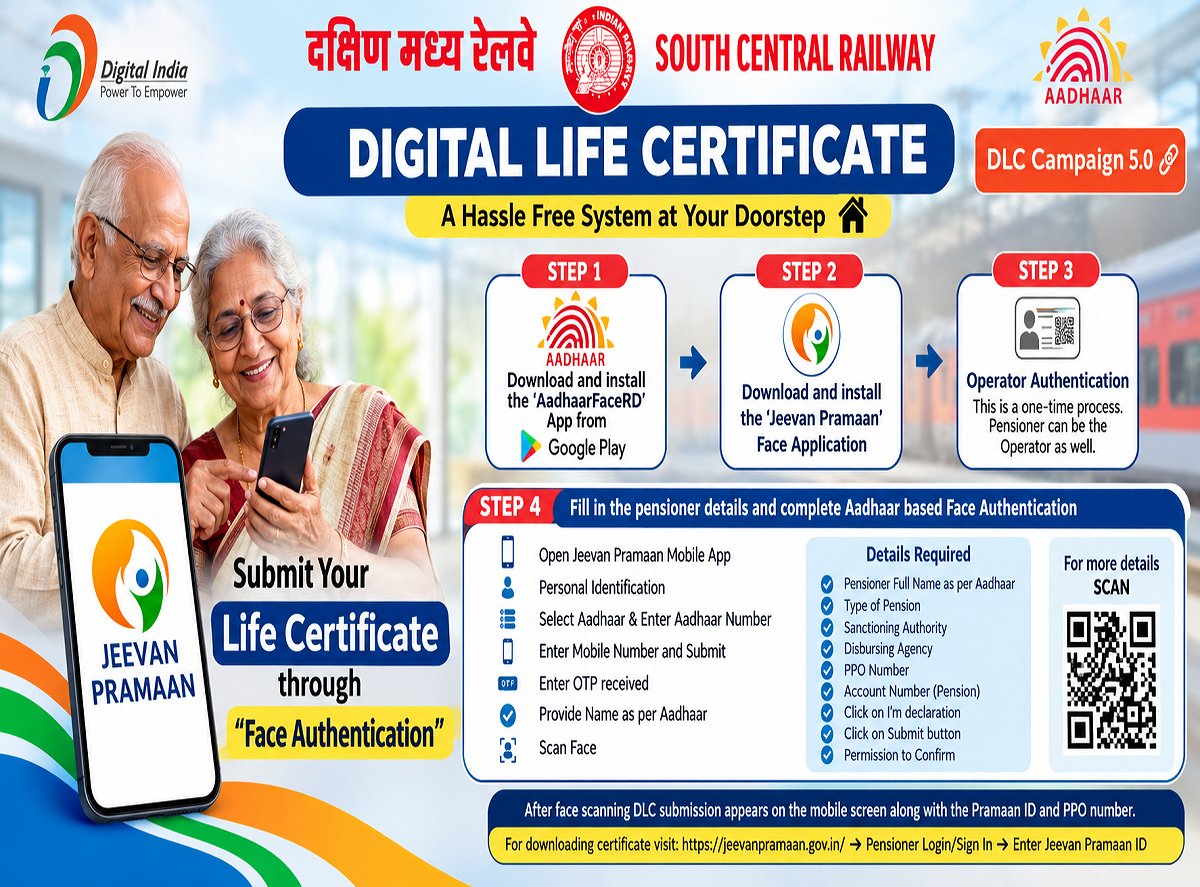
Eligible pensioners can generally follow these steps to generate their certificate through face authentication.
- Install the official AadhaarFaceRD application and the compatible Jeevan Pramaan Face App on a supported Android smartphone.
- Open the Jeevan Pramaan application and complete the required operator registration or authentication steps.
- Enter the pensioner's Aadhaar details and other requested information.
- Provide the required pension information, including the Pension Payment Order (PPO) number and pension-disbursing details.
- Complete the face authentication process using the smartphone camera.
- Follow the on-screen instructions to submit the required information.
- After successful processing, obtain the Jeevan Pramaan identification or acknowledgement details.
The exact steps may vary depending on the application version, device compatibility and authentication requirements.
Pensioners should ensure that the information entered matches their official pension records.
What Documents and Details Are Required?
Before beginning the Digital Life Certificate submission process, pensioners should keep their essential information ready.
This generally includes their Aadhaar number, mobile number, Pension Payment Order details, pension account information and the name of the pension-disbursing authority.
The pensioner must also provide the required consent for Aadhaar-based authentication.
A compatible smartphone with a functioning camera and internet connection is necessary for the face authentication process.
The availability of the facility may depend on the pension scheme and whether the relevant pension-disbursing organisation accepts Jeevan Pramaan certificates.
Why Is Face Authentication Helpful for Senior Citizens?
Face authentication offers a convenient alternative to physical verification methods.
Senior citizens who find it difficult to travel to a bank branch may be able to complete the process from their homes.
It also reduces the need for separate biometric fingerprint devices when the supported face authentication application is used.
Family members or authorised helpers may assist pensioners with operating the smartphone, entering information and following the application instructions.
However, the pensioner's own face must be authenticated, and the verification must follow the prescribed procedure.
This approach can make digital pension services more accessible while maintaining the required identity checks.
Is It Necessary to Visit a Bank After Submitting Jeevan Pramaan?
In many cases, pensioners whose pension-disbursing authorities accept Jeevan Pramaan do not need to submit a separate physical life certificate after successful digital submission.
The certificate can be made available electronically to the relevant pension-disbursing organisation.
However, pensioners should confirm that their certificate has been successfully generated and accepted by the appropriate authority.
A successful authentication attempt does not necessarily resolve errors in PPO details, pension records or other information.
If the pension authority requires additional verification, the pensioner may need to follow its instructions.
When Should Pensioners Submit Their Life Certificate?
For many central government pensioners, November is the usual annual life certificate submission month.
Pensioners aged 80 years and above are generally permitted to submit their annual life certificate from October 1, providing them with an extended submission window.
However, submission schedules can differ depending on the pension scheme, bank and pension-disbursing authority.
Pensioners should verify the deadline applicable to their individual pension arrangement.
Submitting the certificate within the required period helps prevent avoidable interruptions in pension disbursement.
What If Aadhaar Face Authentication Fails?
Face authentication may occasionally fail because of poor lighting, camera issues, connectivity problems or mismatched information.
Pensioners can try again in a well-lit environment while ensuring that their face is clearly visible to the camera.
They should also check that the official applications are updated and that the device meets the required technical specifications.
If repeated attempts are unsuccessful, alternative methods may be available, including biometric authentication at designated service points or physical life certificate submission where permitted.
Pensioners can contact their pension-disbursing bank or authority for assistance.
Where Can Pensioners Get Official Information?
Pensioners can visit the official Jeevan Pramaan website for information about Digital Life Certificates, supported authentication methods and application downloads.
They can also consult the Unique Identification Authority of India (UIDAI) for Aadhaar-related authentication guidance.
Only official applications and trusted sources should be used to avoid fraudulent websites or unauthorised services.
Pensioners should never disclose their Aadhaar OTP, banking password or other confidential credentials to unknown individuals offering certificate submission assistance.
Final Update
The Aadhaar Face Authentication facility is making Digital Life Certificate submission more convenient for eligible pensioners.
Instead of travelling to a bank or pension office, many beneficiaries can complete their annual Jeevan Pramaan verification using a supported smartphone from the comfort of their homes.
Pensioners should verify their applicable submission deadline, keep their pension details ready and use the official Jeevan Pramaan application to complete the process securely.
The initiative represents an important step towards making pension-related services more accessible, particularly for elderly beneficiaries who may face difficulties visiting physical verification centres.