Business
Aadhaar Safety Update 2026: Know Who Is Verifying Your Identity and Why Your Data Is Being Used
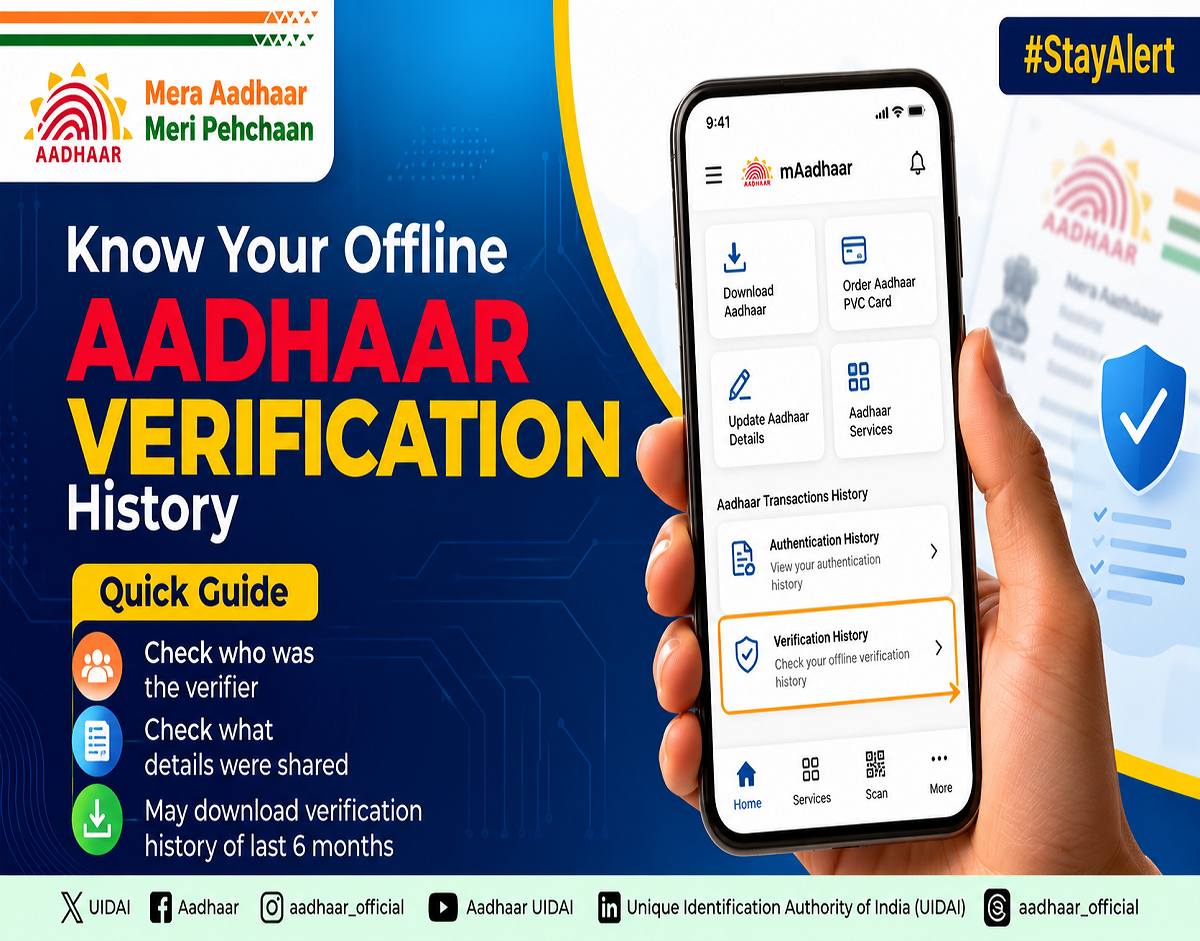
Aadhaar Card Latest Update 2026: Aadhaar users now have greater ways to understand how their identity information is being shared during verification. The Unique Identification Authority of India (UIDAI) is encouraging people to remain aware of the organisations requesting their Aadhaar details and the reasons behind such requests.
Under the Aadhaar offline verification framework, individuals can check the identity of an Offline Verification Seeking Entity (OVSE) and understand the services or purposes for which their personal information is requested.
This awareness is particularly important as Aadhaar-based identity verification is increasingly used for financial services, education, healthcare, employment and other activities.
The framework is designed to make identity verification more transparent while giving Aadhaar holders greater control over the information they choose to share.
What Is an Offline Verification Seeking Entity (OVSE)?
An Offline Verification Seeking Entity, commonly called an OVSE, is an organisation that uses Aadhaar-based offline verification to confirm a person's identity.
Unlike conventional online Aadhaar authentication, offline verification does not require the organisation to connect directly to UIDAI's Central Identities Data Repository (CIDR).
Instead, approved verification mechanisms allow organisations to check digitally verifiable identity information shared by an Aadhaar holder.
UIDAI's framework supports consent-based verification and is intended to reduce unnecessary sharing of personal information.
For example, an organisation may need to verify an individual's identity before providing a particular service. Through the offline verification process, the organisation can request relevant information while informing the individual about its intended use.
Aadhaar Users Can Know Who Is Requesting Their Information
An important feature of the OVSE framework is transparency.
Before completing an offline verification request, Aadhaar holders should be informed about the organisation seeking verification and the purpose for which their information will be used.
Under UIDAI's applicable regulations, the entity must explain what information is involved, how it may be used and what alternative identification arrangements are available.
The organisation must also obtain the Aadhaar holder's consent before carrying out verification.
This helps individuals make informed decisions before sharing personal information.
Users should not approve a verification request simply because it mentions Aadhaar or appears to come from a familiar service provider.
How to Check an Aadhaar Offline Verification Request
Aadhaar holders receiving an offline verification request should carefully review the available information before giving consent.
The following steps can help:
Step 1: Open the official Aadhaar application if the verification request is being processed through the app.
Step 2: Review the identity of the organisation requesting verification.
Step 3: Check the service or purpose mentioned in the request.
Step 4: Examine which Aadhaar-related details the organisation wants to verify.
Step 5: Make sure the verification request relates to a service you have actually requested.
Step 6: Provide consent only after understanding the purpose and information involved.
Step 7: If the request appears unfamiliar or suspicious, do not approve it until you have verified the organisation through official channels.
The exact screens and options may vary according to the application version and verification method.
Where Can Aadhaar Offline Verification Be Used?
UIDAI identifies several sectors where organisations may use the offline verification framework.
These include:
- Banking and financial technology services
- Hospitals and healthcare providers
- Hotels and hospitality businesses
- Educational institutions
- Recruitment and employment services
- Real estate and housing
- Government departments
- Event management and other service providers
The framework allows organisations to verify relevant identity information without necessarily requiring access to UIDAI's central database.
However, an organisation's use of offline verification does not mean it has unrestricted permission to collect, retain or share Aadhaar information.
The applicable consent, purpose limitation and data protection requirements continue to apply.
Aadhaar App Gives Users More Control Over Personal Information
The newer Aadhaar App has been developed around the principle of allowing individuals to show, share and verify their identity information.
The government introduced the application with an emphasis on privacy, selective information sharing and user consent.
Instead of providing an entire Aadhaar document for every verification requirement, users can share relevant information through supported digital verification methods.
According to the Ministry of Electronics and Information Technology, the application is intended to make identity verification more convenient while reducing unnecessary exposure of personal details.
This approach can be particularly useful when an organisation needs to confirm only specific information rather than obtain a complete copy of an Aadhaar document.
Can an OVSE Store or Share Your Aadhaar Information?
Aadhaar holders should understand that offline verification does not automatically mean the verifying organisation is prohibited from retaining every piece of information.
UIDAI's OVSE guidance permits registered entities to collect and store verifiable credentials under applicable conditions and with explicit consent.
Further sharing of offline Aadhaar data is subject to specific requirements, including disclosure of the recipient, the verification purpose and informed consent.
Users should therefore review consent requests carefully and understand whether their information will be retained or shared with another organisation.
Important Cyber Safety Tips for Aadhaar Users
As digital identity verification becomes more common, users should take basic precautions to protect their personal information.
Avoid sharing Aadhaar OTPs with unknown individuals. Do not upload Aadhaar documents to suspicious websites or applications.
Before approving a verification request, confirm that the organisation is genuine and that the request relates to a service you intend to use.
Be cautious of messages claiming that your Aadhaar will be blocked unless you immediately complete verification through an unfamiliar link.
Users should also avoid sharing unnecessary personal details when a service requires only limited identity confirmation.
If an Aadhaar-related request appears suspicious, contact the organisation directly using its official website or customer support details.
Why Aadhaar Offline Verification Matters in 2026
Aadhaar is widely used for identity-related services across India, making privacy and informed consent increasingly important.
UIDAI's offline verification framework aims to balance convenient identity checks with greater transparency over how personal information is handled.
By allowing individuals to identify the organisation seeking verification and understand the stated purpose, the framework encourages more responsible use of Aadhaar information.
For users, the most important precaution is to review every verification request before sharing details or granting consent.
Official UIDAI website: https://uidai.gov.in/
OVSE information: https://uidai.gov.in/en/ovse
Aadhaar services: https://myaadhaar.uidai.gov.in/
Disclaimer: This article explains UIDAI's Aadhaar offline verification framework and related privacy safeguards. The ability to view organisation details, verification purposes and other information depends on the verification method and supported application features. Users should refer to official UIDAI guidance for current procedures.