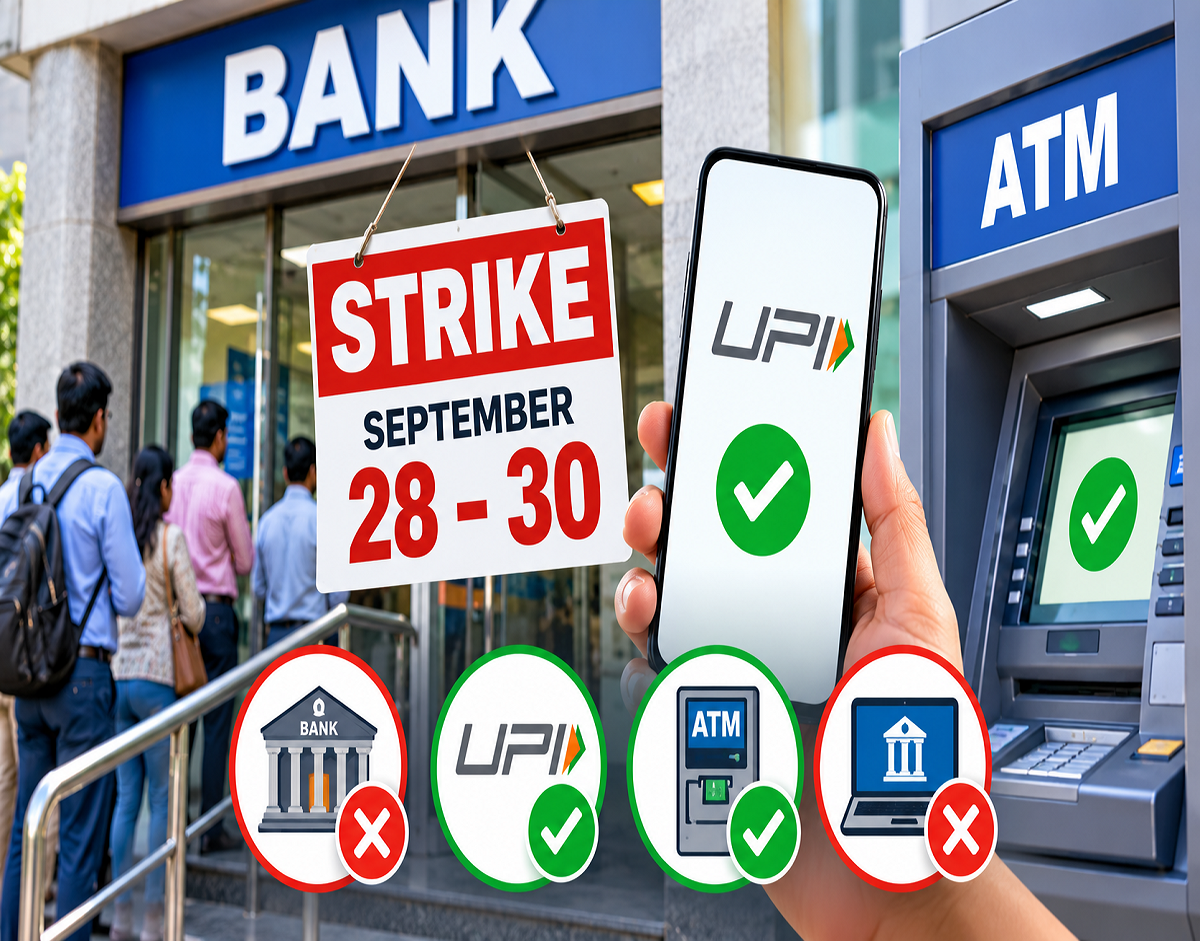

Central government employees and pensioners are set to receive their September 2026 payments earlier than usual. The government has approved the release of September salary and pension on September 25, 2026, ahead of the proposed three-day nationwide bank strike scheduled for September 28 to 30.
The decision is intended to prevent disruption to essential payments at the end of the month, when the proposed industrial action could affect branch-based banking operations and other staff-dependent transactions.
According to the reported government communication, the early-payment arrangement covers Central Government employees as well as pensioners, with relevant ministries, departments and payment authorities being asked to complete the necessary processing.
September Salary to Be Paid on September 25
Central Government salaries are normally processed around the end of the month. For September 2026, however, employees are expected to receive their payments earlier.
An Office Memorandum issued by the Controller General of Accounts (CGA) on September 23 provides for the disbursement of September salary on September 25, 2026.
The measure is intended to ensure that the proposed banking disruption between September 28 and September 30 does not delay salary payments.
Eligible employees should therefore see their September payment processed earlier than the normal month-end schedule, subject to the applicable payroll and banking procedures.
Pensioners Will Also Receive Payment Early
The decision is not limited to serving employees.
Central Government pensioners are also covered by the early-disbursement arrangement. Their pension for September 2026 is expected to be processed on September 25 through the relevant banks and Pay and Accounts Offices.
This could be particularly helpful for pensioners who rely on their monthly pension for regular household expenses, medical costs and other financial commitments.
By moving the payment date forward, the government aims to avoid the risk of month-end banking disruption delaying pension credits.
Which Employees Are Covered?
According to the reported instructions, the early salary arrangement applies broadly to Central Government employees.
This includes employees associated with departments such as Defence, Posts and Telecommunications, along with other eligible Central Government staff.
September wages for eligible industrial workers under the relevant Central Government payment framework are also expected to be processed early.
Employees should remember that the exact time at which a payment appears in an individual bank account can still depend on payroll processing and the receiving bank.
Why Has the Government Changed the Payment Date?
The primary reason is the proposed nationwide bank strike.
Bank unions have called for industrial action on September 28, 29 and 30, 2026. Since these dates fall at the end of both the month and the current quarter, disruption could affect several important banking and payment activities.
September 26 is also the fourth Saturday of the month, while September 27 is a Sunday.
The calendar therefore creates an unusual sequence immediately before the proposed strike:
| Date | Day | Banking Situation |
|---|---|---|
| September 25 | Friday | Early salary and pension payment planned |
| September 26 | Saturday | Fourth Saturday bank holiday |
| September 27 | Sunday | Weekly holiday |
| September 28 | Monday | Proposed bank strike |
| September 29 | Tuesday | Proposed bank strike |
| September 30 | Wednesday | Proposed bank strike |
Processing salaries and pensions on September 25 is intended to prevent this sequence from interfering with essential month-end payments.
Is the September 25 Salary an Extra Payment?
No. Employees should not mistake the early credit for an additional salary or bonus.
The payment represents the regular salary for September 2026, which is simply being released ahead of its normal schedule.
Similarly, pensioners will receive their regular September pension rather than an additional pension benefit.
The government has clarified that the amount disbursed early will be treated as an advance payment for accounting purposes.
Employees should therefore plan their monthly expenses accordingly, as receiving the money earlier does not increase the total salary payable for the month.
Other Payments May Also Be Processed in Advance
Ministries and government departments have reportedly been advised to consider completing other important payments and banking transactions before the final days of September wherever feasible.
The objective is to minimise the possibility of payment-related difficulties if the proposed strike affects normal banking operations.
This is especially relevant because September 30 also marks the end of the quarter, a period when several departments and institutions may have accounting and financial transactions to process.
What Has the CGA Asked RBI to Do?
The Controller General of Accounts has reportedly requested the Reserve Bank of India (RBI) to communicate the necessary instructions to relevant payment branches of banks.
This coordination is important because salary and pension processing involves government accounting systems as well as banking channels through which money ultimately reaches beneficiaries.
The advance processing is intended to ensure that payments reach employees and pensioners before the proposed strike period begins.
Will UPI and ATMs Stop During the Bank Strike?
The proposed bank strike should not be interpreted as a shutdown of the entire banking system.
Branch-dependent services could face disruption if the strike proceeds with significant employee participation. However, digital services such as UPI, mobile banking and internet banking are generally expected to remain operational.
ATMs are also expected to remain available, although cash availability at individual machines can depend on replenishment and local conditions.
Customers who require physical branch services should consider completing urgent work before the strike period.
Could the Bank Strike Still Be Withdrawn?
Yes. The September 28-30 action remains a proposed strike and could potentially be postponed, modified or withdrawn if an agreement is reached between the parties involved.
The government's decision to process salaries and pensions early is a precautionary measure designed to protect essential payments if the strike proceeds.
Employees and pensioners should therefore follow official communications rather than relying on social-media messages about changes to either the strike or payment schedule.
What Central Government Employees and Pensioners Should Know
The most important point is that eligible Central Government employees and pensioners are expected to receive their September 2026 salary or pension on September 25, rather than waiting until the usual month-end payment period.
The measure has been taken in view of the proposed three-day banking strike from September 28 to September 30 and the preceding weekend holidays.
Since the September 25 disbursement is an early release of the regular monthly payment—not additional income—employees and pensioners should budget accordingly.
Note: Individual account-credit timing can vary depending on payroll processing and the receiving bank. Employees and pensioners should rely on official communications from their department, Pay and Accounts Office, pension-disbursing authority or bank for account-specific information.