
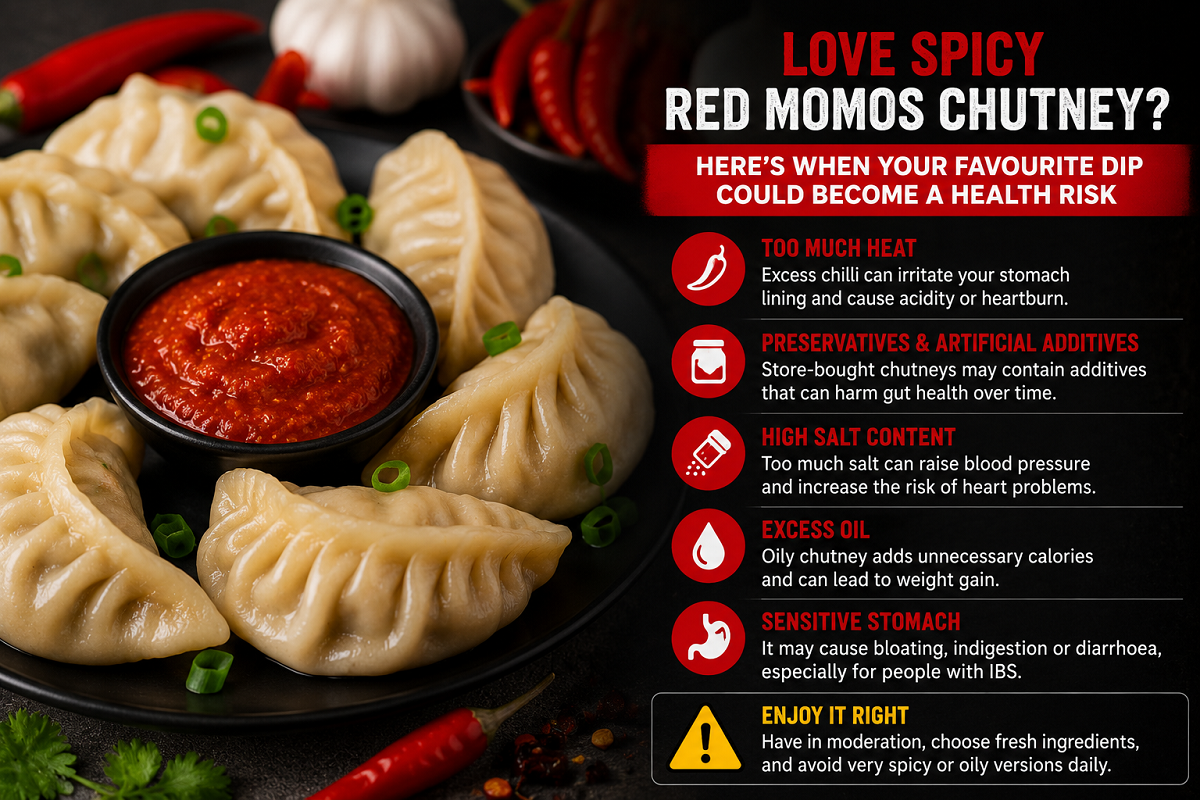
Momos Red Chutney: Momos and their fiery red chutney have become a favourite street-food combination for many people. For some momo lovers, the spicy dip is almost as important as the dumplings themselves. However, questions about the safety and hygiene of street-side chutney have emerged after 115 kg of red momo chutney was reportedly destroyed in Kanpur after being found unfit for consumption during an inspection.
The incident does not mean that every red chutney served with momos is unsafe. The bigger concern is how the chutney is prepared, which ingredients are used, how long it is stored and whether basic food-safety standards are followed.
So, what usually goes into momo chutney, and when can this popular spicy accompaniment become risky?
What Is Usually Used to Make Momos Red Chutney?
Traditional red momo chutney is generally prepared using ingredients such as tomatoes, red chillies, garlic and spices. Depending on the recipe, ginger, vinegar, salt and other seasonings may also be added.
When fresh ingredients are used and the chutney is prepared and stored hygienically, these ingredients themselves do not automatically make the dip harmful.
The problem can arise when poor-quality ingredients, excessive additives, unsafe colours or contaminated water are used, particularly in food prepared under unhygienic conditions.
Artificial Colours Can Be a Concern
Customers are often attracted to momo chutney because of its bright red appearance. However, an unusually intense colour can sometimes raise questions about whether colouring agents have been added.
Permitted food colours must be used only according to applicable food-safety standards and within prescribed limits. The use of non-permitted colours or excessive quantities of additives can make food unsafe.
Colour alone cannot tell you whether a chutney is adulterated. Laboratory testing or an official food-safety inspection is required to establish whether a particular sample contains prohibited or excessive substances.
Poor-Quality Ingredients May Make Chutney Unsafe
Street-food vendors may prepare large batches of chutney to serve throughout the day. Food-safety problems can arise if damaged tomatoes, spoiled ingredients or improperly stored raw materials are used.
Fresh chutney contains considerable moisture, which means improper handling or prolonged storage can encourage microbial growth.
A chutney that develops an unusual smell, taste, texture or appearance should not be consumed.
Contaminated Water Can Increase the Risk
Water is another important food-safety factor.
If water used to wash ingredients, prepare the chutney or clean utensils is contaminated, microorganisms can enter the food.
The same applies to dirty mixers, containers, spoons and serving equipment. Even a chutney made with otherwise fresh ingredients can become contaminated through unhygienic preparation or handling.
This is why cleanliness at the food stall or restaurant matters just as much as the ingredients themselves.
Improper Storage Is Another Major Problem
Freshly prepared chutney should not be left exposed for long periods, particularly in warm conditions.
At street-food stalls, containers may sometimes remain open for hours and be repeatedly handled during serving. Exposure to dust, flies, dirty utensils and repeated contact can increase contamination risk.
Preparing very large quantities without appropriate refrigeration can further increase the possibility of spoilage.
Customers should be cautious if the chutney appears stale, smells unusual or has clearly been sitting uncovered for a long time.
Is the Spiciness of Red Chutney Dangerous?
Red chillies are responsible for much of the characteristic heat in momo chutney. Spicy food is not inherently dangerous for everyone, but very spicy preparations can cause discomfort in some people.
Excessive chilli consumption may trigger symptoms such as heartburn, stomach irritation or acid reflux, particularly in people who are already sensitive to spicy foods.
Therefore, people who regularly experience digestive discomfort after spicy meals may benefit from limiting the quantity of chutney they consume.
How Can You Choose Momos and Chutney More Safely?
Instead of assuming that all street-side momo chutney is harmful, pay attention to hygiene and food handling.
Choose a vendor where the preparation and serving area appears clean. Chutney should ideally be kept covered, utensils should look clean and ingredients should appear fresh.
Avoid chutney if it has an unusual odour, strange taste, signs of spoilage or questionable storage conditions.
You can also prepare momo chutney at home using fresh tomatoes, chillies, garlic and spices. Homemade preparation gives you greater control over ingredients, cleanliness and storage.
Kanpur Incident Raises Food-Safety Questions
The reported destruction of 115 kg of momo red chutney in Kanpur after it was found unfit for consumption highlights why food hygiene cannot be ignored, particularly when sauces and chutneys are prepared in bulk.
However, one such incident should not be interpreted to mean that momo chutney itself is inherently harmful.
The real risks depend on factors such as ingredient quality, permitted versus prohibited additives, water quality, hygiene, temperature and storage conditions.
So, if you love the fiery red dip served alongside momos, you do not necessarily have to give it up. Instead, choose hygienic food outlets, avoid suspicious-looking or poorly stored chutney and consume extremely spicy preparations in moderation.
When prepared with safe ingredients and handled correctly, red momo chutney can remain an enjoyable accompaniment rather than an unnecessary food-safety risk.