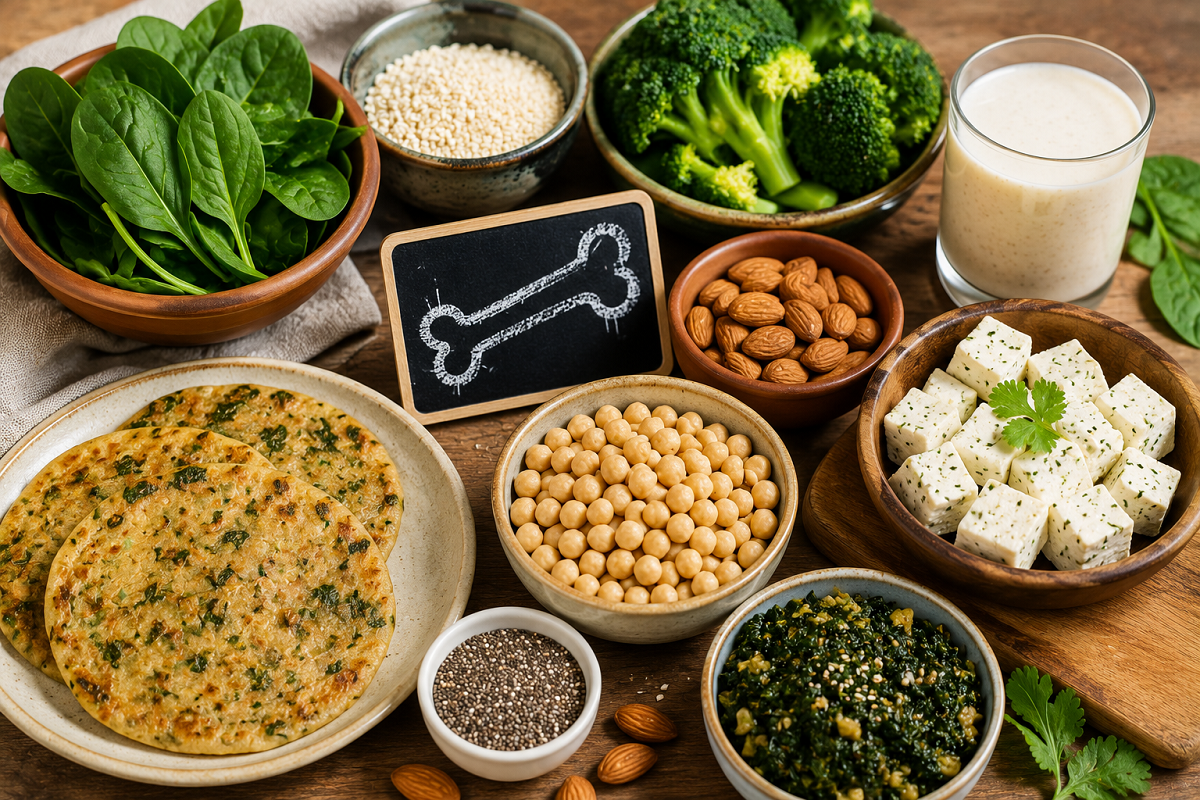
Calcium-Rich Foods for Strong Bones: Calcium plays an important role in maintaining healthy bones and teeth, and getting enough of this mineral becomes particularly important as we grow older. When people think about increasing their calcium intake, milk is often the first food that comes to mind. However, dairy milk is not the only dietary source of calcium.
Several foods commonly found in Indian kitchens can contribute meaningful amounts of calcium along with protein, fibre and other important nutrients. Sesame seeds, ragi, amaranth, soy foods and certain leafy greens are among the options that can help diversify your diet.
Here are six Indian foods worth considering if you want to increase your dietary calcium intake without depending entirely on milk.
1. Ragi
Ragi, also known as finger millet, is a popular traditional grain and a useful plant-based source of calcium.
It can easily be incorporated into everyday meals in the form of ragi roti, dosa, porridge, cheela or idli. Ragi flour can also be combined with other flours when preparing rotis.
Its versatility makes it particularly convenient for people who want to add more nutrient-dense grains to their regular diet.
However, rather than relying on a single food, ragi should ideally be consumed as part of a varied and balanced diet.
2. Sesame Seeds
Tiny sesame seeds, or til, can be a valuable addition to a calcium-focused diet.
They can be sprinkled over salads and vegetables or incorporated into chutneys. Traditional foods such as til laddoo and sesame-based preparations are other familiar ways of consuming them.
Sesame seeds also contain fats and other nutrients, so a relatively small serving can be incorporated into meals without requiring major changes to your diet.
White and black sesame seeds can both be used depending on the recipe and personal preference.
3. Amaranth
Amaranth, commonly known as rajgira, is another traditional food that can add nutritional variety to the diet.
Rajgira is frequently consumed during fasting periods in India, but it does not have to be restricted to festive or fasting meals.
Amaranth flour can be used for rotis, while the grain can be incorporated into porridge and other dishes.
Including traditional grains such as ragi and rajgira alongside other foods can help create a more varied nutrient profile.
4. Soybeans and Soy Foods
Soybeans and foods prepared from soy can also be incorporated into a bone-friendly diet.
Options include soybeans, tofu and certain fortified soy products. Soy foods are particularly useful because they can provide protein in addition to calcium, although the exact calcium content can vary considerably between products.
For tofu, calcium levels depend partly on how it has been manufactured. Checking the nutrition label is therefore helpful when calcium intake is the main consideration.
Soy can be added to curries, stir-fries, salads and several other everyday dishes.
5. Calcium-Rich Leafy Greens
Green vegetables are an important part of a balanced diet, and some varieties can contribute calcium as well.
Leafy vegetables can be included in dals, soups, sabzis, parathas and mixed vegetable dishes.
Eating a variety of greens rather than depending on only one type is a practical way to obtain different vitamins and minerals.
It is also worth remembering that the amount of calcium the body absorbs can differ between vegetables because naturally occurring compounds in some plants affect mineral absorption.
6. Chickpeas
Chickpeas, or chana, are another familiar Indian kitchen staple that can contribute to overall nutrient intake.
They provide plant-based protein and fibre along with minerals, including some calcium.
Boiled chickpeas can be added to salads and chaats, while kala chana can be prepared as a curry or eaten after soaking and cooking. Chickpea flour, or besan, can also be used for cheela and several other dishes.
Chana should not be viewed as a replacement for every major calcium source, but it can contribute to a varied diet that supports overall nutrition.
Strong Bones Need More Than Calcium
While calcium is essential for bone health, simply eating calcium-rich foods does not guarantee stronger bones.
Vitamin D is also important because it helps the body absorb and use calcium effectively. Adequate protein intake and regular physical activity, particularly weight-bearing and resistance exercises, are also important for maintaining bone health.
This means the focus should be on overall nutrition and lifestyle rather than trying to obtain large quantities of calcium from one particular food.
Don't Depend Only on Milk for Calcium
Milk and other dairy products can certainly contribute calcium to the diet, but people who do not drink milk still have other dietary options.
Traditional foods such as ragi, sesame seeds, rajgira, soy foods, leafy greens and chickpeas can help diversify calcium intake while supplying several other nutrients.
Individual calcium requirements vary with age, sex, diet and life stage. Anyone with a diagnosed calcium or vitamin D deficiency, osteoporosis, kidney disease, or another medical condition affecting bone health should seek personalised advice from a qualified healthcare professional rather than relying solely on dietary changes.
The key is not necessarily to replace milk completely, but to build a varied diet that provides calcium and other nutrients from multiple sources.