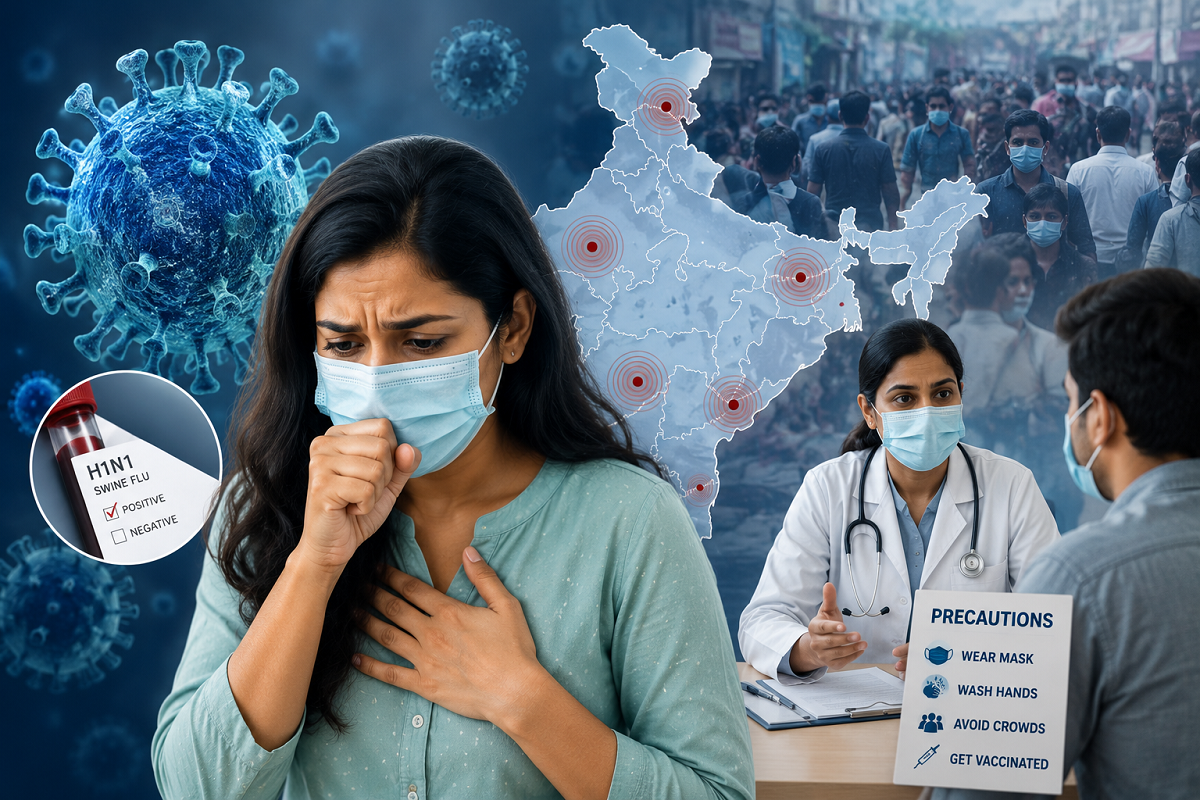
A rise in H1N1 influenza cases in Delhi has raised concerns, with some people wondering whether swine flu could spread across the country in a manner similar to COVID-19. While H1N1 is contagious and outbreaks can occur, directly comparing the current situation with the emergence of COVID-19 can be misleading.
According to the reported figures, Delhi recorded 166 new H1N1 cases within 24 hours, taking the number of identified cases to 2,612. Cases of other influenza A infections have also been reported, bringing the combined figure mentioned in the report to around 3,300.
The increase has prompted health authorities to strengthen preparedness. According to the Delhi government's reported update, hospitals have been asked to maintain adequate availability of doctors, nursing personnel, laboratory staff, medicines, oxygen, beds and testing facilities.
But does an increase in cases mean India could be heading towards another COVID-like situation? Medical experts say the two situations should not automatically be treated as equivalent.
Why H1N1 and COVID-19 Should Not Be Directly Compared
One of the most important differences is that H1N1 is not a newly discovered virus.
The H1N1 influenza virus has circulated among humans for years and has caused seasonal outbreaks in different parts of the world. The 2009 H1N1 strain caused a global influenza pandemic, after which the virus continued circulating as part of seasonal influenza.
COVID-19, by contrast, was caused by a novel coronavirus when it emerged in late 2019, meaning populations initially had little pre-existing immunity and there was no established vaccine at the start of the outbreak.
Therefore, an increase in H1N1 infections does not by itself indicate that the country is moving towards a repeat of the COVID-19 pandemic.
At the same time, H1N1 should not be dismissed. Influenza can spread efficiently and can cause serious illness in some people.
How Does H1N1 Spread?
H1N1 spreads primarily through respiratory particles released when an infected person coughs, sneezes, talks or breathes, particularly during close contact.
Transmission can become easier when people spend prolonged periods close together, especially in crowded or poorly ventilated indoor spaces.
This helps explain why influenza cases can sometimes increase rapidly within a school, workplace, neighbourhood or city.
People can also potentially spread influenza around the time symptoms develop, which makes basic respiratory hygiene and staying away from others while ill useful for reducing transmission.
Is H1N1 Dangerous for Everyone?
Many people who develop influenza experience symptoms such as fever, cough, sore throat, body aches, headache and fatigue and recover without serious complications.
However, the risk is not the same for everyone.
Young children, older adults, pregnant women and people with certain chronic medical conditions may have a greater risk of developing complications from influenza.
Individuals with respiratory illnesses such as asthma or chronic obstructive pulmonary disease (COPD), as well as people with some other underlying health problems or weakened immune systems, may require closer medical attention.
One potentially serious complication is pneumonia, which can lead to breathing difficulties and may require hospital treatment.
Don't Ignore These Warning Signs
Not every fever or cough requires emergency treatment, but certain symptoms should receive prompt medical attention.
A person should seek medical advice if symptoms are severe, continue to worsen or fail to improve as expected.
Difficulty breathing, shortness of breath, persistent chest pain or pressure, confusion, severe weakness or a concerning drop in oxygen saturation are warning signs that should not simply be treated as an ordinary cold at home.
High-risk individuals should consider contacting a healthcare professional early if they develop influenza-like symptoms because antiviral treatment may be most useful when started promptly in appropriate patients.
Antiviral medicines should be taken according to medical advice rather than through self-medication.
Flu Vaccination Can Reduce the Risk of Severe Illness
Seasonal influenza vaccination is an important preventive measure.
Flu vaccines are updated to target influenza strains expected to circulate, and vaccination can reduce the risk of influenza illness and, importantly, lower the likelihood of severe outcomes in many people.
Vaccination can be particularly important for groups at greater risk of influenza complications, including older adults, pregnant women and people with certain chronic health conditions.
People who are unsure whether they should receive a flu vaccine can discuss their individual circumstances with a healthcare professional.
It is also important to understand that vaccination does not guarantee that a person will never catch influenza. Its major benefit includes reducing the likelihood and severity of illness.
Simple Precautions Can Reduce H1N1 Transmission
People do not need to panic or adopt extreme measures because influenza cases are rising. Basic precautions can make a meaningful difference.
If you develop fever, cough and other flu-like symptoms, staying home when possible can reduce the chance of passing the infection to colleagues, classmates or family members.
Cover your mouth and nose while coughing or sneezing, wash or sanitise your hands regularly and avoid unnecessarily touching your eyes, nose and mouth.
Good indoor ventilation can also help reduce the concentration of respiratory particles.
Extra care is sensible when living with an older adult, pregnant woman, young child or someone with a chronic illness or weakened immune system.
People with respiratory symptoms who need to be around others may also consider a well-fitting mask, particularly in crowded indoor environments or when interacting with vulnerable individuals.
Could H1N1 Cases Increase Further?
Yes, H1N1 cases can increase and outbreaks can affect multiple locations because influenza is a transmissible respiratory infection. However, predicting the future scale of an outbreak requires surveillance data and cannot be determined simply from a short-term rise in one city's case numbers.
An increase in Delhi therefore deserves monitoring and appropriate public-health action, but it does not automatically mean India is facing another COVID-19-like crisis.
The sensible approach is awareness rather than panic. People should follow respiratory hygiene, stay home when ill where possible, consider seasonal influenza vaccination based on medical advice and seek timely care when warning symptoms develop.
H1N1 is a familiar influenza virus, but familiar does not mean harmless. Monitoring rising cases while protecting people at higher risk remains the most practical response.