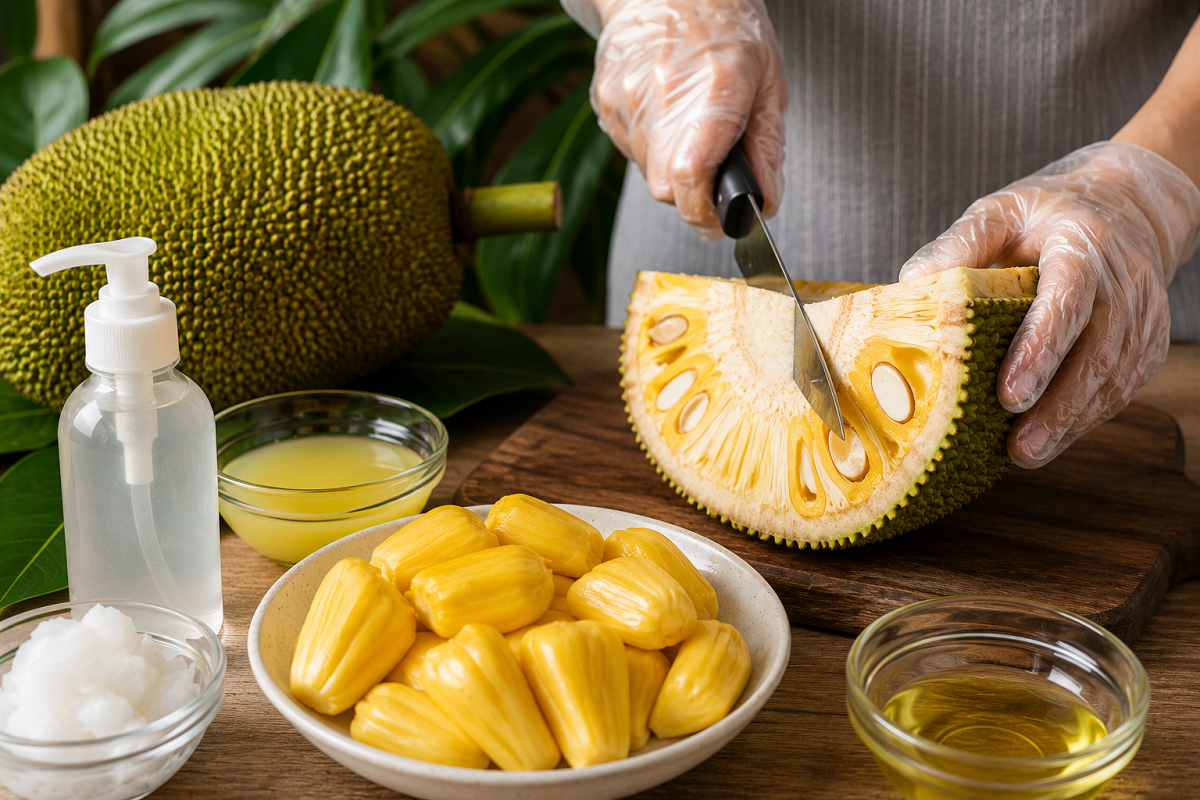
Cutting a whole jackfruit can feel intimidating, especially if you are doing it for the first time. The biggest problem is usually not the tough outer skin but the thick, sticky white latex that starts coming out as soon as the fruit is cut.
This sap can cling to your hands, knife, chopping board and even nearby kitchen surfaces. Washing it immediately with plain water often does not solve the problem and may leave your hands feeling sticky for longer.
That does not mean you need to avoid buying whole jackfruit or depend on a vegetable seller to clean it every time. With a little preparation and a few simple kitchen tricks, you can cut raw jackfruit at home with far less mess.
Here are five easy methods that can make the job cleaner, safer and much more manageable for beginners.
1. Apply Oil to the Knife Blade Before You Start
One of the easiest ways to deal with jackfruit latex is to create a protective layer on the knife blade before cutting.
Take a small amount of regular cooking oil and lightly coat the blade. The thin layer of oil makes it harder for the sticky sap to attach firmly to the metal, so cleaning the knife becomes easier.
Be careful not to apply oil to the handle.
A greasy handle can make the knife slip while you are cutting through the hard skin and fibrous interior. Since jackfruit requires some pressure to slice, maintaining a firm grip is especially important.
If the blade becomes heavily coated with latex while cutting, wipe it clean, apply a little oil again and continue.
2. Oil Only the Hand Holding the Jackfruit
A common mistake is to coat both hands with oil before beginning.
Although oil helps prevent the sticky latex from clinging to the skin, putting it on both hands can make handling a knife unsafe.
Instead, lightly grease only the hand that you will use to hold or steady the jackfruit. Keep your knife-holding hand completely dry.
This gives you two benefits: the hand touching the fruit gets some protection from the latex, while the dry hand maintains a secure grip on the knife.
You can also use food-safe gloves if you prefer, but the same rule applies—make sure your knife hand is not slippery.
3. Cut the Jackfruit Into Smaller Sections
Trying to process an entire jackfruit in one go can create unnecessary mess, particularly for beginners.
Start by cutting the fruit into two large sections. From there, divide each section into smaller quarters or manageable pieces.
Working with smaller portions gives you better control and limits the area over which the sticky sap can spread.
As you expose the inside, you will notice a thick, firm central core. This portion can release a significant amount of latex, so removing it early can make the remaining cleaning process easier.
Once the core is removed, you can separate the edible bulbs or cut the raw jackfruit into pieces according to the recipe you are preparing.
4. Protect the Cutting Surface Before Starting
Jackfruit sap does not only stick to hands and knives. It can also leave a stubborn coating on chopping boards, countertops and kitchen cloths.
Before cutting, cover the work area with a disposable or easy-to-clean layer.
You can place old newspaper underneath your cutting board or use a disposable sheet. This catches sap, peel and fibrous waste and helps keep the counter cleaner.
Use a sturdy, non-slip chopping board and place it on a stable surface. Avoid cutting the fruit directly on a smooth countertop where it may move around.
Once you finish, the protective sheet can be removed along with much of the mess.
5. Do Not Wash Sticky Hands With Water Immediately
This is one of the most useful tricks to remember.
If jackfruit latex gets on your hands, avoid immediately putting them under running water. Water alone may not remove the sticky residue effectively.
Instead, rub a small amount of cooking oil over the sticky areas first. Massage it gently until the latex starts loosening from the skin.
Then wipe your hands with a paper towel or an old cloth.
Only after removing most of the residue should you wash your hands thoroughly with soap and water.
The same oil-based method can also help when cleaning sticky residue from some kitchen tools, provided the tools can be washed properly afterward.
Extra Safety Tips While Cutting Jackfruit
Jackfruit is large, heavy and often awkward to handle, so safety matters just as much as keeping your hands clean.
Always use a strong chopping board that does not slide. A sharp, sturdy knife is better than a blunt one because forcing a dull blade through the fruit can increase the chance of slipping.
Keep the knife handle dry at all times, and avoid rushing through the process.
If the fruit is very large, continue cutting it into progressively smaller sections rather than trying to remove everything at once.
Whenever the knife gets heavily coated with sap, stop, clean the blade carefully, reapply a small amount of oil and continue.
Why Jackfruit Becomes So Sticky
The white substance that appears while cutting jackfruit is a natural latex present in the fruit.
This latex is concentrated in the rind and fibrous portions, which is why the stickiness becomes more noticeable when the fruit is freshly cut.
Oil works well because it helps loosen the latex and prevents it from bonding as strongly to skin and utensils.
Preparing your tools before cutting can therefore save much more time than trying to clean everything afterward.
A Simple Routine Beginners Can Follow
For first-time users, the easiest approach is to keep everything ready before making the first cut.
Prepare a sturdy board, a sharp knife, a small bowl of cooking oil, paper towels and a waste sheet or newspaper.
Lightly oil the knife blade and the hand that will hold the fruit. Cut the jackfruit into smaller sections, remove the central core early and work one piece at a time.
If your hands become sticky, use oil first and soap and water afterward.
With these simple steps, cutting jackfruit at home becomes much less messy and far easier to manage. Instead of avoiding whole jackfruit because of its sticky sap, you can prepare it confidently for curries, stir-fries and other traditional dishes.