Train passengers should stay alert if someone approaches them claiming to be a Travelling Ticket Examiner (TTE) or Ticket Collector (TC) and demands money for a ticket-related issue or penalty. Cases of impersonation have surfaced in which fraudsters allegedly pose as railway staff and collect money from unsuspecting travellers.
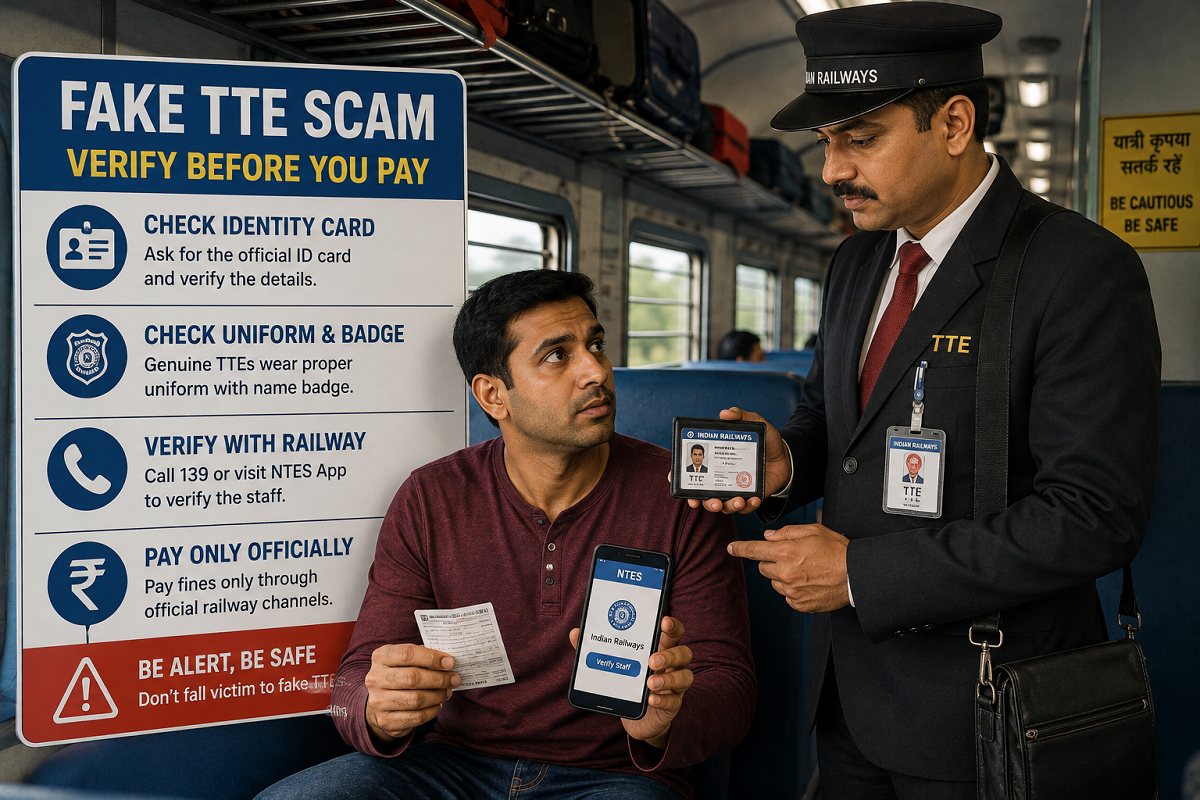
The safest approach is to verify the person's identity before making any payment. A railway uniform or name badge can be useful clues, but they should not be treated as the only proof of authenticity. Passengers can ask the person to show an official railway identity card and should insist on an authorised receipt whenever any legitimate penalty or additional fare is collected.
If anything appears suspicious, passengers can contact Indian Railways through its official helpline and report the matter.
How Can You Check Whether a TTE Is Genuine?
A genuine TTE should be able to establish that he or she is an authorised railway employee.
Passengers can check the official identity card, name and other identifying details of the person conducting the ticket inspection. The uniform and name badge may also help, but these alone are not enough because someone attempting fraud could try to imitate the appearance of railway staff.
If the person refuses to show official identification when reasonably asked, passengers should become cautious and avoid making an immediate payment until the matter is verified.
The important point is not to assume that someone is genuine simply because they confidently claim to be a TTE or TC.
TTE and TC Perform Different Duties
Passengers often use the terms TTE and TC interchangeably, but their usual roles are different.
A Travelling Ticket Examiner generally checks tickets while passengers are travelling on a train. TTEs may also deal with matters such as vacant berths, ticket irregularities and applicable fare or penalty issues during the journey.
Ticket Collectors are more commonly associated with railway stations, platforms and entry or exit points, where they may check whether passengers have valid tickets.
Both are part of the railway ticket-checking system, but the location and nature of their duties can differ.
Understanding this distinction can help passengers recognise unusual situations.
Be Careful if Someone Demands Cash Without Verification
A common warning sign is when someone claiming to be railway staff immediately demands money without properly explaining why a payment is required.
If a TTE says there is a ticket irregularity, the passenger should first understand the reason for the charge. If there is any doubt about the person's identity, passengers can ask for official identification before proceeding.
They should also avoid handing over money merely because the person is creating pressure or threatening immediate consequences.
A genuine ticket-related penalty should follow an authorised railway process.
Always Ask for an Official Receipt
If you legitimately have to pay an additional fare, penalty or other railway charge, do not leave the transaction undocumented.
Ask for an official railway receipt.
The receipt acts as evidence that the payment was collected through the proper process. It also gives passengers a record of the amount paid and the reason for the charge.
If someone asks for money but refuses to issue an official receipt, that should be treated as a serious warning sign.
Passengers should avoid informal settlements where money is taken without any railway documentation.
Do Not Transfer Money to an Unknown Personal Number
Digital payments make transactions convenient, but they can also be misused by fraudsters.
If someone claiming to be a TTE or TC asks you to transfer money to an unfamiliar personal mobile number or payment account, do not do so without verifying that the transaction is genuinely authorised.
Passengers should be particularly cautious about QR codes, UPI IDs or mobile numbers provided casually by an individual.
When in doubt, verify the employee's identity and ask how the payment is officially supposed to be made.
What If You Have Already Paid?
If you have already handed over money and then become suspicious, try to collect and preserve as much information as possible.
Keep the receipt if one was issued. Note the person's name, badge details, coach number, train number, location and approximate time of the incident.
If a digital payment was made, keep the transaction record or screenshot.
These details can be useful while reporting the incident to railway authorities.
If no receipt was provided, that fact should also be mentioned while making the complaint.
Report Suspicious Behaviour Through Railway Channels
Passengers who suspect that someone is impersonating railway staff should report the matter as quickly as possible.
Indian Railways' helpline 139 can be used to seek assistance and report railway-related concerns.
Prompt reporting can help railway authorities verify whether the person is an authorised employee and may also protect other passengers from becoming victims of the same scam.
If the situation appears threatening, passengers should avoid confrontation and seek help from genuine railway or security personnel.
Why Uniform Alone Is Not Enough
A person wearing clothes similar to a railway uniform may appear convincing at first glance.
However, appearance alone should never be considered conclusive proof. Name badges can also be imitated.
That is why official identification and proper documentation are more reliable indicators.
Passengers do not need to become suspicious of every railway employee, but they should feel comfortable verifying credentials when money is being demanded in an unusual or questionable manner.
Signs That Should Make a Passenger More Cautious
Several situations may deserve extra attention: refusal to show official identification, demands for immediate payment without explanation, refusal to provide a receipt, requests to transfer money to a personal number, or aggressive pressure to pay before the passenger can verify the matter.
Any one of these signs does not automatically prove fraud, but they are sufficient reasons to check more carefully before handing over money.
Simple Precautions Can Prevent a Costly Scam
Most passengers focus on their reservation, luggage and arrival time when travelling by train. Verifying the identity of ticket-checking staff may not normally cross their mind.
However, fraudsters can take advantage of the authority associated with railway uniforms and official-sounding designations.
If someone claims to be a TTE or TC and asks for money, verify the person's railway identity, understand the reason for the charge and demand an official receipt. Avoid transferring funds to unknown personal payment accounts, and report suspicious activity through the railway helpline.
A few minutes spent checking the details can help prevent financial loss and make the journey safer for you and other passengers.