Technology
WhatsApp Restricted Chat Could Keep Private Conversations Off Linked Devices: Here’s How It Works
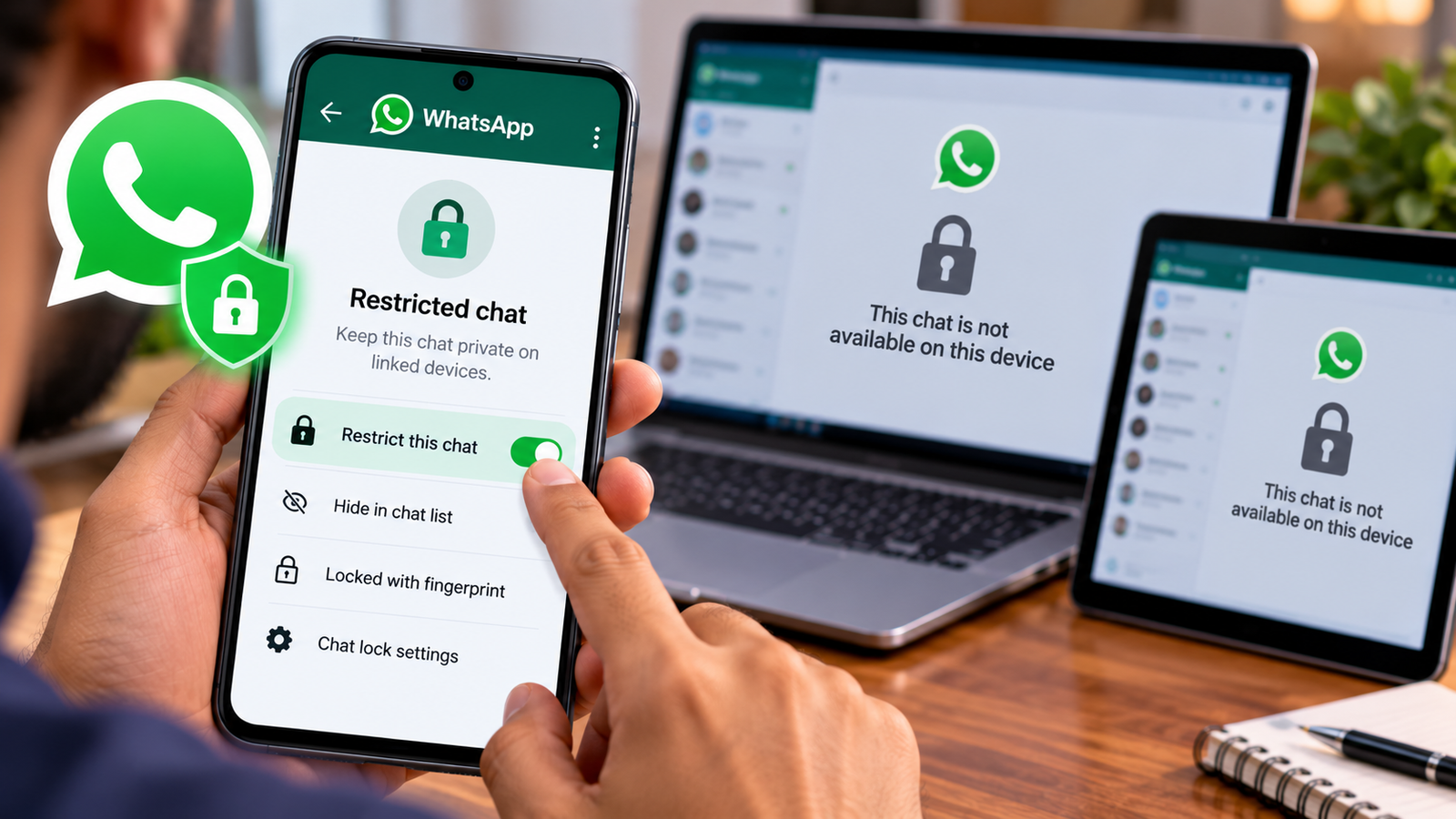
WhatsApp Restricted Chat Feature: WhatsApp is reportedly testing a stronger privacy option that could give users more control over sensitive conversations. Called Restricted Chat, the feature is designed to place additional limits on what can be done with messages, photos, videos and other content inside a selected conversation.
The feature is reportedly an upgraded and renamed version of WhatsApp's Advanced Chat Privacy option. Once enabled for a particular conversation, Restricted Chat can introduce four major restrictions, including preventing media from automatically appearing in the phone's gallery and stopping the conversation from being accessed through linked devices.
The feature is currently being rolled out to selected beta testers on Android, meaning most WhatsApp users may not see it yet.
What Is WhatsApp Restricted Chat?
Restricted Chat is an optional privacy setting designed for conversations where users want stronger controls over how chat content can be accessed or used.
According to the information available in the report, WhatsApp is renaming its Advanced Chat Privacy feature to make its purpose clearer to users while expanding its capabilities.
The setting is expected to be available from the individual Chat Info screen.
It remains disabled by default, so users would have to manually turn it on for each conversation they want to restrict.
This also means Restricted Chat is not required for ordinary WhatsApp conversations. It simply provides an additional privacy option for users who want tighter controls.
Restricted Chat Adds Four Major Privacy Controls
Once Restricted Chat is enabled, four important restrictions are expected to apply to the selected conversation.
First, photos and videos shared inside the chat will not be automatically saved to the phone's gallery.
Second, users will not be able to export the restricted conversation.
Third, Meta AI features will not be available within that conversation, limiting the ability of supported AI functionality to interact with its content.
The fourth—and one of the most significant—restriction involves linked devices.
A Restricted Chat will reportedly remain accessible only on the user's primary device.
Messages May Not Appear on WhatsApp Web
WhatsApp normally allows users to link their account with additional devices, including computers using WhatsApp Web and other supported devices.
Restricted Chat changes that behaviour for selected conversations.
According to the report, once the feature is turned on, messages belonging to that conversation will only be sent and received on the primary smartphone.
As a result, the restricted conversation would not be available through linked devices such as WhatsApp Web or other connected devices.
This could be particularly useful for people who regularly keep WhatsApp signed in on office computers, shared machines or multiple devices but want certain sensitive conversations to remain limited to their main phone.
WhatsApp Will Display a System Message
Users will not have to guess whether a conversation has been restricted.
Once Restricted Chat is activated, WhatsApp is expected to display a system message within the conversation explaining that messages can only be sent and received on the primary device.
This provides a clear indication of how the feature affects the chat.
The restriction could also reduce access through services that depend on linked-device functionality.
According to the report, some third-party tools and AI agents may use linked-device access to interact with WhatsApp conversations. Keeping a selected chat limited to the primary device could prevent this type of linked-device access for that conversation.
Photos and Videos Won't Automatically Save to Gallery
Another useful privacy measure concerns media files.
WhatsApp can normally save received photos and videos to a device's gallery depending on the user's settings.
With Restricted Chat enabled, media shared within that conversation would be prevented from automatically appearing in the phone's gallery.
This could help users avoid situations where sensitive photos or videos become visible outside WhatsApp through the regular Photos or Gallery application.
It is especially relevant on devices where other people may occasionally browse the gallery or where media is automatically organised by another app.
Chat Export Will Be Blocked
Restricted Chat is also expected to disable WhatsApp's chat-export functionality for protected conversations.
WhatsApp's export option can normally be used to create a copy of a conversation that can then be handled outside the app.
Blocking exports adds another barrier against moving the contents of a sensitive conversation outside WhatsApp through the platform's standard export function.
However, users should not interpret this as an absolute guarantee that conversation content can never be copied or captured through other methods.
Privacy features can reduce common forms of sharing or access, but they should not be treated as complete protection against every possible method of reproducing information.
Meta AI Features Will Be Restricted
WhatsApp's growing integration with Meta AI is another area covered by the feature.
When Restricted Chat is enabled, Meta AI functionality reportedly cannot be used within that particular conversation.
This gives users an additional choice when they do not want AI-related features interacting with the content of a sensitive chat.
The restriction applies at the conversation level, allowing users to keep normal functionality elsewhere while placing tighter controls on selected chats.
Is Restricted Chat the Same as Chat Lock?
Restricted Chat is primarily described as a set of controls over how the contents of a conversation can be used or accessed across WhatsApp features and linked devices.
This is different from simply hiding or locking access to a conversation.
Its focus includes blocking automatic media saving, preventing chat exports, restricting Meta AI functionality and keeping the conversation away from linked devices.
Users should therefore check the exact description provided inside WhatsApp when the feature becomes available rather than assuming it performs the same function as every existing privacy or chat-lock option.
Restricted Chat Is Currently in Beta
There is one major limitation for users interested in trying the feature immediately: it has not yet received a broad public rollout.
According to the report, Restricted Chat is being made available to selected beta testers through WhatsApp beta for Android version 2.26.39.11.
The rollout is gradual.
As a result, even users who have installed the latest eligible beta version may not immediately see Restricted Chat on their devices.
WhatsApp has also not confirmed when the feature will become available to all Android users or whether its functionality will remain exactly the same when the stable version arrives.
How to Check for Restricted Chat
For users included in the beta rollout, the new setting is expected to appear within the information page for an individual conversation.
Users can open the relevant chat, access its Chat Info page and look for the Restricted Chat privacy option.
Since the feature is disabled by default, it will need to be manually enabled for individual conversations.
If the option does not appear, there may be nothing wrong with the phone or WhatsApp installation. The account may simply not be included in the current testing phase.
What Restricted Chat Could Mean for WhatsApp Privacy
WhatsApp already provides end-to-end encryption for personal messages and calls, but Restricted Chat addresses a different privacy concern: what can happen to a conversation after it reaches the user's devices.
By preventing selected conversations from appearing on linked devices, stopping automatic media saving, disabling exports and limiting Meta AI functionality, WhatsApp could give users more granular control over sensitive chats.
For now, however, Restricted Chat should be considered a beta feature under limited testing rather than a privacy option available to every WhatsApp user.
Its final capabilities, supported devices and wider release timeline could still change before WhatsApp launches it broadly.