Technology
Google May Let You Trigger Emergency SOS by Saying ‘Help’ Three Times: Here’s How It Could Work
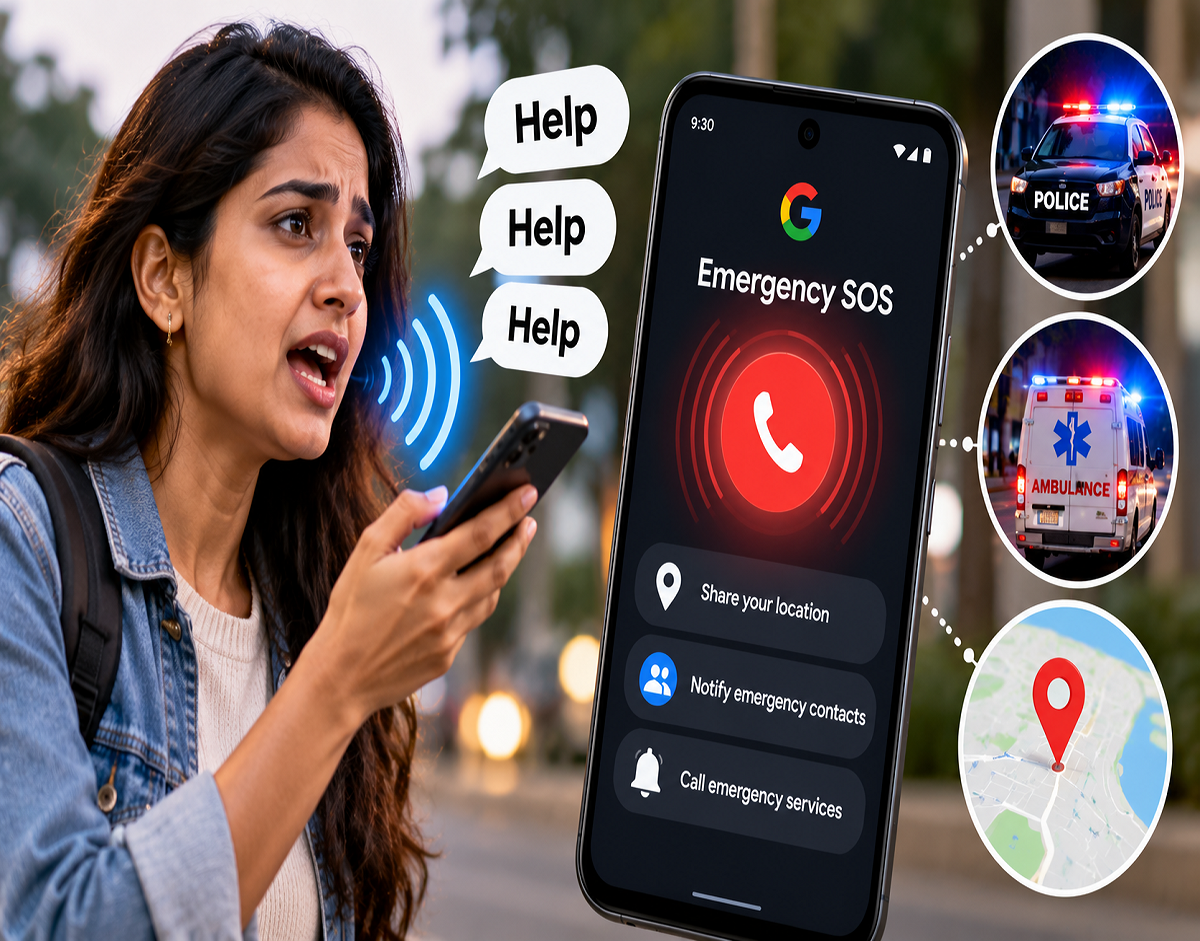
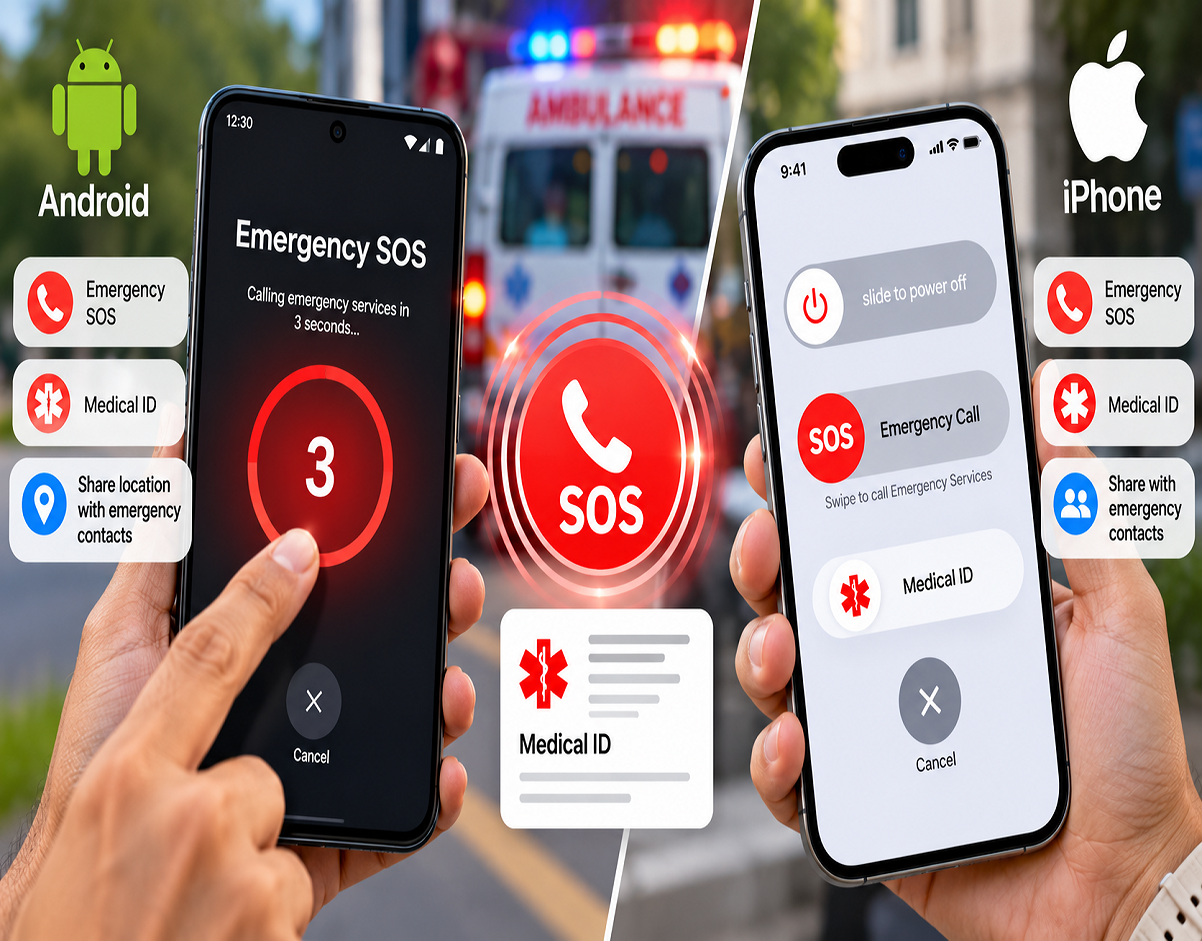
Google Emergency SOS Update: Google appears to be working on a new safety feature that could allow users to activate Emergency SOS using only their voice. Instead of reaching for the phone or repeatedly pressing the power button, users may eventually be able to start the emergency process by saying "Help" three times.
The reported feature was spotted in the code of Google's Personal Safety app and appears designed for situations where a user is unable to physically operate their smartphone.
If eventually released, the voice-activated option could complement Google's existing Emergency SOS functionality and potentially trigger actions such as sharing the user's real-time location, starting emergency video recording and contacting emergency responders.
However, users should note that the feature has not yet been officially launched or confirmed for general availability by Google. The information is based on functionality found in app code and a setup animation, meaning Google could modify, delay or even decide not to release it publicly.
Say 'Help' Three Times to Start Emergency SOS
According to the details cited in the report, Android Headlines discovered references to a voice-activated Emergency SOS function inside Google's Personal Safety app.
The functionality was reportedly spotted in build version 2026.09.16.982745548.
A setup animation associated with the feature indicates that a user could begin the SOS process by saying "Help" three times.
This could be particularly useful during an emergency when the smartphone is nearby but not physically within the user's reach.
For example, someone who has fallen, is injured or is otherwise unable to pick up the device could potentially call for assistance using their voice.
Verbal Confirmation May Be Required
Saying "Help" three times may not immediately send an emergency alert.
According to strings found in the app code, Google appears to be adding a second verification step to prevent accidental activation.
After detecting the emergency phrase, the system may ask the user to verbally confirm whether they actually want to trigger Emergency SOS.
If the user says "Yes," the SOS process could continue.
If the user says "Cancel," the emergency process could be stopped.
Such a confirmation mechanism could help reduce false alerts caused by television audio, conversations or situations where the word "help" is spoken without an actual emergency.
The exact implementation could still change before any public release.
Real-Time Location Could Be Shared
The voice command itself would only be the method used to activate the emergency system. Once SOS is triggered, several existing safety functions could potentially begin.
One of the most important is real-time location sharing.
Depending on the final implementation and the user's Personal Safety settings, location information could be shared with designated emergency contacts.
This could be useful when someone is unable to explain exactly where they are or cannot manually send their location.
Users would still need to configure the relevant safety and emergency-contact settings for supported functions to operate as intended.
Emergency Video Recording Could Also Start
Another function associated with Emergency SOS is emergency video recording.
If included in the final voice-activated system, a user could potentially trigger recording without first unlocking and navigating through the phone.
Emergency recording can provide useful information about the circumstances surrounding an incident, depending on the device's settings and available functionality.
However, exactly which actions are automatically triggered would depend on Google's final design and the options enabled by the user.
It May Also Contact Emergency Responders
The proposed feature could also be connected with the ability to call emergency services or first responders.
This is potentially one of the most significant advantages of hands-free SOS activation.
In some emergencies, a person may be physically unable to reach the phone even though the device is close enough to hear them. Voice activation could provide another way to start the emergency workflow.
Still, users should not currently rely on saying "Help" three times during an emergency because the reported feature has not yet been officially rolled out.
Until it becomes available, users should continue to rely on emergency features that are actually supported and enabled on their devices.
How Does Google's Existing Emergency SOS Work?
Google already provides Emergency SOS functionality on supported devices.
According to the report, the existing system can be activated by quickly pressing the smartphone's power button five times.
Depending on the phone, region and settings, Emergency SOS can be configured to perform different safety actions.
The reported voice feature would therefore not necessarily replace the existing button-based system.
Instead, it could provide an additional hands-free activation method, making the feature more accessible in circumstances where touching the phone is difficult or impossible.
Pixel Phones Could Get the Feature First
The report suggests that Google's Pixel smartphones could be among the first devices to receive voice-activated Emergency SOS if the company decides to release it.
That would be unsurprising because Google's Personal Safety features are closely integrated with Pixel devices.
The feature could potentially expand to other Android smartphones later, although there is currently no confirmed rollout schedule.
Its availability on Samsung smartphones is also unclear. Samsung already provides its own built-in emergency and SOS features, so implementation could differ depending on the manufacturer.
Users should therefore not assume that every Android smartphone will receive the feature simultaneously.
Why Voice-Activated SOS Could Be Useful
Emergency features are most useful when they can be activated quickly and with minimal physical interaction.
Traditional smartphone SOS systems usually require the user to press hardware buttons or interact with the screen. That works in many situations but may not help when a person cannot reach or operate their device.
Voice activation could address this limitation.
A user could potentially call for assistance while the phone is lying on a table, on the floor or elsewhere nearby.
The additional verbal-confirmation step could also help Google balance quick emergency access with the need to prevent accidental SOS activation.
Google Has Not Confirmed a Launch Date
Despite the promising functionality revealed in the app code, there is currently an important limitation: the feature is still under development based on the information available in the report.
Finding code strings or setup animations inside an app does not guarantee that the feature will be publicly released in its current form.
Google could modify the activation phrase, change the confirmation mechanism, restrict the feature to certain devices or regions, postpone its release or decide against launching it.
For now, users should view the ability to trigger Google's Emergency SOS by saying "Help" three times as an upcoming feature being explored rather than an option that is already available on Android phones.
If it eventually reaches users, however, voice-activated Emergency SOS could provide an important additional way to seek assistance when physically operating a smartphone is not possible.