Technology
UPI Charges After Diwali 2026: Will Payments Above ₹2,000 Cost Extra? Latest MDR Update Explained
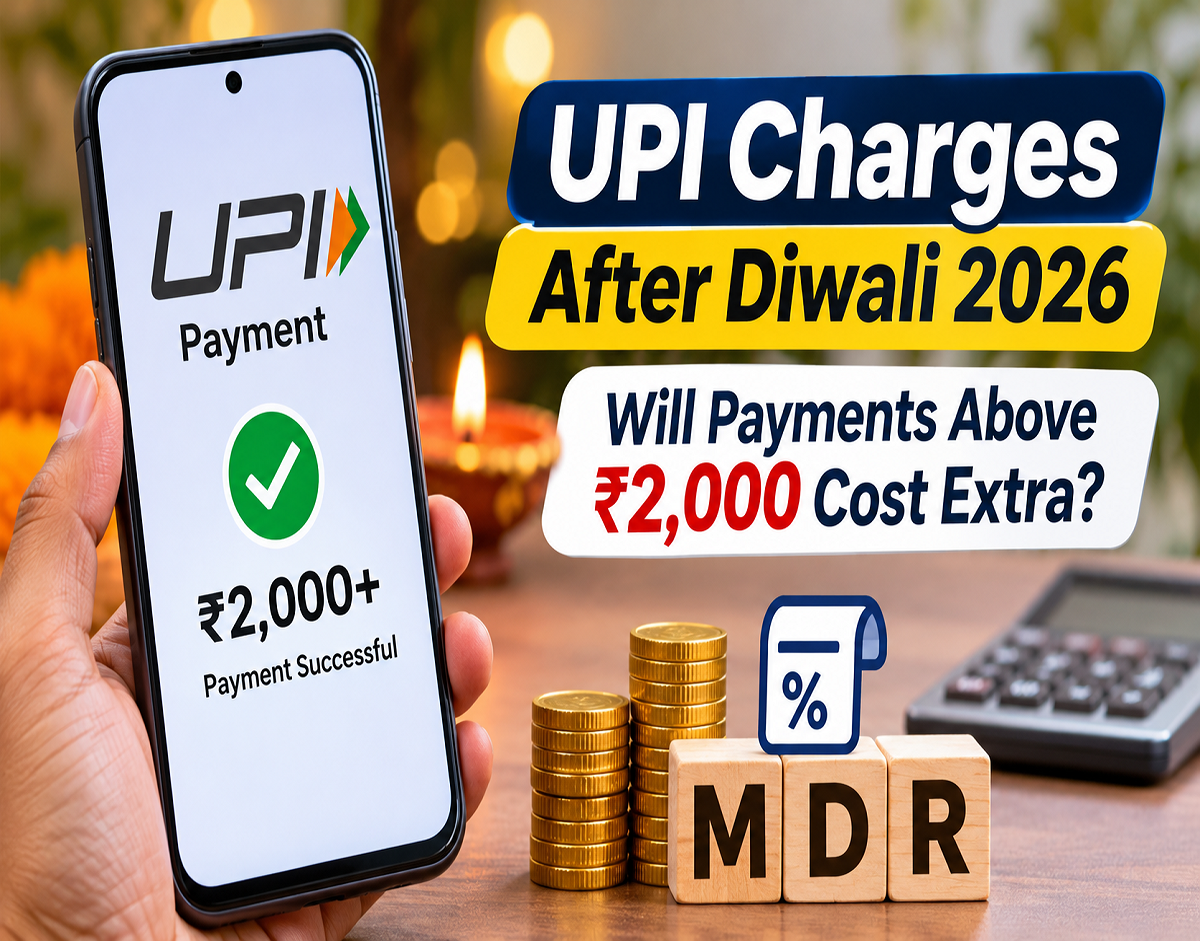
UPI Payment Charges 2026: With the Diwali celebrations coming to an end, questions about possible charges on Unified Payments Interface (UPI) transactions have resurfaced. Reports suggest that a proposed Merchant Discount Rate (MDR) of 0.4% on certain merchant payments exceeding ₹2,000 could be introduced after the festive season. However, ordinary users of Google Pay, PhonePe, Paytm and other UPI applications should understand that merchant transaction charges and customer payment fees are not the same.
UPI Transaction Charges: What Is Changing After Diwali?
Digital payments have become an essential part of everyday financial transactions in India. From purchasing groceries and paying restaurant bills to shopping online and transferring money, millions of consumers rely on UPI for convenient payments.
Following the Diwali festivities, discussions surrounding a proposed MDR structure have attracted attention among merchants and consumers.
According to a November 10 report, the National Payments Corporation of India (NPCI) had initially considered October 15, 2026, as the implementation date for revised merchant transaction charges. The report states that the proposed rollout was subsequently postponed to avoid additional financial pressure during the festive shopping period.
The revised implementation date has reportedly not yet been announced.
Importantly, the reported proposal should not be confused with an already implemented nationwide charge on all UPI transactions. Any new fee structure would require confirmation through an applicable official notification.
What Is MDR and Why Does It Matter?
Merchant Discount Rate, commonly known as MDR, is a transaction-related fee associated with accepting digital payments.
It is generally charged to merchants for payment acceptance and processing services. Depending on the payment arrangement, the fee may be distributed among participating payment service providers and financial institutions.
For example, when a customer pays a retailer through an eligible digital payment method, the merchant may incur a processing charge under the applicable pricing structure.
MDR is different from a direct fee collected from the customer.
This distinction is particularly important because headlines about UPI charges can create confusion among users who regularly transfer money or make purchases through QR codes.
Proposed UPI MDR Rates for Transactions Above ₹2,000
The November 10 report refers to an NPCI FAQ dated September 15, 2026, outlining a proposed fee structure for selected person-to-merchant transactions.
The following figures reflect the reported proposal, not independently confirmed charges currently in force.
| Transaction category | Reported MDR structure |
|---|---|
| Eligible merchant payments above ₹2,000 | 0.4% |
| Maximum MDR on general eligible transactions | ₹300 |
| Railway, telecom, insurance and fuel merchants | Flat ₹5 per eligible transaction |
| Capital market-related merchant payments | 0.02%, capped at ₹300 |
| Person-to-person UPI transfers | Not covered by the reported MDR proposal |
Under this proposed arrangement, the charges would apply only to qualifying merchant transactions rather than every payment made using UPI.
How Much Would Merchants Pay Under the Proposed Rules?
If the reported 0.4% MDR is introduced, the amount payable by an eligible merchant would depend on the transaction value, subject to the stated maximum limit.
Here are some illustrative calculations:
| UPI payment amount | MDR at 0.4% |
|---|---|
| ₹2,500 | ₹10 |
| ₹5,000 | ₹20 |
| ₹10,000 | ₹40 |
| ₹25,000 | ₹100 |
| ₹50,000 | ₹200 |
| ₹1,00,000 | ₹300 after applying the cap |
For instance, a qualifying merchant transaction worth ₹1 lakh would generate a fee of ₹400 at 0.4%. However, if the proposed ₹300 ceiling applies, the merchant's MDR liability would be restricted to ₹300.
These examples are intended to explain the reported pricing model and should not be treated as confirmation that the charges have taken effect.
Will Google Pay, PhonePe and Paytm Users Have to Pay Extra?
One of the biggest concerns among consumers is whether they will be charged additional money when scanning a QR code or paying through a UPI application.
According to the reported proposal, the MDR would be levied on eligible merchants receiving payments, rather than automatically being deducted from the customer's account.
Therefore, a customer making a ₹5,000 payment would not necessarily have to pay an additional ₹20 simply because the merchant might incur a 0.4% MDR.
However, merchant-side costs and any separate charges disclosed by businesses should not be confused. Whether a merchant can pass on a particular payment cost depends on the applicable rules and commercial arrangements.
Consumers should always verify the final payment amount displayed before authorising a transaction.
Will Money Transfers Between Friends and Family Remain Free?
Yes. The proposed MDR framework does not introduce charges on person-to-person (P2P) UPI transfers, regardless of the transaction amount.
This means individuals can continue sending money to family members, transferring funds between their own bank accounts and splitting expenses with friends without paying the proposed merchant fee.
The Ministry of Finance clarified in September 2026 that all P2P UPI transfers would remain outside the MDR framework. It also stated that approximately 96% of merchant transactions would remain unaffected by the proposed charges.
Small Shopkeepers and Street Vendors May Also Remain Exempt
The proposed rules include protection for eligible small businesses.
Street vendors and small merchants receiving up to ₹1 lakh per month through qualifying UPI QR payments under the Person-to-Person-Merchant (P2PM) category would continue to benefit from the zero-MDR arrangement.
This provision is intended to protect small retailers, neighbourhood shops and other businesses that rely on affordable digital payment acceptance.
Consequently, the proposed fee would not automatically apply to every shopkeeper receiving a UPI payment exceeding ₹2,000.
Why Was the October 15 Implementation Date Postponed?
NPCI announced on October 13, 2026, that the planned introduction of MDR on selected UPI merchant transactions would be delayed until after Diwali.
The decision followed concerns about introducing additional payment-processing costs during one of India's busiest shopping periods.
Retail organisations had raised questions about the impact on merchants, particularly businesses operating with limited profit margins.
Postponing implementation gave businesses and payment service providers additional time to prepare for the proposed changes.
When Will the New UPI MDR Rules Take Effect?
As of the November 10 update, the revised implementation date had not been confirmed in the official announcements reviewed.
Although NPCI indicated that the charges would be introduced after Diwali, this does not mean they automatically became effective once the festival ended.
Merchants and customers should wait for a formal notification specifying the commencement date and applicable conditions.
The bottom line: The proposed 0.4% MDR concerns selected merchant transactions above ₹2,000, not ordinary person-to-person transfers. Customers using UPI for everyday payments should not assume that a new transaction fee has already been imposed.