Technology
Investment Scam Alert 2026: Beware of Fake Trading Groups, Guaranteed Profit Tips and Online Stock Market Fraud
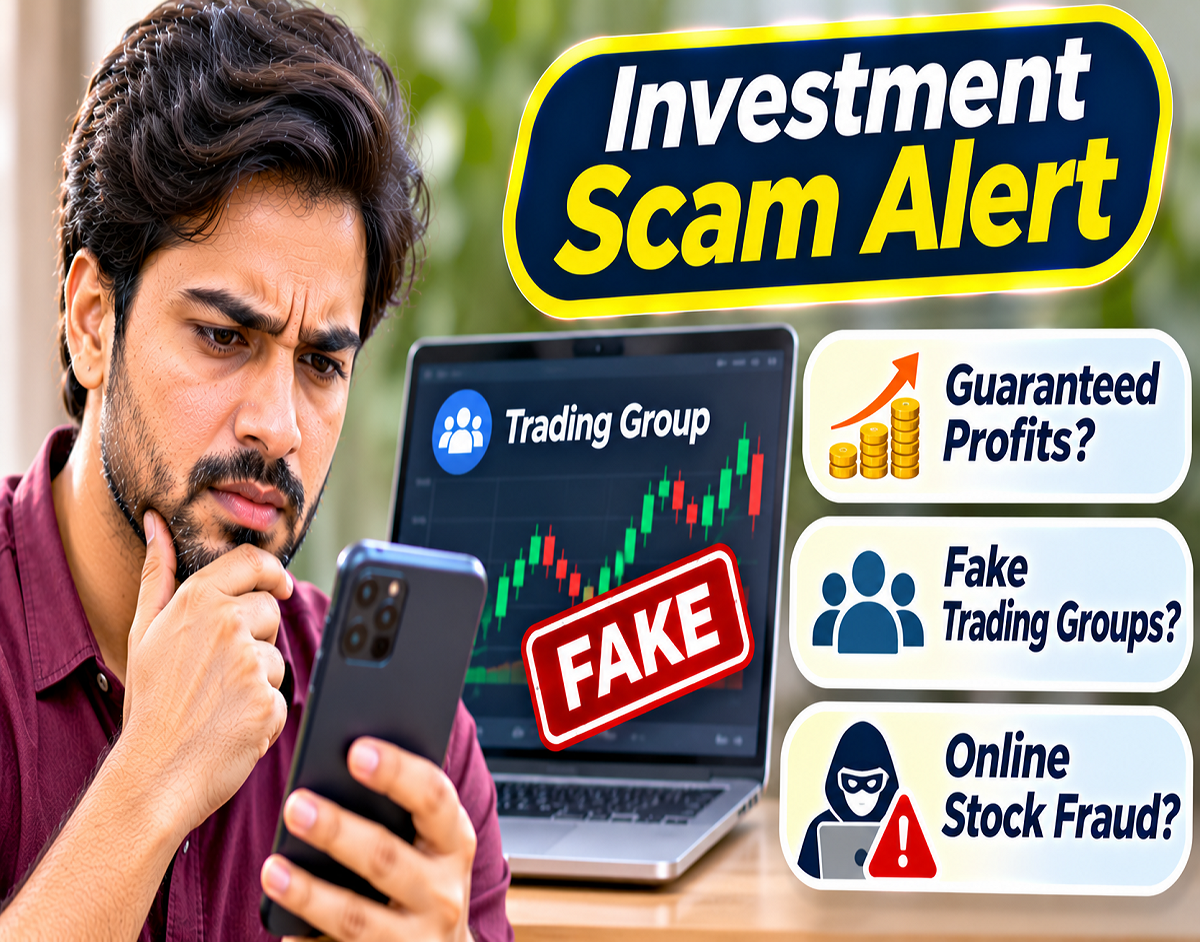
Investment Fraud Alert 2026: The promise of earning quick money through stock market investments can be attractive, especially when social media groups and online trading communities claim to offer exclusive tips. However, cybercriminals are increasingly using fake investment groups, impersonated financial experts and unrealistic profit guarantees to deceive unsuspecting investors.
A cyber safety awareness message associated with the UPI Chalega campaign has warned people against trusting investment recommendations without proper verification.
The advisory highlights how fraudsters may create fake trading groups and use claims of expert knowledge to persuade individuals to transfer money into fraudulent investment schemes.
People are being advised to pause before investing, verify the credibility of investment opportunities and avoid decisions based on pressure or promises of unusually high returns.
Those who experience financial cyber fraud should immediately report the incident through the national cybercrime helpline 1930.
Investment Fraud Alert 2026: Key Highlights
| Particulars | Details |
|---|---|
| Main Concern | Fake online investment and trading scams |
| Common Platforms | Messaging apps, social media and fraudulent websites |
| Fraud Techniques | Fake trading groups and impersonated investment experts |
| Major Warning Sign | Guaranteed or unusually high profits |
| Financial Cybercrime Helpline | 1930 |
| Cybercrime Complaint Portal | cybercrime.gov.in |
| UPI Support Portal | upihelp.npci.org.in |
| Main Safety Advice | Pause, verify and invest carefully |
What Is an Online Investment Scam?
An online investment scam occurs when fraudsters mislead people into transferring money by presenting fake or deceptive investment opportunities.
These schemes may involve stocks, commodities, cryptocurrencies or other financial products.
Fraudsters frequently claim that they possess special market knowledge, access to exclusive trading opportunities or strategies capable of generating extraordinary profits.
In some cases, criminals impersonate legitimate investment professionals or use the names of established financial institutions without authorisation.
Victims may initially receive convincing messages, fabricated performance reports or screenshots showing supposed investment gains.
However, the investment platform or trading arrangement may be fraudulent, and the money transferred by the victim may never be invested in a genuine financial product.
How Fake Trading Groups Trap Investors
One method highlighted in the awareness message involves fraudulent trading groups.
Scammers may create groups on WhatsApp, Telegram or other messaging platforms and present them as communities managed by experienced market analysts.
Members may receive daily stock recommendations, market updates and messages claiming that other participants have earned substantial profits.
Some of these messages may come from accounts controlled by the fraudsters themselves.
The apparent success stories can create a false impression that the investment opportunity is legitimate.
Once a person begins trusting the group, the organisers may encourage them to transfer money or register on an unfamiliar trading website.
The victim may then be pressured to invest larger amounts.
Common Stages of a Fake Trading Group Scam
- Initial Contact: A person receives an invitation to join an investment or trading group.
- Trust Building: The group shares market commentary, profit screenshots and testimonials.
- Expert Impersonation: An administrator claims to be a professional trader or investment adviser.
- Investment Offer: Members are encouraged to invest through a specific application or payment account.
- Fabricated Profits: A fraudulent dashboard may display artificial gains.
- Additional Payment Demands: Victims may be asked to pay taxes, commissions or withdrawal charges.
- Loss of Access: Fraudsters may stop responding or prevent the victim from withdrawing funds.
Not every online investment community is fraudulent, but these patterns should be treated as warning signs.
Beware of Fake Investment Experts
Fraudsters may impersonate well-known market analysts, financial advisers or investment professionals.
They can create social media profiles using photographs, names and logos associated with genuine individuals or organisations.
Some may circulate edited videos or misleading promotional material to make their claims appear credible.
Investors should not assume that a person is authorised to provide investment advice simply because they have a large social media following or claim professional experience.
In India, investors can check the registration details of relevant market intermediaries through official Securities and Exchange Board of India (SEBI) resources.
Registration is an important verification step, although it does not guarantee that any investment will be profitable.
Why Guaranteed Profit Claims Are Dangerous
Financial markets involve uncertainty, and investment returns can fluctuate.
A person promising unusually high returns without any possibility of loss may be making a misleading or fraudulent claim.
Scammers often use phrases such as guaranteed daily income, risk-free trading or exclusive profit opportunities.
These claims are designed to reduce caution and encourage quick decisions.
Investors should remember that genuine investment opportunities generally involve some degree of risk.
Even investments offered through regulated intermediaries can lose value.
How to Identify a Fake Trading or Investment Scheme
| Warning Sign | Why It Should Raise Concern |
|---|---|
| Guaranteed High Returns | Financial market profits cannot generally be guaranteed |
| Pressure to Invest Immediately | Prevents careful verification |
| Unknown Trading Application | May be an unauthorised or fraudulent platform |
| Payments to Personal Accounts | Funds may not reach a legitimate investment intermediary |
| Fake Profit Screenshots | Can be fabricated to attract investors |
| Withdrawal Fees Demanded Repeatedly | May indicate an attempt to extract additional money |
| Unverified Expert Credentials | Adviser may be impersonating a professional |
| Requests for OTPs or UPI PINs | May expose financial accounts to misuse |
How to Verify an Investment Opportunity Before Sending Money
Before investing through an unfamiliar platform or accepting advice from an online group, complete several important checks.
Check the Intermediary's Registration
Visit the official SEBI website to access relevant information about registered market intermediaries.
Verify the registration details independently rather than relying on screenshots or certificates shared by a group administrator.
Confirm the Official Website
Fraudulent investment websites may closely resemble legitimate platforms.
Check the website address carefully and avoid opening investment links from unsolicited messages.
Avoid Transfers to Unknown Accounts
Be cautious if someone asks you to transfer investment money to an individual's personal bank account or an unfamiliar UPI ID.
Confirm the authorised payment arrangements directly with the legitimate intermediary.
Do Not Share Confidential Credentials
Never disclose your UPI PIN, banking password, OTP or other sensitive financial credentials.
These details are not required simply to receive investment advice.
Understand the Investment Product
Before committing money, review the product's risks, charges, withdrawal conditions and regulatory status.
If the investment cannot be clearly explained or independently verified, avoid making a rushed decision.
Can UPI Be Used in Investment Scams?
Yes. Fraudsters may ask victims to transfer money through UPI, bank transfers or other digital payment methods.
The payment technology itself is not necessarily fraudulent; the risk arises when criminals deceive users into sending funds to unauthorised recipients.
For example, a fake trading group administrator may share a UPI ID and claim that the payment will be credited to a special investment account.
If the account actually belongs to a fraudster, the victim may lose the transferred money.
Always verify the recipient and purpose before approving a UPI transaction.
Remember that a UPI PIN is used to authorise certain outgoing transactions and is not required to receive a normal incoming payment.
What to Do If You Become a Victim of Investment Fraud
If you suspect that you have transferred money to a fraudulent investment platform, immediate reporting is important.
First, contact your bank or payment service provider and report the suspicious transaction.
Next, call the national cybercrime helpline 1930.
You can also submit a complaint through the official National Cyber Crime Reporting Portal.
Keep relevant evidence, including payment receipts, transaction IDs, group messages, website addresses, screenshots and contact numbers.
Do not delete conversations with suspected fraudsters before preserving the evidence.
Prompt reporting may improve the possibility of intervention, although recovery of lost funds cannot be guaranteed.
Where to Get Help With UPI Transactions
For UPI-related assistance, users can visit NPCI's official UPI Help portal.
The portal provides access to support information related to UPI transactions and services.
However, general UPI assistance should not replace an urgent cybercrime complaint when money has been lost to fraud.
Victims should contact their bank and report the incident through 1930 or cybercrime.gov.in without delay.
Important Investment Safety Tips
- Avoid investment schemes promising guaranteed or unusually high returns.
- Do not trust trading groups merely because they display profit screenshots.
- Verify the identity and registration of financial advisers and intermediaries.
- Never transfer investment funds to unknown personal accounts.
- Avoid installing trading applications from unverified links.
- Do not share OTPs, UPI PINs or banking passwords.
- Be cautious of requests for additional payments to release supposed profits.
- Preserve evidence and report suspected financial fraud promptly.
Why Awareness Is Important for First-Time Investors
Many people begin investing after watching online videos, reading social media posts or receiving recommendations from friends.
While digital platforms can provide useful financial information, they can also expose inexperienced investors to misleading claims.
Fraudsters may exploit a person's limited understanding of market risks by presenting fabricated success stories.
Learning to distinguish legitimate investment services from suspicious offers is therefore an essential part of financial literacy.
Investors should take time to understand where their money is going and who is responsible for managing it.
Conclusion
The UPI Chalega cyber awareness message reminds people that promises of quick profits should never replace proper investment verification.
Fake trading groups, impersonated financial experts and misleading investment platforms can expose individuals to significant financial losses.
Before investing, verify the credentials of the adviser or intermediary, understand the risks and avoid transferring money under pressure.
The most important message is simple: Pause. Verify. Invest wisely.
If you experience financial cyber fraud, contact your bank and call 1930 immediately. For UPI-related assistance, use NPCI's official UPI Help portal.
Source Credit: UPI Chalega / NPCI cyber safety awareness message on fake trading groups, investment fraud and safe digital payments. Official references: NPCI UPI Help, National Cyber Crime Reporting Portal and SEBI.