
Business
RBI Floating Rate Loan Rules: New Changes Proposed for EMI, Interest Rates and Loan Benchmark
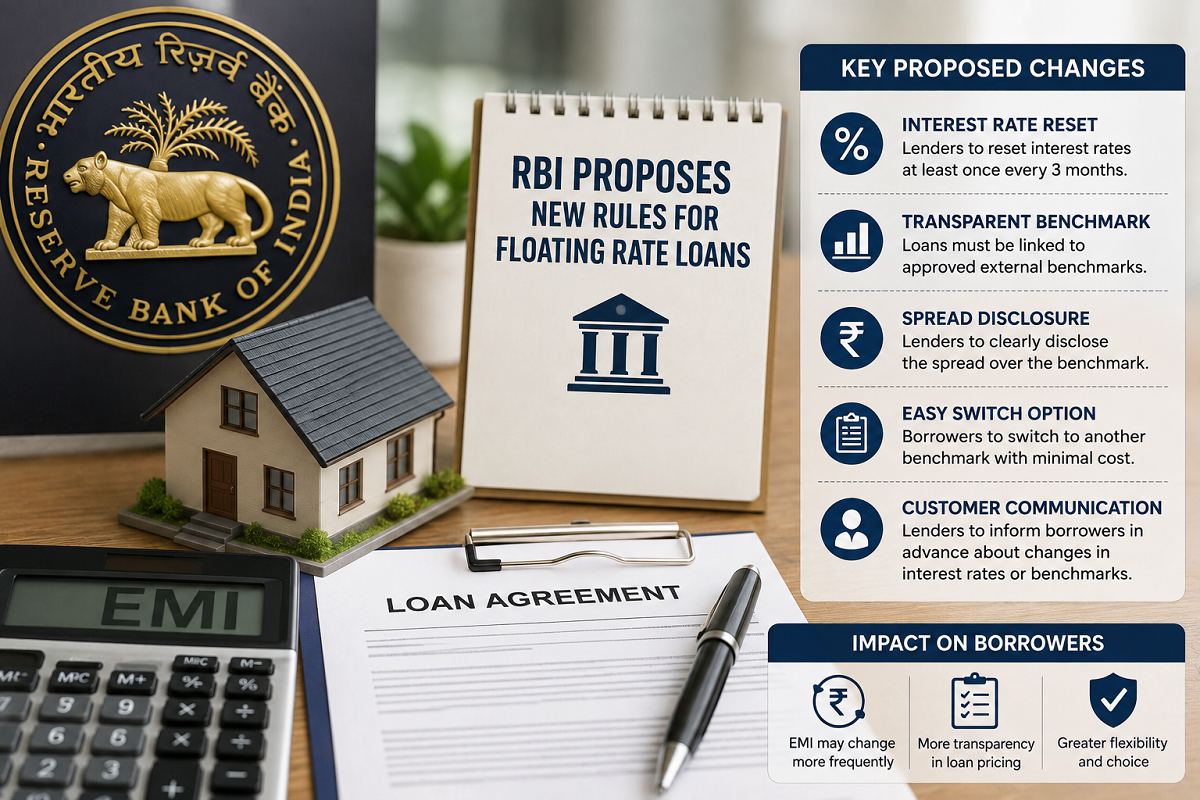
RBI Floating Rate Loan Rules 2026: Borrowers with home loans, personal loans or other floating-rate loans could see important changes in the way their interest rates are determined. The Reserve Bank of India (RBI) has proposed a new framework aimed at making loan benchmarks, interest-rate resets and lender spreads more transparent.
One of the key proposals is that existing loans should not be shifted to the new framework without the borrower’s consent. The proposed migration would also be carried out without charging the borrower a fee.
It is important to note that these are draft rules. Borrowers should wait for the final RBI guidelines before assuming that their existing EMI or interest rate will automatically change.
What Is a Floating Rate Loan?
Unlike a fixed-rate loan, the interest rate on a floating-rate loan can change during the loan tenure. The rate is generally linked to a benchmark.
When the benchmark changes, the interest rate charged on the loan may also change. Depending on the loan terms, this can affect the borrower’s EMI, remaining tenure, or both.
RBI’s proposed framework seeks to make this process easier for borrowers to understand.
Loan Benchmark Details Must Be Clear
Under the proposed rules, lenders would need to clearly disclose the benchmark linked to the floating-rate loan.
Borrowers should be able to understand important details such as the benchmark used for calculating the interest rate, how frequently the rate is reset and when the next reset will take place.
This could make it easier for customers to understand why their loan interest rate or EMI has changed.
Borrower Consent Required for Migration
One of the most significant proposals concerns existing floating-rate loans.
If an existing loan is to be migrated from the current system to the new framework, the borrower’s consent would be required.
This means lenders would not simply be able to shift eligible existing borrowers to the new system without their approval.
The proposed migration would also be carried out without charging a migration fee.
What Happens to the Interest Rate After Migration?
Borrowers are often concerned that moving from one benchmark system to another could immediately make their loan more expensive.
The proposed framework includes safeguards intended to prevent customers from being unfairly disadvantaged merely because their loan is migrated to a new benchmark arrangement.
Borrowers should nevertheless compare their existing interest rate, benchmark and spread with the terms offered under the new framework before giving consent.
Lenders' Spread Could Become More Transparent
The final interest rate on a loan is not determined by the benchmark alone. Lenders can add a spread over the benchmark.
This spread can include components related to the borrower’s credit risk, operating costs and other factors.
RBI's draft framework proposes tighter conditions around changes to these components. For example, changes related to credit risk should be linked to an assessment of the borrower’s credit profile rather than being altered without a clear basis.
Greater transparency in spreads could help borrowers understand why two customers with similar loans may be charged different interest rates.
What If the Existing Benchmark Is Discontinued?
A loan may be linked to a benchmark that is subsequently discontinued or becomes unavailable.
The proposed framework also seeks to provide clarity for such situations. Lenders may need to provide an alternative benchmark or establish a fallback mechanism.
The objective is to ensure that borrowers are not left uncertain about how their interest rate will be calculated if the original benchmark disappears.
How Could the New Rules Affect Your EMI?
Suppose your floating-rate home loan is linked to a benchmark that rises. Your loan interest rate may subsequently increase.
Depending on the terms of the loan, the lender may increase the EMI, extend the repayment tenure, or use a combination of the two.
Similarly, if the benchmark falls and the benefit is transmitted to the borrower, the applicable loan rate may decline.
The proposed rules are therefore important because they could make it easier for borrowers to see when the benchmark changed, when their loan rate was reset and how the lender calculated the final interest rate.
What Should Existing Borrowers Check?
If you currently have a floating-rate home or personal loan, check your loan documents or latest statement for the following details:
- Current interest rate
- Benchmark linked to the loan
- Spread charged over the benchmark
- Interest-rate reset frequency
- Next reset date
- Remaining loan tenure
- Current EMI
Knowing these details will make it easier to evaluate any migration option offered after the final rules come into effect.
Should You Change Your Loan Right Now?
There is no need to rush into changing your loan solely because of the proposed framework.
These are draft provisions, and the final rules may differ. Borrowers should wait for the RBI's final guidelines and subsequently check the terms offered by their lender.
If migration is offered, compare the effective interest rate, remaining tenure, EMI, benchmark and spread before making a decision.
Bottom Line
RBI's proposed floating-rate loan framework could make interest-rate calculations more transparent for borrowers. Two of the most borrower-friendly proposals are mandatory customer consent before migrating an existing loan and no fee for such migration.
For home-loan and other floating-rate borrowers, the bigger benefit may be greater clarity about why their interest rate and EMI change over time.
Disclaimer: This article is for general information only. The RBI framework discussed above is based on draft proposals and may change before final implementation. Borrowers should check the final RBI guidelines and their lender's terms before making financial decisions.