Business
8th Pay Commission Update: Panel to Visit Key Cities; Know Meeting Schedule and When Salaries May Rise
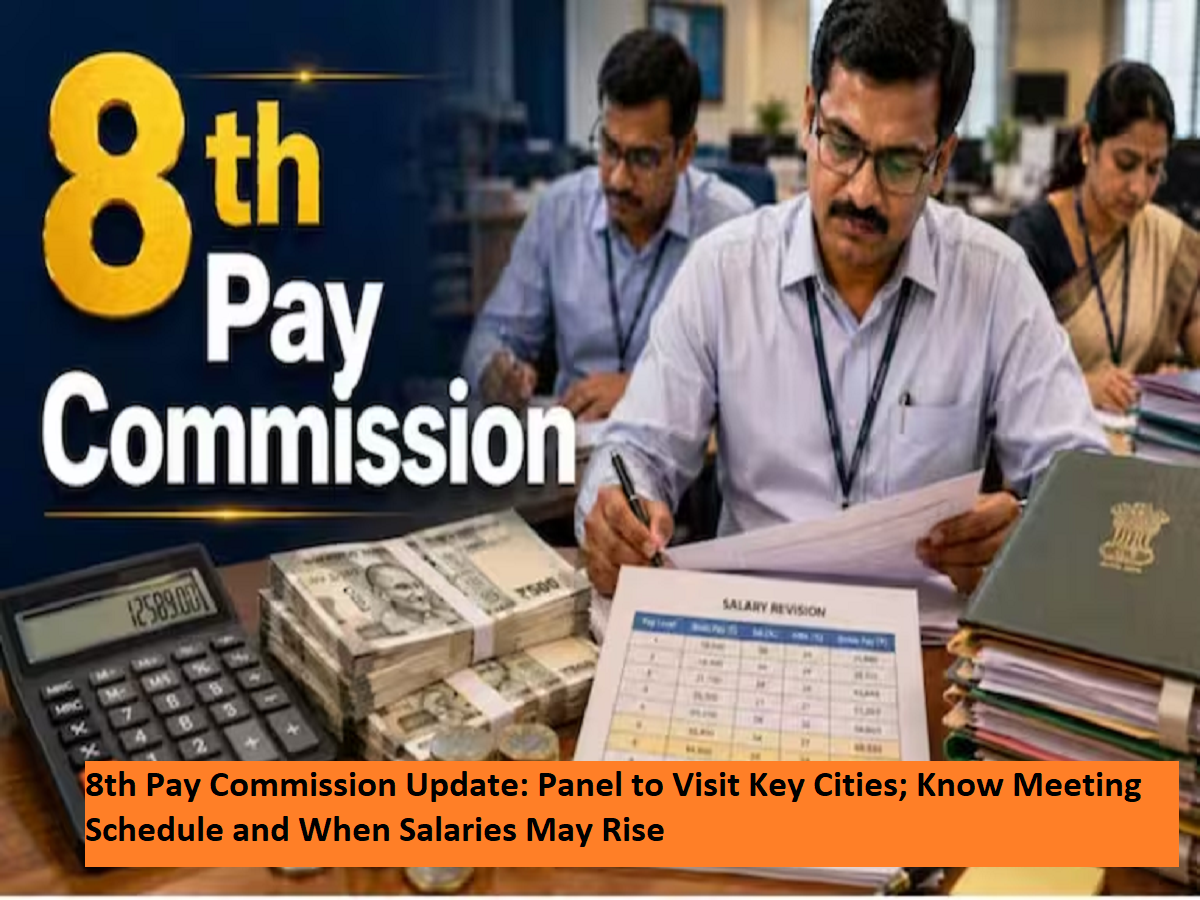
8th Pay Commission Latest Update: The 8th Central Pay Commission (8th CPC) is moving into an important consultation phase, with the panel preparing to visit several cities during August and September 2026. The meetings are expected to give central government employees, pensioners, staff associations and other stakeholders an opportunity to present their views on salaries, allowances, pensions and working conditions.
The commission, headed by retired Justice Ranjana Prakash Desai, is expected to examine the existing compensation structure and recommend changes for central government employees and pensioners.
Among the key issues likely to attract attention are the fitment factor, minimum basic pay, pension revision, Dearness Allowance-related concerns, House Rent Allowance (HRA), Transport Allowance (TA) and other employee benefits.
8th Pay Commission City Visit Schedule
The commission has planned consultations across several cities. The schedule mentioned for the upcoming visits is:
| City | Scheduled Visit |
|---|---|
| Jaipur | August 31-September 1, 2026 |
| Chennai | September 7-8, 2026 |
| Puducherry | September 9, 2026 |
| Chandigarh | September 16-18, 2026 |
| Mumbai | Railway-related consultations/field visit |
The Mumbai visit is expected to include interactions related to the Central Railway zone, allowing the commission to understand working conditions and issues faced by railway employees.
Stakeholders seeking appointments for the Jaipur, Chennai and Puducherry consultations were asked to submit their requests by August 18, while the deadline for seeking an appointment for the Chandigarh meeting is August 25.
Why Are These Meetings Important?
A Pay Commission does much more than recommend a simple percentage increase in salaries.
Its work involves reviewing the entire pay structure of central government employees while considering inflation, economic conditions, employee responsibilities, existing allowances, retirement benefits and the government's financial position.
Employee organisations and pensioners' associations can use these consultations to explain shortcomings in the existing system and submit proposals for the next salary and pension framework.
The feedback collected through such meetings could therefore become an important input while the commission prepares its recommendations.
Fitment Factor and Basic Pay Likely to Remain in Focus
One of the most closely watched issues surrounding the 8th Pay Commission is the fitment factor.
A fitment factor is used while transitioning from an existing pay structure to a revised one. Changes to this factor can have a significant impact on the calculation of revised basic pay.
Employee organisations are expected to push for an increase that adequately reflects inflation and the rise in the cost of living since the implementation of the previous Pay Commission.
However, employees should remember that no final fitment factor or revised minimum basic salary should be considered confirmed until the commission submits its recommendations and the government takes a decision on them.
HRA, TA and Other Allowances Could Be Reviewed
Salary revision is only one part of the Pay Commission's work.
Allowances such as House Rent Allowance and Transport Allowance are also important components of the compensation received by government employees.
Employee representatives are expected to raise issues related to the cost of housing, transportation and day-to-day living, particularly in cities where expenses have risen substantially.
The commission may examine whether the existing allowance structure remains suitable or requires restructuring.
Pensioners Are Also Watching the 8th CPC Closely
The Pay Commission is equally important for retired government employees.
Pension-related issues, retirement security and the financial impact of inflation on senior citizens are likely to feature prominently during stakeholder consultations.
Representatives of pensioners may seek changes that provide better protection against rising living and healthcare expenses.
However, the final pension formula will become clear only after the commission completes its review and the government considers its recommendations.
Who Could Benefit From the 8th Pay Commission?
The recommendations are expected to affect a very large number of serving and retired government personnel.
Estimates cited in reports indicate that the exercise could ultimately have implications for more than one crore employees and pensioners, including central government staff as well as retired personnel from departments such as Railways and Defence.
Because of the scale involved, even a relatively small change in the pay or pension formula can have a significant impact on both household finances and government expenditure.
When Will the 8th Pay Commission Submit Its Report?
The 8th Pay Commission was constituted on November 3, 2025 and was given an 18-month period to complete its work and submit recommendations.
Based on that timeline, its report is expected around May 2027, unless the schedule is subsequently changed or extended.
The commission's current consultations are therefore an important part of the process leading up to the final report.
When Will Central Government Employees Get a Salary Hike?
This remains the biggest question for employees.
Submission of the Pay Commission's report does not automatically mean revised salaries will immediately start appearing in bank accounts. The recommendations first have to be examined by the central government.
The government may accept some recommendations, modify others or seek further examination before announcing the final implementation framework.
There is therefore a difference between the effective date of revised pay and the date on which employees actually start receiving revised salaries.
If implementation happens later but the government decides to give retrospective effect from an earlier date, eligible employees could potentially receive arrears. However, no such arrangement should be treated as confirmed until an official government decision is announced.
Claims that employees will definitely have to wait until 2029 or 2030 for the full benefit should also be treated cautiously, as the actual implementation schedule has not yet been finalised.
What Should Employees Watch Next?
The upcoming Jaipur, Chennai, Puducherry, Chandigarh and other consultations will be important milestones in the 8th Pay Commission process.
Employees should particularly watch for official developments concerning the fitment factor, minimum basic pay, pension formula, HRA, TA, other allowances and the effective date of implementation.
For now, figures circulating about the exact salary increase remain proposals or estimates rather than final decisions.
The clearest picture will emerge only after the commission completes stakeholder consultations, submits its report and the central government announces which recommendations it has accepted.
Disclaimer: Information regarding proposed salary increases, fitment factors and implementation timelines should not be considered final unless officially notified by the Government of India or the 8th Central Pay Commission.