
Trending
Nepal's Notorious Wild Elephant Linked to Tragic Deaths of Four Members of the Same Family Over 14 Years
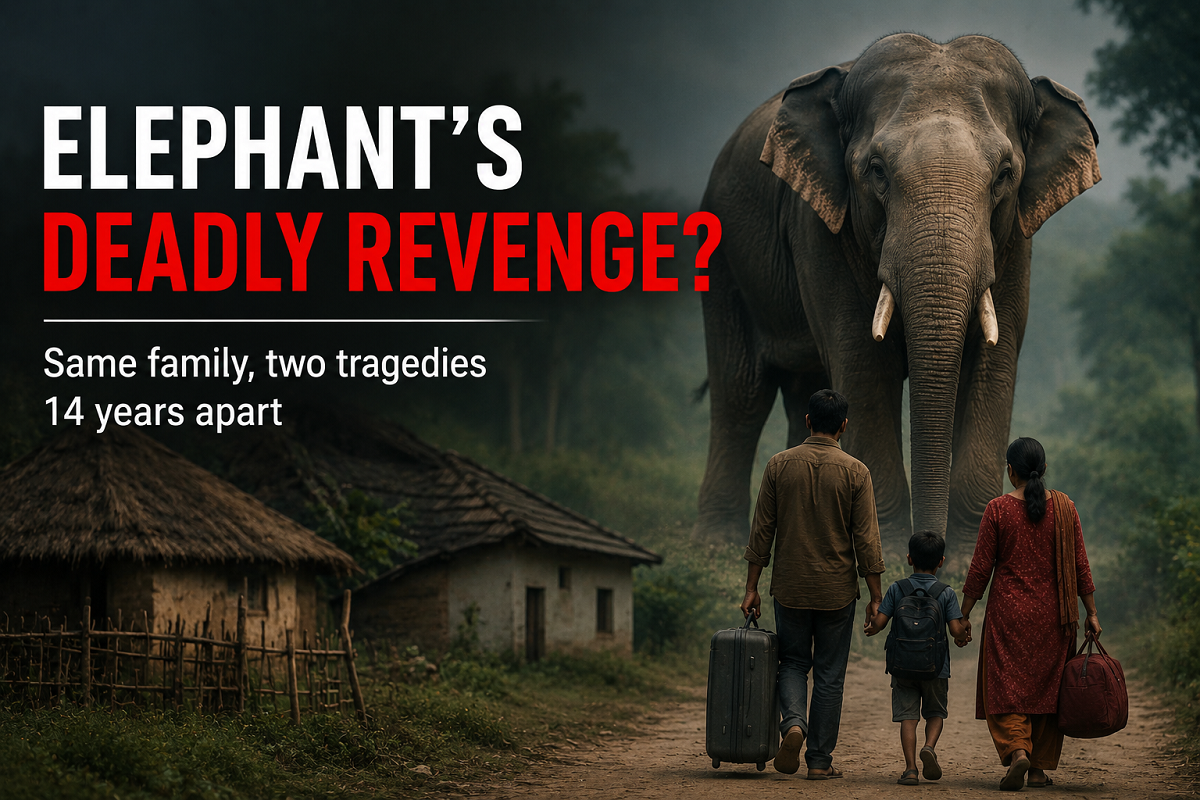
Nepal Elephant Incident: A heartbreaking incident from Nepal has drawn widespread attention after a wild elephant known as Dhurbe was reportedly involved in the deaths of two more members of a family that had relocated years earlier following a previous fatal attack. The case has sparked intense discussion online, with many expressing sympathy for the affected family while wildlife experts point to the long-running issue of human-elephant conflict.
Family Suffers Another Tragic Loss Years After Relocating
According to reports from Nepal, the latest incident occurred near Chitwan National Park, where a wild elephant allegedly entered a residential area and fatally attacked a 25-year-old woman and her four-year-old son.
The victims belonged to the same family that had previously experienced a fatal elephant attack more than a decade earlier. After losing close relatives in that earlier incident, the family reportedly moved to a different location in the hope of living safely away from the elephant's range.
However, the recent tragedy has once again placed the family at the center of a devastating wildlife conflict.
Earlier Attack Forced the Family to Leave Their Village
Reports indicate that the family's ordeal began in 2012, when the elephant known locally as Dhurbe allegedly attacked and killed the parents of a resident named Shanichara Bote near Madi, close to Chitwan National Park.
Following that incident, the family decided to relocate approximately 14 kilometers away, crossing the Rapti River and settling in another area believed to be safer.
For years, they believed the move had reduced the risk of future encounters with the animal.
Latest Incident Revives Painful Memories
The recent attack reportedly occurred after the elephant entered the family's new locality.
According to local reports, Shanichara Bote's daughter-in-law and young grandson lost their lives during the incident. The tragedy has left the family devastated, as they had hoped relocating years earlier would protect them from future encounters with the animal.
The incident has once again highlighted the dangers faced by communities living close to forest areas and wildlife habitats.
Dhurbe's History Has Drawn Attention
The elephant known as Dhurbe has been mentioned in multiple reports over the years because of its repeated involvement in fatal encounters with humans.
According to officials cited in local reports, the elephant has allegedly been linked to multiple human fatalities over the past decade. Wildlife authorities have monitored the animal because of its repeated movement into human settlements near protected forest areas.
Experts note that while such incidents are extremely tragic, they usually occur within the broader context of increasing human-wildlife interactions around shrinking natural habitats.
Human-Elephant Conflict Remains a Serious Challenge
Conservationists say Nepal and several parts of South Asia continue to face challenges related to human-elephant conflict.
As forests become fragmented and human settlements expand closer to wildlife corridors, encounters between elephants and people have become more frequent. Wild elephants may enter villages in search of food or while following traditional migration routes, increasing the risk of property damage and fatal accidents.
Wildlife departments often work to monitor elephant movements, create early-warning systems, and educate local communities on safety measures, although preventing every encounter remains difficult.
Social Media Reacts to the Incident
The tragic story has generated significant attention across social media platforms, where many users have shared condolences for the affected family.
Some posts have focused on the elephant's reportedly strong memory, while others have speculated about the unusual circumstances surrounding the repeated attacks. However, wildlife experts caution against attributing human motives such as revenge or intentional targeting without scientific evidence.
Elephants are known for their intelligence and memory, but experts emphasize that animal behavior is influenced by many environmental and biological factors.
A Reminder of the Need for Better Wildlife Management
The incident has renewed discussions about improving safety measures for communities living near forests while also protecting wildlife.
Experts believe stronger habitat conservation, improved monitoring of high-risk animals, early warning systems, and greater community awareness can help reduce future conflicts between humans and wild elephants.
As investigations and official assessments continue, the tragedy serves as a reminder of the complex challenges involved in balancing wildlife conservation with the safety of people living near protected forest areas.