Trending
Janmashtami 2026 Date: Krishna Janmashtami on September 4; Check Puja Muhurat and Paran Time
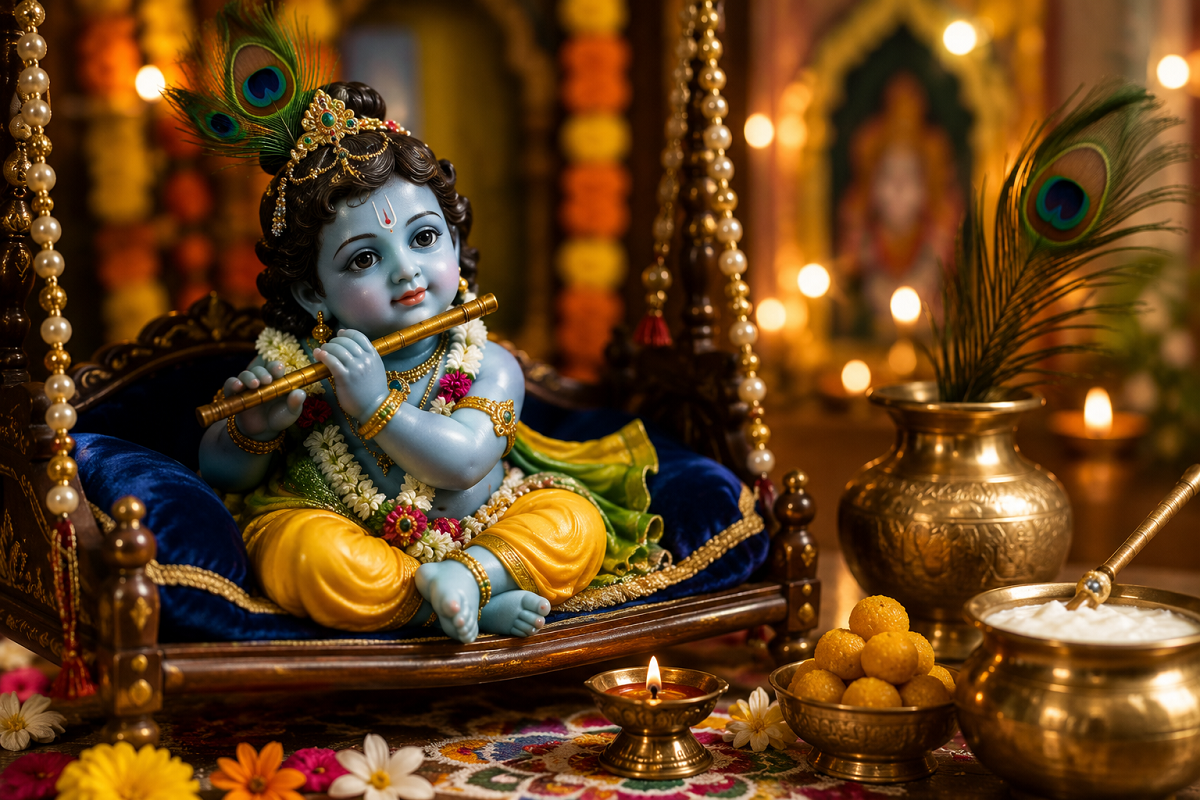
Krishna Janmashtami, one of the most widely celebrated Hindu festivals dedicated to Lord Krishna, will be observed on September 4, 2026. The festival commemorates the birth of Krishna and is marked by fasting, midnight worship, devotional songs, temple celebrations and special offerings.
Janmashtami falls on Krishna Paksha Ashtami during the Hindu month of Bhadrapada. Since Krishna is traditionally believed to have been born at midnight, the Nishita Kaal period holds special importance for Janmashtami worship.
In 2026, devotees planning to observe the fast or perform midnight puja should take note of the Ashtami Tithi, Nishita Puja Muhurat, Rohini Nakshatra and vrat paran timings.
When Is Krishna Janmashtami in 2026?
According to the Hindu calendar timings cited for the festival, Krishna Janmashtami will be celebrated on Friday, September 4, 2026.
The Ashtami Tithi of Krishna Paksha is scheduled to begin in the early hours of September 4 and continue past midnight.
The reported timings are:
Ashtami Tithi begins: September 4, 2026 at 2:25 AM
Ashtami Tithi ends: September 5, 2026 at 12:13 AM
Since the festival is associated with the midnight birth of Lord Krishna, devotees traditionally perform the principal worship late at night.
Janmashtami 2026 Nishita Puja Muhurat
Nishita Kaal is considered one of the most significant periods for Krishna Janmashtami worship because it corresponds with the traditional midnight celebration of Krishna's birth.
For Janmashtami 2026, the reported Nishita Puja Muhurat is from 11:57 PM on September 4 to 12:43 AM on September 5.
Devotees may arrange their Krishna puja, bhajans and other rituals so that the main worship takes place around midnight.
Temple celebrations can differ according to local traditions, and exact muhurat calculations may also vary slightly depending on location and the Panchang being followed.
Rohini Nakshatra Timing on Janmashtami 2026
Rohini Nakshatra has a special association with Lord Krishna's birth in Hindu tradition and is therefore closely observed during Janmashtami.
The timings provided for 2026 are:
Rohini Nakshatra begins: September 4, 2026 at 12:29 AM
Rohini Nakshatra ends: September 4, 2026 at 11:04 AM
Devotees who follow detailed Panchang-based observances may consider both the Ashtami Tithi and Rohini Nakshatra while planning their religious activities.
Janmashtami 2026 Vrat Paran Time
Those observing a Janmashtami fast traditionally break it at the appropriate paran time after completing the prescribed rituals.
According to the religious observance mentioned in the source information, the traditional paran can be performed after 6:01 AM on September 5, 2026.
Another practice commonly followed by some devotees is to conclude the fast after the midnight worship. Under that custom, the reported paran time is after 12:43 AM on September 5.
Because fasting practices vary across regions, families and religious traditions, devotees may follow the custom traditionally observed in their household or consult their local priest or Panchang.
How Is the Janmashtami Fast Observed?
Janmashtami fasting is considered an important part of Krishna worship for many devotees.
Those observing a strict vrat generally avoid grains during the fasting period. Depending on individual tradition, some people observe a nirjala fast without food and water, while others consume fruits, milk and foods permitted during religious fasting.
The fast is usually accompanied by prayer, chanting Krishna's name, reading religious texts and participating in bhajans.
Devotees who are elderly, pregnant, taking medication or managing a health condition should prioritize their health and seek appropriate medical advice before attempting a strict or prolonged fast.
What Happens at Midnight on Janmashtami?
The most anticipated part of Janmashtami celebrations takes place around midnight.
According to Hindu tradition, Lord Krishna was born to Devaki and Vasudeva in Mathura at midnight. Devotees therefore celebrate the symbolic birth of Bal Gopal when the clock approaches 12.
A Krishna idol, particularly a form representing Laddu Gopal or Bal Krishna, may be ceremonially bathed with ingredients such as milk, curd, honey, ghee and water.
This ritual is commonly known as abhishek.
Devotees may ring bells, blow a conch and chant Krishna mantras during the ceremony. The idol is then dressed in fresh clothes and ornaments before being placed in a decorated cradle.
Bhog and Jhulan Traditions on Krishna Janmashtami
Food offerings are another major part of Janmashtami celebrations.
Different regions and temples follow different traditions, with devotees preparing sweets and dishes associated with Krishna. Milk, curd, butter and mishri are particularly popular because Krishna's childhood stories are closely connected with dairy products.
Some elaborate celebrations include Chhappan Bhog, in which 56 varieties of food are symbolically offered to the deity.
Another popular ritual is Jhulan, where the child form of Krishna is placed in a beautifully decorated swing and gently rocked by devotees.
After the midnight worship, prasad is distributed among family members and other devotees.
Krishna Mantra for Janmashtami Worship
Devotees may chant Krishna mantras during the puja and midnight celebrations. One mantra traditionally recited is:
Om Devakinandanaya Vidmahe Vasudevaya Dhimahi, Tanno Krishnah Prachodayat.
Along with mantra chanting, devotees may recite passages from the Bhagavad Gita, sing Krishna bhajans or listen to stories about Krishna's life.
Why Is Janmashtami Celebrated?
Krishna Janmashtami celebrates the birth of Lord Krishna, regarded in Hindu tradition as an incarnation of Lord Vishnu.
Stories of Krishna's childhood in Mathura, Gokul and Vrindavan form an important part of the festival. Temples and homes are often decorated with flowers, lights and tableaux depicting scenes from his life.
In several parts of India, celebrations continue beyond the midnight puja. Maharashtra is particularly famous for Dahi Handi events, while Mathura and Vrindavan attract large numbers of devotees for elaborate temple festivities.
Janmashtami 2026: Key Timings to Remember
For devotees planning ahead, Krishna Janmashtami falls on September 4, 2026, with the principal celebrations continuing into the early hours of September 5.
The Ashtami Tithi begins at 2:25 AM on September 4, while the main Nishita Puja window is reported from 11:57 PM to 12:43 AM. The traditional vrat paran time is listed as after 6:01 AM on September 5, although some devotees may conclude their fast after the midnight worship according to their customary practice.
As Panchang timings can vary by city and calculation method, devotees should verify the precise local muhurat closer to the festival, particularly when performing time-specific rituals.
Disclaimer: The religious practices, rituals and timings mentioned here are based on traditional beliefs and the information provided in the source material. Customs may vary by region, family tradition and Panchang. Readers may consult a knowledgeable priest or local religious authority for observances specific to their location.