
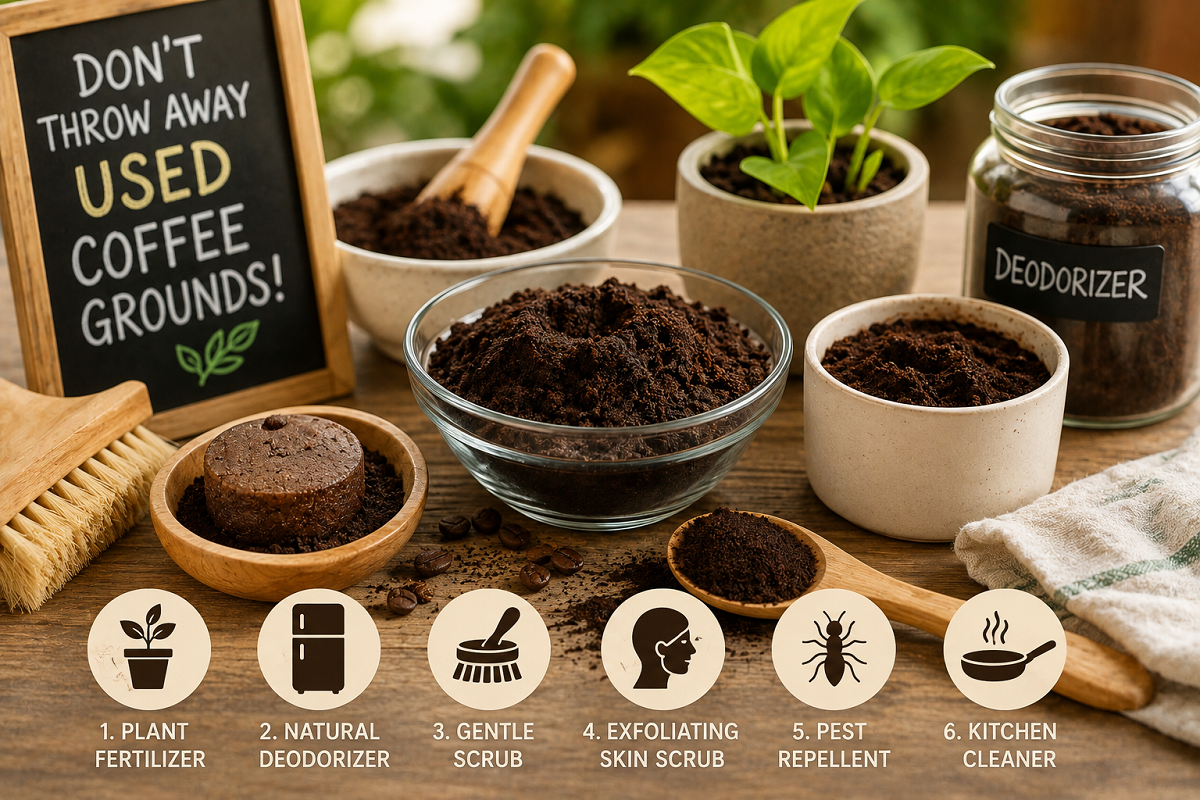
For millions of people, coffee is an essential part of the morning routine. Once the cup is finished, however, the used coffee grounds usually go straight into the dustbin.
That may be a missed opportunity.
Used coffee grounds can have several practical applications around the house. Their coarse texture makes them useful for certain cleaning jobs, while dried grounds can help deal with unpleasant odours. They can also become a useful addition to a compost pile rather than ending up in household waste.
So, the next time you prepare coffee, consider saving the grounds. From freshening up the refrigerator to helping with stubborn kitchen grime, here are six practical ways to give leftover coffee grounds a second life.
1. Use Coffee Grounds to Reduce Refrigerator Odours
A refrigerator can develop unpleasant smells even when it is cleaned regularly.
Strong-smelling foods, leftovers and certain vegetables can leave odours behind, especially in an enclosed refrigerator compartment.
Dried used coffee grounds can be used as a simple household deodoriser.
After brewing coffee, allow the grounds to dry thoroughly. Put them in a small open bowl and place it inside the refrigerator.
The grounds may help absorb or reduce unwanted smells over time.
The same idea can also be tried in other enclosed spaces prone to odours, such as a cupboard or near a rubbish bin.
The important part is to use dry grounds. Wet coffee grounds stored for extended periods can develop mould, making them unsuitable for this purpose.
2. Turn Them Into a Natural Scrub for Tough Kitchen Dirt
The grainy texture of coffee grounds makes them a useful abrasive for certain cleaning jobs.
If a pot or pan has stubborn food residue, a small amount of used grounds can help with scrubbing.
Place some grounds on a damp sponge and gently work over the dirty area before washing and rinsing the utensil thoroughly.
This can be particularly useful for tackling stuck-on food and grease.
However, coffee grounds should not be used indiscriminately on every surface.
Their abrasive texture could scratch delicate finishes, while their dark colour may stain porous or light-coloured materials.
Before using the trick on an unfamiliar surface, test a small hidden area first.
3. Remove Strong Cooking Smells From Your Hands
Cooking with ingredients such as garlic, onions or fish can leave a strong smell on the hands.
Ordinary handwashing may not always remove the odour immediately.
A small quantity of coffee grounds can be gently rubbed between the hands before washing thoroughly with soap and water.
The texture can act as a mild scrub, while coffee itself has deodorising properties.
Do not scrub aggressively, particularly if your skin is sensitive.
Coffee grounds should also not be rubbed over cuts, wounds or irritated skin.
4. Add Used Coffee Grounds to Your Compost
One of the most useful destinations for spent coffee grounds is the compost bin.
Instead of treating them as kitchen waste, mix them with other compostable materials.
Used coffee grounds contain organic matter and nutrients, including nitrogen, making them useful as one component of a balanced compost mixture.
However, more is not necessarily better.
Avoid filling a compost pile primarily with coffee grounds. Mix them with other materials such as dry leaves, cardboard and appropriate kitchen scraps.
Once the compost has properly decomposed, the resulting organic material can be used to improve garden soil.
This approach is preferable to assuming that large quantities of fresh coffee grounds can simply be dumped around any plant.
5. Use Them Carefully in Your Gardening Routine
Coffee grounds frequently appear in gardening hacks, with claims that they can be sprinkled directly around almost every plant.
The reality is more complicated.
While spent coffee grounds contain nutrients, horticultural guidance warns that applying large quantities of uncomposted grounds directly to soil can create problems.
A thick layer can compact and interfere with the movement of air and water. Residual caffeine and other compounds can also affect the growth of some plants.
A safer approach is to compost the grounds first and then use the finished compost as part of your normal gardening routine.
If you do use grounds directly, keep the quantity small and make sure you understand the needs of the particular plant.
Do not assume that coffee grounds will automatically make soil highly acidic or that every acid-loving plant needs large quantities of them.
6. Give Pots and Pans an Extra Scrub
Burnt or dried food stuck to cookware can sometimes be difficult to remove.
Because coffee grounds are naturally coarse, they can provide extra scrubbing action.
Put a small amount onto the affected area, add a little water and gently scrub with a sponge.
Once the residue loosens, wash the cookware normally and rinse thoroughly.
Again, this technique is best reserved for durable surfaces.
Avoid using abrasive coffee grounds on cookware with delicate coatings or surfaces that the manufacturer recommends cleaning only with non-abrasive products.
Dry the Grounds Before Storing Them
If you plan to save used coffee grounds rather than use them immediately, drying is important.
Freshly brewed grounds retain considerable moisture. Leaving wet grounds in a closed container can encourage mould and unpleasant smells.
Spread the used grounds out and allow them to dry properly before storing them for later household use.
Once dry, keep them in an appropriate container until needed.
Never Wash Coffee Grounds Down the Sink
One reuse method you should avoid is disposing of coffee grounds through the kitchen sink.
Although the particles may appear small enough to disappear down the drain, they can accumulate inside plumbing and contribute to blockages.
Put unwanted grounds in the compost or household waste instead.
The same precaution applies when using coffee grounds as a cleaning scrub: remove as much of the material as practical before rinsing cookware or surfaces.
Don't Expect Every Viral Coffee Hack to Work
The internet is full of surprising claims about leftover coffee grounds.
Some practical uses—such as composting, deodorising and abrasive cleaning—have reasonable support.
Other claims are less reliable.
For example, coffee grounds are sometimes promoted as a guaranteed way to repel various garden pests. Evidence for many of these claims is limited, so it is better not to rely on them as your primary pest-control strategy.
Similarly, coffee grounds should not be treated as a universal fertiliser suitable for every plant.
The safest approach is to use them moderately and for purposes where their physical or composting properties are actually useful.
Keep Coffee Grounds Away From Pets
Coffee contains caffeine, and some caffeine can remain in spent grounds.
This means used coffee grounds should be kept somewhere pets cannot eat them.
Caffeine can be dangerous to dogs and cats, so grounds should not be left in an accessible bowl or scattered in places where pets may ingest them.
If you use coffee grounds for household purposes, dispose of them safely afterwards.
Six Uses for Leftover Coffee Grounds at a Glance
| Use | How Coffee Grounds Can Help |
|---|---|
| Refrigerator | May help absorb unwanted odours |
| Kitchen cleaning | Provides gentle abrasive scrubbing |
| Hands | Can help remove strong cooking smells |
| Compost | Adds organic material to a balanced compost mix |
| Gardening | Best used carefully, preferably after composting |
| Pots and pans | Helps loosen some stubborn food residue |
The Bottom Line
Your morning coffee can remain useful even after you've finished drinking it.
Instead of automatically throwing used grounds into the bin, consider drying and reusing them for simple household tasks.
They can be used to reduce refrigerator odours, scrub certain kitchen surfaces, remove strong smells from hands, enrich compost and help tackle stubborn residue on durable cookware.
For gardening, however, caution is important. Rather than covering plant soil with thick layers of fresh grounds, composting them first is generally the safer option.
With sensible use, leftover coffee grounds can become a useful household resource while also reducing the amount of everyday kitchen waste that goes straight into the bin.