Technology
Diwali UPI Scam Alert 2026: Beware of These 8 Online Payment Frauds That Could Empty Your Bank Account
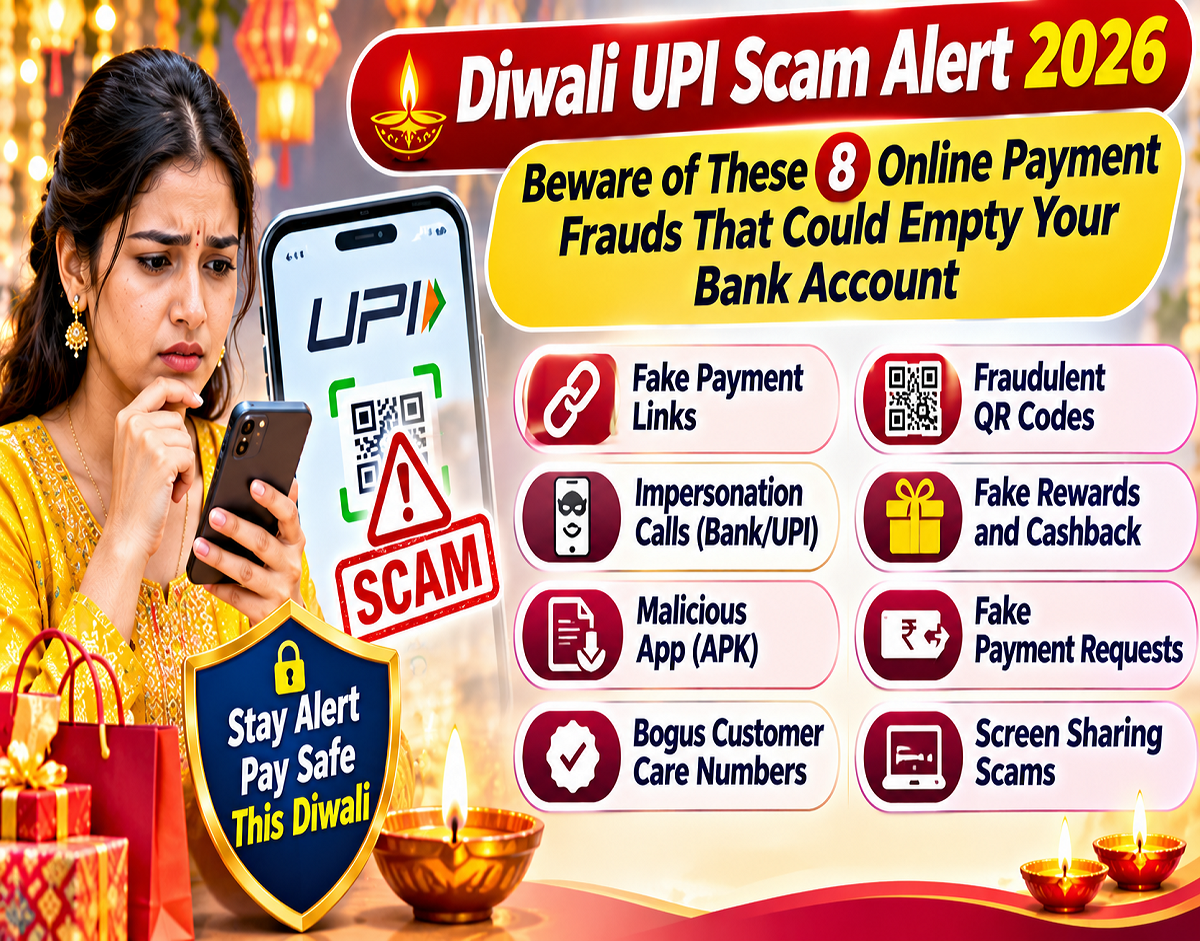
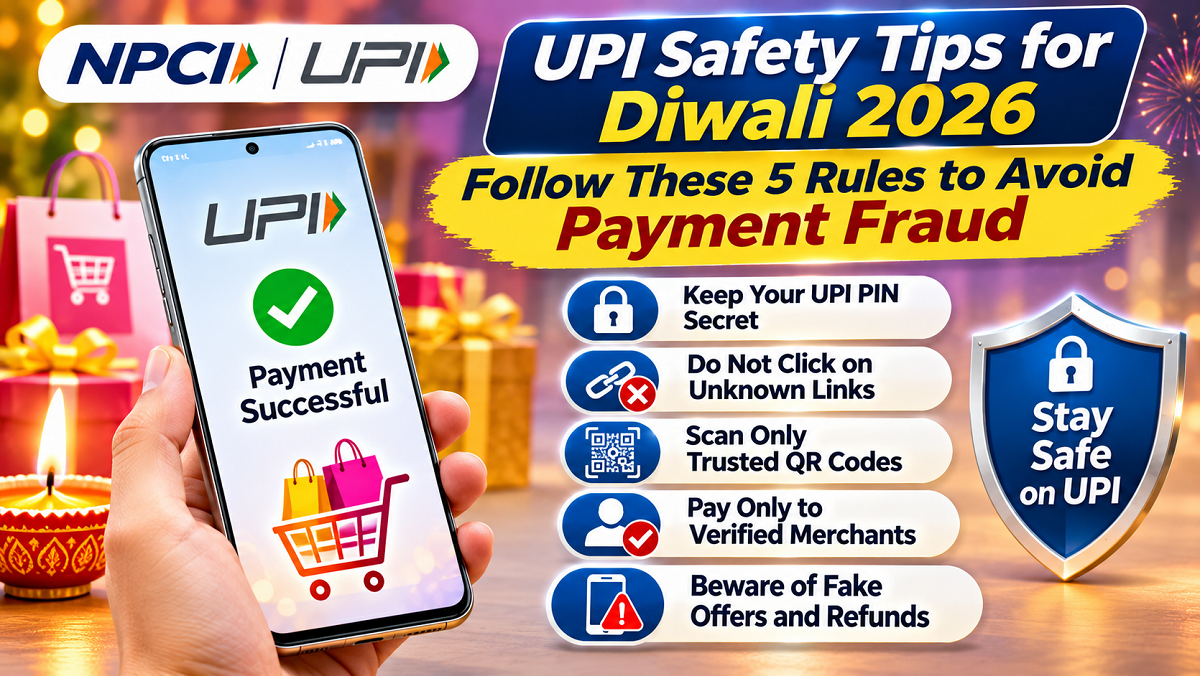
Diwali UPI Fraud Alert 2026: As Diwali celebrations approach, millions of Indians are using Unified Payments Interface (UPI) services for online shopping, purchasing gifts, paying merchants and transferring money to friends and relatives. While digital payments make festive shopping convenient, cybercriminals may exploit the increased transaction activity to target unsuspecting users.
Fraudsters often circulate attractive offers promising free Diwali gifts, cashback rewards, shopping vouchers and festive bonuses. These messages may appear genuine, especially when they imitate popular banks, payment applications or e-commerce companies.
However, clicking a suspicious link, approving an unknown payment request or sharing confidential banking information can expose users to financial fraud.
Consumers should remain alert while using UPI applications such as Google Pay, PhonePe, Paytm and other authorised payment platforms.
Here are eight important UPI fraud risks and safety precautions everyone should understand during Diwali 2026.
Diwali UPI Fraud 2026: How Scammers Target Digital Payment Users
During the festive season, online shopping platforms and payment applications frequently promote discounts, cashback and reward programmes.
Cybercriminals may imitate these legitimate promotions to deceive users.
Fraudulent messages are often circulated through SMS, WhatsApp, social media advertisements and email.
Some messages claim that a cashback reward is about to expire, while others ask users to complete an urgent verification process to receive a gift.
Such tactics create pressure to act quickly without checking whether the offer is genuine.
Understanding the warning signs can help users avoid falling victim to these scams.
1. Fake Diwali Cashback Links
One common fraud involves sending messages that promise cashback or free rewards.
The message may contain a link directing users to a website designed to resemble an official banking or payment platform.
Once the website opens, users may be asked to enter their mobile number, banking details, card information or other sensitive data.
Some fraudulent websites may also attempt to persuade users to install malicious applications.
Safety Tip: Avoid opening unexpected cashback links received from unknown numbers. Check offers directly through the official application or website of the company concerned.
2. QR Code Scam: Never Enter Your UPI PIN to Receive Money
Fraudsters sometimes claim that a user must scan a QR code to collect a Diwali gift, refund or cashback reward.
After scanning the code, the victim may be directed to approve a payment.
The most important rule is that receiving an ordinary UPI payment does not require entering your UPI PIN.
A UPI PIN is generally used to authorise outgoing payments and certain other account-related actions.
Scanning a QR code may initiate a payment rather than credit money to your account.
Safety Tip: Never scan a QR code and approve a debit transaction merely because someone promises to send you money.
3. Fake UPI Collect Requests
Another fraud technique involves sending a payment collection request to a user's UPI application.
The request may be presented as a festive reward, refund or prize.
If the user approves the request and enters their UPI PIN, money may be transferred from their account.
Before authorising any request, users should carefully examine the recipient, amount and transaction purpose.
Safety Tip: Reject unexpected collect requests and never approve payments to unknown individuals.
4. Fake Bank and Customer Care Calls
Scammers may impersonate representatives of banks, payment applications or online shopping platforms.
They may claim that a cashback reward is pending, a transaction has failed or an account requires urgent verification.
During the conversation, they may request confidential information such as OTPs, UPI PINs or banking passwords.
In some cases, fraudsters may direct users to install applications that allow access to their devices.
Safety Tip: Never disclose confidential banking credentials over the phone. Contact customer support only through verified official channels.
5. Fake Diwali Shopping Websites
Fraudulent shopping websites can become particularly dangerous during major sales events.
Such websites may imitate popular brands and advertise unusually large discounts on electronics, clothing, jewellery or household products.
Customers may be encouraged to make advance payments through UPI.
After receiving payment, the website operator may disappear without delivering the product.
Other fake websites may collect personal information for further misuse.
Safety Tip: Verify the website address, seller information, payment security and return policies before making purchases.
6. Screen-Sharing and Remote Access App Fraud
Some scammers ask users to download screen-sharing or remote-access applications under the pretext of helping them claim rewards or resolve payment problems.
Once the user grants access, the fraudster may be able to observe sensitive information or manipulate the device.
This can create serious risks when banking or payment applications are accessible.
Safety Tip: Never install remote-access software at the request of an unknown caller claiming to represent a bank or payment service.
7. Fake Diwali Gift Vouchers and Reward Messages
Fraudsters may circulate messages claiming that users have won shopping vouchers, gift hampers or special festive bonuses.
To claim the supposed reward, recipients may be asked to complete a form, pay a processing fee or provide sensitive information.
Some messages use the names and logos of established companies to appear credible.
Safety Tip: Verify all gift and cashback offers through the company's official application or website. Do not pay an unexpected fee to receive an unverified prize.
8. Wrong Recipient and Payment Confirmation Scams
A common payment-related risk involves approving a transaction without checking the details displayed on the screen.
Fraudsters may provide misleading payment information or impersonate a legitimate merchant.
Users who are distracted during festive shopping may fail to notice that the recipient's name or amount is incorrect.
Some scammers may also show fake payment confirmation screenshots to convince merchants that money has been transferred.
Safety Tip: Verify the recipient's details before paying, and confirm incoming payments through your own bank or payment application rather than relying on screenshots.
Diwali 2026: Eight Essential UPI Safety Rules
| Safety Rule | What You Should Do |
|---|---|
| Suspicious Links | Avoid unexpected gift and cashback links |
| UPI PIN and OTP | Never share them with anyone |
| QR Code Payments | Do not enter a PIN to receive ordinary payments |
| Collect Requests | Reject unknown or suspicious requests |
| Online Shopping | Use verified applications and websites |
| Remote Access | Never install apps on an unknown caller's instructions |
| Cashback Offers | Verify promotions through official channels |
| Payment Confirmation | Check the recipient, amount and transaction status |
Following these precautions can help reduce the risk of financial fraud during festive transactions.
What Should You Do If You Become a Victim of UPI Fraud?
If money is transferred from your bank account without authorisation, immediate action is essential.
The first step is to contact your bank and report the suspicious transaction.
You should also raise a complaint through the UPI application used for the payment, where applicable.
Next, report the incident through India's official cybercrime reporting channels.
Cyber Fraud Emergency Assistance
National Cybercrime Helpline
1930
National Cyber Crime Reporting Portal
Report suspected financial cyber fraud as quickly as possible and retain the complaint acknowledgement.
When filing a complaint, preserve relevant evidence, including:
- UPI transaction ID and payment reference number.
- Bank debit messages and transaction records.
- Screenshots of suspicious messages.
- Fraudulent website links.
- Phone numbers used by suspected scammers.
- Any communication involving the fraudulent transaction.
Prompt reporting can help banks and relevant authorities investigate the incident and potentially restrict the movement of fraudulent funds.
However, filing a complaint does not guarantee that the money will be recovered.
Can You Get Your Money Back After UPI Fraud?
The possibility of recovering money depends on the circumstances of the transaction, how quickly the incident is reported and the applicable banking rules.
There is an important distinction between an unauthorised electronic transaction and a payment that a customer has been deceived into approving.
Customer liability and refund eligibility may differ between these situations.
Banks investigate complaints according to applicable regulatory requirements and their grievance-handling procedures.
Users should therefore report suspicious transactions immediately and cooperate with the investigation.
They should also request a complaint reference number from their bank for future follow-up.
How to Keep Your UPI Account Safe During Festive Shopping
Users should protect their smartphones with strong screen locks and keep payment applications updated.
They should avoid downloading modified or unofficial versions of banking applications.
It is also advisable to review transaction notifications regularly and report unfamiliar debits without delay.
UPI users should remember that legitimate companies do not require customers to disclose their UPI PIN or banking OTP to receive cashback.
When shopping online, checking the website address and payment recipient can prevent many avoidable mistakes.
Consumers should be especially cautious when an offer creates urgency or promises unusually high rewards.
Diwali 2026: Enjoy Festive Shopping Without Falling for Digital Scams
UPI has made digital payments convenient for millions of Indian consumers, but the same convenience can be exploited by cybercriminals.
During Diwali, fraudulent cashback messages, fake shopping websites, QR code scams and impersonation calls may appear alongside genuine festive offers.
The safest approach is to verify unexpected messages, avoid suspicious links and carefully examine every payment request.
Users should never share their UPI PIN, OTP or banking passwords, even if the caller claims to represent a trusted company.
Remember: You do not need to enter your UPI PIN to receive an ordinary UPI payment. If someone asks you to do so for cashback, a refund or a gift, treat the request as suspicious.
A few seconds spent verifying payment details can help protect your savings and make Diwali celebrations safer.