Food
Diwali Sweets Safety Tips 2026: How to Identify Adulterated Mawa, Fake Ghee and Unsafe Mithai Before Buying
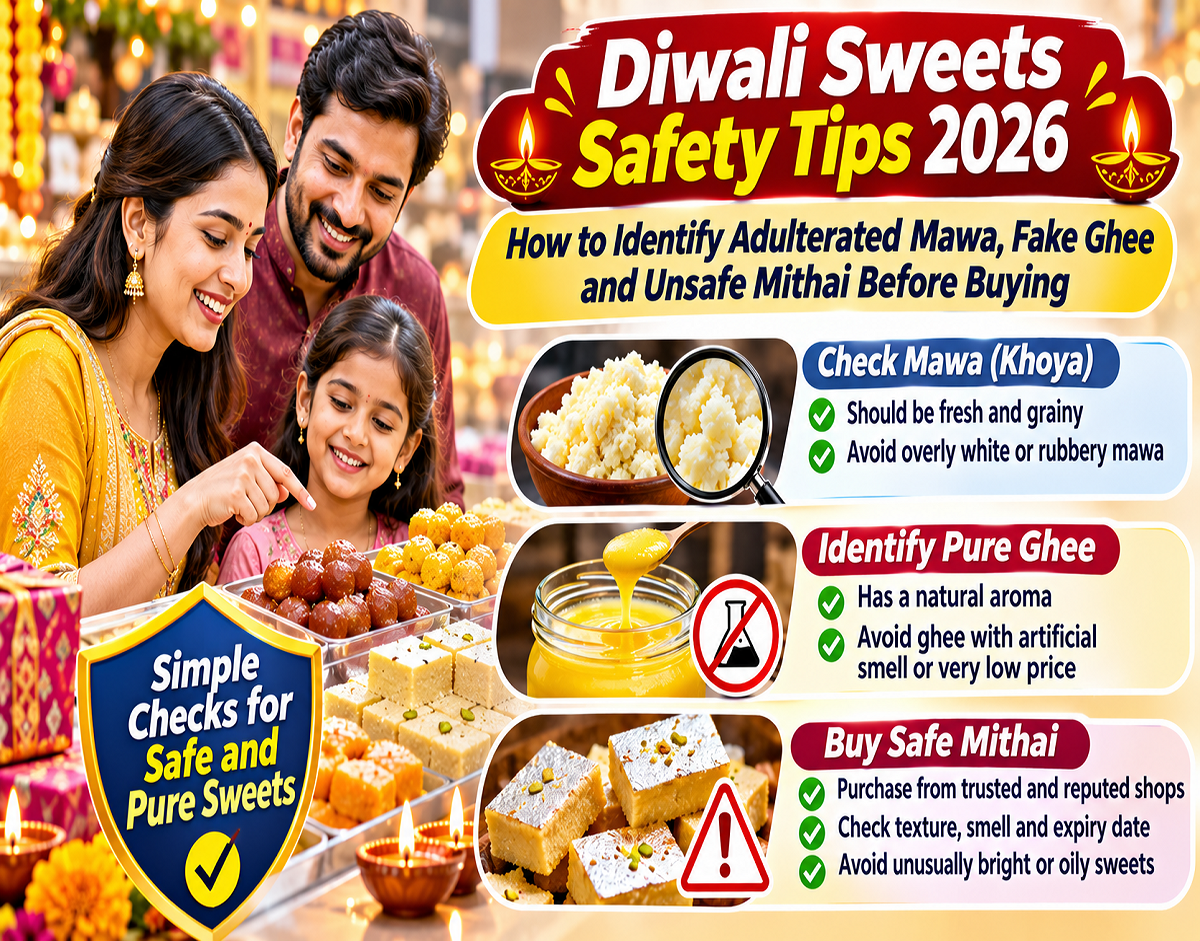
Diwali Food Safety Alert 2026: With Diwali celebrations approaching, sweet shops across India are witnessing increased demand for traditional mithai, dry fruits, namkeen and other festive food products. Families purchase sweets for religious offerings, gifting and sharing with relatives and friends. However, the festive rush can also increase the risk of consumers encountering poor-quality, improperly stored or adulterated food products.
Food items prepared using milk, mawa (khoya), ghee and other perishable ingredients require particular attention because their quality can deteriorate when manufacturing, handling or storage conditions are inadequate.
Consumers should therefore avoid choosing sweets solely on the basis of attractive packaging, colourful displays or unusually low prices.
Checking food safety registration details, product freshness, packaging information and storage conditions can help families make safer purchasing decisions.
Here are seven important precautions to follow while buying sweets for Diwali 2026.
Diwali 2026: Check These 7 Things Before Buying Sweets
1. Buy Sweets From FSSAI-Licensed or Registered Shops
The first precaution is to purchase sweets from established businesses that comply with applicable food safety requirements.
Food businesses in India are generally required to obtain the appropriate registration or licence from the Food Safety and Standards Authority of India (FSSAI), depending on their operations.
Customers should look for the displayed FSSAI registration or licence number at the shop.
For packaged food products, check the relevant food business identification details printed on the label.
Consumers can also use official FSSAI resources to verify available information about food businesses.
However, the presence of a registration number alone does not guarantee that every product sold by a business is safe or free from adulteration.
2. Examine the Colour, Smell and Texture of Mithai
Freshness is an important factor when selecting sweets, particularly those made with milk-based ingredients.
Consumers should inspect the appearance of the sweets before purchasing them.
An unusual smell, visible mould, unexpected discolouration or an abnormal texture may indicate deterioration.
For example, milk-based sweets that appear excessively sticky, discoloured or spoiled should be avoided.
However, appearance and smell cannot reliably identify every form of adulteration or contamination.
Some unsafe food products may look and smell normal.
Therefore, visual inspection should be treated as one precaution rather than a definitive food safety test.
3. Check Packaging, Manufacturing Details and Shelf Life
Packaged sweets should carry the information required under applicable food labelling rules.
Before purchasing, consumers should examine the label for relevant details, including:
- Product name and ingredients.
- Manufacturer or packer's information.
- FSSAI licence or registration details, as applicable.
- Date of manufacture or packaging, where required.
- Expiry or use-by information, as applicable.
- Storage instructions.
- Allergen information, where relevant.
Avoid products with damaged, leaking, swollen or improperly sealed packaging.
For loose sweets, customers can ask the seller about the product's preparation date and shelf life.
They should also check whether the shop displays applicable best-before information for non-packaged sweets.
4. Be Careful With Unusually Cheap Festive Sweets
During Diwali, many shops offer discounts and special festive packages.
Although discounts do not automatically indicate poor quality, unusually low prices can be a reason to examine the product more carefully.
Sweets made with ingredients such as pure ghee, milk solids and dry fruits have production costs that may differ substantially from products made with alternative ingredients.
Consumers should check product descriptions rather than assuming that every sweet is prepared using traditional ingredients.
For example, a product made with vegetable fat should not be mistaken for one prepared exclusively with dairy ghee.
Price alone cannot establish whether a sweet is adulterated, but customers should be cautious when the product's quality or ingredients are unclear.
5. Pay Special Attention to Mawa, Milk and Ghee Quality
Mawa, also known as khoya, is commonly used in traditional Indian sweets such as peda, barfi and gulab jamun.
Because it is a concentrated milk product, its quality and storage conditions are particularly important.
Poor handling, unsuitable storage temperatures or the use of substandard ingredients can make milk-based sweets unsafe.
Consumers should buy mawa-based products from reliable sellers who maintain appropriate hygiene and storage practices.
Similarly, when purchasing ghee, customers should check the product label, manufacturer information and packaging integrity.
Products marketed as pure ghee should comply with applicable food standards.
Home-based checks promoted on social media, including colour, melting or smell tests, cannot conclusively establish whether ghee or mawa has been adulterated.
Reliable confirmation of adulteration may require laboratory testing.
6. Store Diwali Sweets at the Correct Temperature
Even sweets purchased from a reputable shop can become unsafe if stored improperly.
Milk-based sweets often require refrigeration and should not be left at room temperature for extended periods.
Consumers should follow the manufacturer's storage instructions and applicable use-by dates.
Perishable sweets should generally be refrigerated promptly, especially during warm weather.
Dry sweets may have different storage requirements depending on their ingredients and packaging.
Customers should avoid mixing freshly purchased sweets with older products without checking their shelf lives.
Food that develops mould, unusual odours or other signs of spoilage should be discarded.
7. Always Collect a Bill After Purchasing Sweets
A purchase receipt is an important document that consumers should retain after buying festive food products.
It provides information about the seller, transaction date and amount paid.
If a product is found to be spoiled, incorrectly labelled or otherwise unsatisfactory, the receipt can support a complaint.
For packaged sweets, consumers should also preserve the label and batch details where possible.
These records may help food safety authorities identify the product and investigate the issue.
How to Identify Adulterated Mawa and Fake Ghee
Consumers often search for simple ways to detect adulteration in traditional sweets.
However, it is important to understand that many common household tests are unreliable.
For example, the appearance, texture or smell of mawa may vary depending on its preparation method, moisture content and ingredients.
Similarly, the consistency of ghee can change with temperature without necessarily indicating adulteration.
The following signs may justify additional caution:
| Food Product | Warning Signs to Watch For |
|---|---|
| Mawa or Khoya | Sour or unusual smell, visible mould, poor storage conditions |
| Ghee | Damaged packaging, unclear ingredients, suspicious labelling |
| Milk-Based Sweets | Spoilage, abnormal odour, unsuitable storage |
| Packaged Mithai | Missing mandatory information, broken seals, expired products |
| Namkeen | Rancid smell, damaged packaging, improper storage |
| Dry Fruit Sweets | Visible mould, insects or signs of moisture damage |
These observations can help consumers avoid visibly spoiled or questionable products, but they cannot prove whether a product contains prohibited adulterants.
Suspected adulteration should be reported to the appropriate food safety authority for investigation.
FSSAI Festive Food Safety Monitoring: What Consumers Should Know
According to the source report, FSSAI issued directions in September 2026 calling for increased monitoring of food quality and adulteration during the festive season.
The reported focus included products such as milk, mawa, ghee, sweets, namkeen and edible oils.
Such monitoring is intended to strengthen oversight of food products that experience increased demand during festivals.
Food safety authorities may inspect establishments, collect samples and take action where violations are established under applicable laws.
Consumers also play an important role by reporting suspicious products and maintaining proper purchase records.
Where to Complain About Adulterated Sweets in India
If consumers suspect that a shop is selling adulterated, spoiled or unsafe food products, they can approach the relevant state food safety department.
Complaints may also be submitted through applicable official FSSAI grievance channels.
For consumer-related grievances, individuals can contact the National Consumer Helpline.
National Consumer Helpline
1915 — Consumer helpline
8800001915 — WhatsApp
The source report lists helpline hours as 8 AM to 8 PM. Consumers should check official channels for current service availability.
National Consumer Helpline official website
When filing a complaint, consumers should provide the shop's name, location, purchase date, product details and supporting evidence.
If a food product appears to have caused illness, medical attention should be prioritised.
Extra Food Safety Precautions During Diwali Celebrations
Apart from purchasing safe sweets, families should also maintain hygiene when serving festive food.
Hands should be washed before handling food, and sweets should be kept covered to protect them from dust and insects.
Perishable products should not remain on serving tables for unnecessarily long periods.
Families preparing homemade sweets should use fresh ingredients, clean utensils and appropriate storage methods.
When gifting sweets, it is advisable to select products that can remain safe under the expected transportation and storage conditions.
Diwali 2026: Celebrate With Safe and Quality Food
Traditional sweets are an important part of Diwali celebrations, but food safety should remain a priority.
Choosing reputable sellers, checking product labels, examining freshness and preserving purchase receipts can help reduce avoidable risks.
Consumers should be particularly careful when purchasing mawa-based sweets, dairy products and ghee, as these ingredients require proper quality control and storage.
The festive season is also a reminder that attractive packaging and low prices should never replace basic food safety checks.
Before purchasing Diwali sweets, remember these three essential precautions: verify the seller, check the product's freshness and labelling, and always collect a bill.
These simple habits can help families celebrate the festival with greater confidence while protecting their health.