Business
Rajasthan e-Mitra Alert 2026: Always Collect Your Receipt and Check These 5 Details After Every Transaction
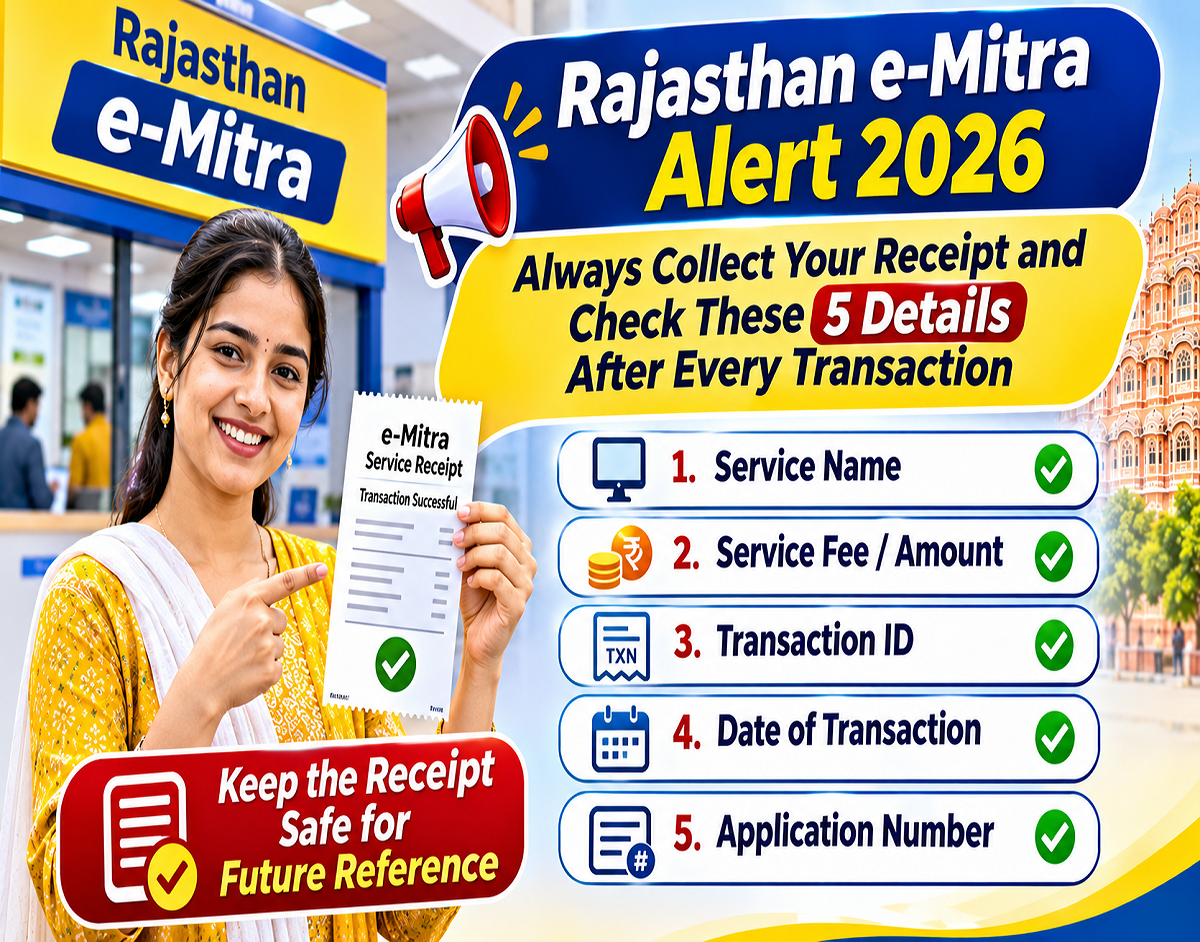
Rajasthan e-Mitra Update 2026: Residents of Rajasthan who use e-Mitra kiosks for government and citizen-related services have been advised to follow an important precaution after completing their transactions. The official e-Mitra Rajasthan platform has issued a public awareness message urging citizens to collect their payment receipts, verify essential transaction details and preserve the documents for future reference.
According to the advisory shared through e-Mitra Rajasthan's official social media account, customers should carefully check five important details on their receipts: the service name, amount charged, transaction ID, transaction date and application number.
The department has emphasised that keeping a valid receipt can help citizens access transaction information whenever required.
The advisory is particularly relevant for people who regularly visit e-Mitra centres to apply for government certificates, pay utility bills, submit applications or access other public services.
Rajasthan e-Mitra Advisory 2026: Why Is Collecting a Receipt Important?
The e-Mitra network is an important part of Rajasthan's digital service delivery system, providing citizens with access to various government and utility-related services through authorised kiosks.
Many people depend on these centres to complete applications and payments without visiting multiple government offices.
However, completing a transaction is only one part of the process. Citizens should also ensure that they receive proper acknowledgement of the service.
A receipt provides a record of the transaction and helps customers verify the details entered into the system.
It can be useful when checking application progress, confirming payments or raising concerns about a service.
The latest e-Mitra advisory reminds citizens that they should not leave a kiosk without collecting and checking their receipt.
Check These 5 Important Details on Your e-Mitra Receipt
According to the official awareness message, citizens should verify five essential pieces of information after using an e-Mitra service.
| Receipt Details | What Citizens Should Check |
|---|---|
| Service Name | Confirm that the receipt mentions the service you requested |
| Service Fee | Verify that the amount charged matches the applicable fee |
| Transaction ID | Ensure that a transaction reference number is available |
| Transaction Date | Check that the recorded date is correct |
| Application Number | Verify the application reference number, where applicable |
Checking these details immediately can help customers identify possible mistakes before leaving the service centre.
If any information appears incorrect, they should request clarification from the kiosk operator.
1. Verify the Service Name Before Leaving the Kiosk
The first important detail is the name of the service mentioned on the receipt.
Citizens should confirm that it matches the service they requested.
For example, if someone visits an e-Mitra centre to apply for a government certificate, the receipt should reflect the relevant application service.
Similarly, customers paying utility bills should verify that the transaction corresponds to the intended payment.
An incorrect service description could indicate a data-entry mistake or a transaction that needs further clarification.
Customers should raise any discrepancy immediately rather than waiting until the application is processed.
2. Check the Service Fee to Avoid Incorrect Charges
The second essential detail is the amount charged for the service.
e-Mitra kiosks facilitate different types of transactions, and applicable fees may vary depending on the service.
Citizens should check the amount printed on their receipt and compare it with the authorised fee information available for the transaction.
If the kiosk operator requests an additional payment, customers should ask for an explanation and an appropriate receipt.
They should not assume that every amount requested by an operator is an officially prescribed charge.
Verifying the fee can help promote transparency and reduce the risk of unauthorised collections.
3. Keep the Transaction ID Safe for Future Reference
A transaction ID is an important reference associated with a payment or service transaction.
It may help identify the transaction in the relevant system when customers need assistance.
For example, if a payment is deducted but the service status is unclear, the transaction ID can help support an enquiry.
Citizens should ensure that the transaction reference is clearly visible on the receipt.
They can also retain a digital copy of the receipt as a backup.
However, a transaction ID alone may not be sufficient for every enquiry, and additional information could be required depending on the service.
4. Confirm the Transaction Date on the Receipt
The date printed on the receipt is another important detail.
It helps establish when the service request or payment was recorded.
This information may become useful when checking processing timelines, following up on pending applications or discussing payment-related issues.
Customers should confirm that the transaction date corresponds to the service they have just completed.
If the date appears incorrect, they should ask the kiosk operator to clarify the discrepancy.
Keeping accurate transaction records can make future communication with service providers more convenient.
5. Verify the Application Number for Status Tracking
Many government-related services provide an application number or acknowledgement reference.
This number may be required to check the status of an application or obtain further information.
For example, citizens applying for certain certificates or government services may need their application reference when making enquiries.
The latest e-Mitra advisory specifically encourages customers to check the application number printed on their receipts.
Where an application number is applicable, customers should ensure that it is readable and correctly recorded.
Not every service necessarily generates a separate application number, so the available reference details may differ by transaction type.
What Should You Do If an e-Mitra Receipt Contains Incorrect Information?
If customers notice incorrect details on their receipts, they should contact the kiosk operator before leaving the centre.
They should explain the discrepancy and request verification of the transaction.
If the issue cannot be resolved immediately, they should retain the receipt and any supporting payment records.
Citizens may also seek assistance through the official e-Mitra support or grievance channels, depending on the nature of the issue.
It is advisable to avoid making a duplicate payment merely because the first transaction's status is unclear.
Instead, customers should first confirm whether the original transaction was successful.
Can You Keep a Digital Copy of Your e-Mitra Receipt?
Keeping a digital copy can be a useful precaution.
Citizens may photograph or scan their receipts and store them securely on their mobile phones or another trusted device.
A digital copy can help preserve transaction information if the original paper receipt becomes damaged or misplaced.
However, users should ensure that important details such as the transaction ID, application number and payment amount remain clearly visible.
Receipts containing personal information should not be shared publicly or forwarded to unknown individuals.
Where an original receipt is required for a particular service, customers should preserve the physical document as well.
Why Is the e-Mitra Receipt Advisory Important for Rajasthan Residents?
The e-Mitra platform supports access to a wide range of citizen services across Rajasthan.
As more government-related processes become digital, maintaining accurate transaction records becomes increasingly important.
A properly issued receipt can help customers confirm the service requested and the amount paid.
It can also provide useful reference information if an application is delayed or a payment requires clarification.
The advisory encourages citizens to take a more active role in verifying their transactions rather than relying entirely on kiosk operators.
Such precautions can improve transparency and help reduce avoidable service-related disputes.
Rajasthan e-Mitra Update 2026: Important Advice for Citizens
Residents using e-Mitra services should make it a routine practice to collect their receipts after every applicable transaction.
Before leaving the kiosk, they should verify the service name, fee, transaction ID, date and application number.
They should also preserve the receipt until the relevant service has been completed and any necessary follow-up is finished.
The latest communication from e-Mitra Rajasthan is a citizen-awareness advisory. It does not announce a new service charge, application deadline or change in eligibility requirements.
Instead, it highlights a simple but important precaution that can help people protect their transaction records and access assistance when needed.
For official information about available services, citizens can visit the Rajasthan e-Mitra portal at emitra.rajasthan.gov.in.
Source Credit: e-Mitra Rajasthan, official X account @eMitraRajasthan, November 6, 2026.