Technology
Delhi No PUC, No Fuel Rule 2026: New Restrictions From November 1? Check Vehicle Rules and Fines
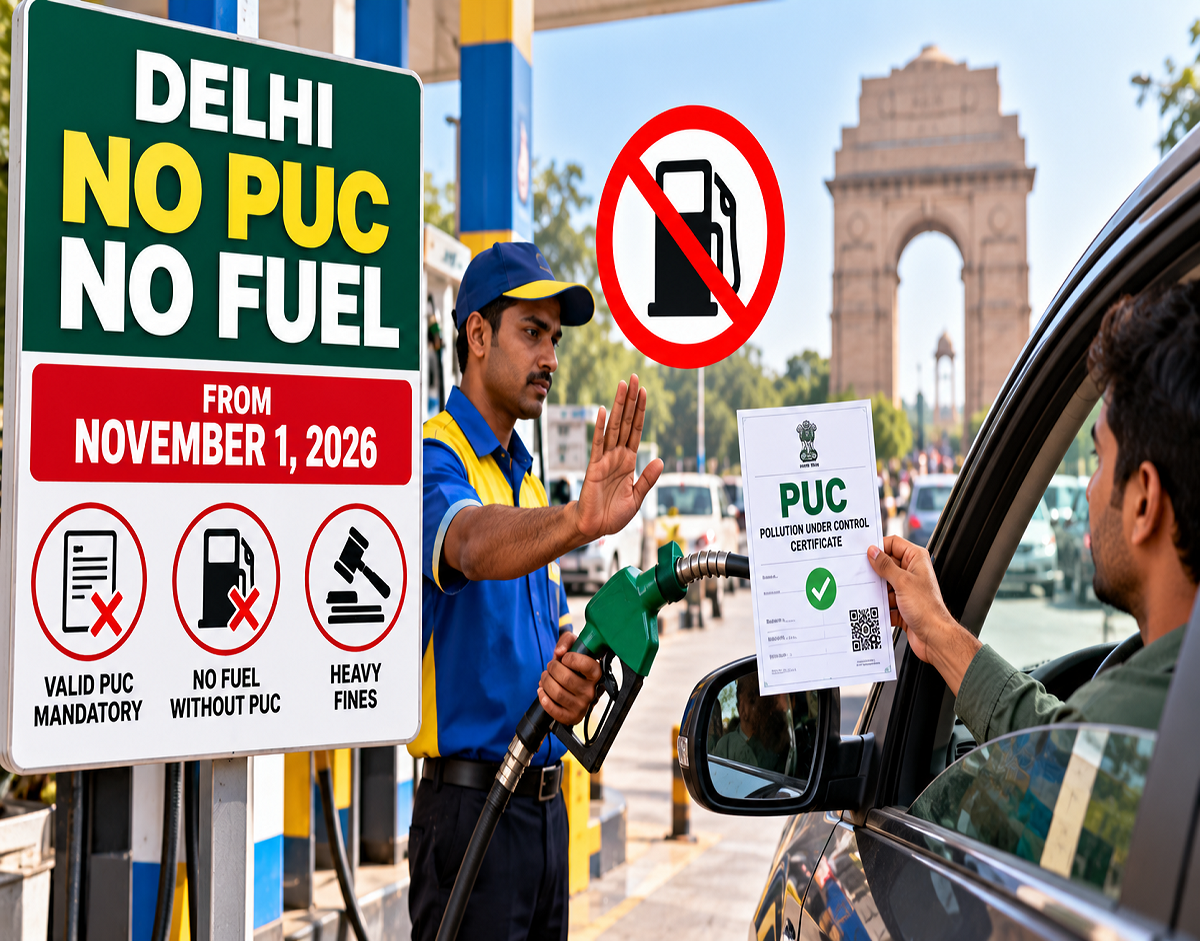
Delhi Traffic Rules Update, October 24, 2026: Vehicle owners in Delhi may face stricter pollution-related checks from November 1, 2026. According to a recent report, authorities are preparing to enforce a 'No PUC, No Fuel' policy at around 500 petrol pumps across the national capital.
Under the reported proposal, motorists without a valid Pollution Under Control (PUC) certificate could be denied petrol or diesel at participating fuel stations.
The report also claims that restrictions on the entry of vehicles that do not meet BS-VI emission standards may take effect from November 1.
However, the precise implementation date, coverage of petrol pumps and scope of the proposed BS-VI restrictions require confirmation through an official government notification.
With Delhi approaching its winter pollution season, vehicle owners are being advised to check their PUC certificate validity and ensure their vehicles comply with applicable emission regulations.
Here is what motorists should know about the reported restrictions, PUC certificate requirements, fines and online verification process.
What Is Delhi's 'No PUC, No Fuel' Rule?
The 'No PUC, No Fuel' policy is intended to discourage motorists from operating vehicles without valid pollution compliance certificates.
Under such an enforcement arrangement, fuel stations may be instructed to check whether a vehicle has a valid PUC certificate before dispensing petrol or diesel.
If the vehicle does not have a valid certificate, the fuel station may refuse to supply fuel, subject to the applicable government directions and exemptions.
According to the supplied report, the arrangement could cover approximately 500 petrol pumps in Delhi.
However, the report does not provide an independently verifiable official order confirming that all 500 locations will begin enforcement on November 1.
Vehicle owners should therefore monitor announcements from the Delhi government and relevant transport authorities for the final operational details.
Will Petrol Pumps Stop Giving Fuel From November 1?
The report claims that November 1, 2026, has been selected as the implementation date for the proposed restrictions.
If the policy is enforced as described, vehicles without valid PUC certificates could face difficulties obtaining fuel at covered stations.
This would make it important for drivers to renew expired certificates before visiting petrol pumps.
However, the rules governing fuel refusal, verification methods and possible exemptions need to be established through the relevant official directions.
A PUC certificate is already an important legal compliance requirement for vehicles to which the pollution certification rules apply.
Therefore, motorists should not wait for a new fuel-related restriction before ensuring that their certificates are valid.
Will Vehicles Older Than BS-VI Be Banned From Delhi?
Another important claim in the report concerns vehicles that do not meet Bharat Stage VI emission standards.
The source suggests that restrictions may apply to the entry of certain pre-BS-VI vehicles into Delhi from November 1.
However, this should not be interpreted as a confirmed blanket ban on every BS-IV or older vehicle.
Delhi's vehicle restrictions can depend on several factors, including fuel type, vehicle age, registration category, emission standard and pollution-control measures in force.
Temporary restrictions may also be introduced under the Graded Response Action Plan (GRAP), depending on air quality conditions.
The precise scope of any new restriction must be checked against an official notification.
Vehicle owners should not assume that every older vehicle is prohibited from entering Delhi solely because of the reported November 1 announcement.
What Is a PUC Certificate and Why Is It Important?
A Pollution Under Control certificate confirms that a vehicle has undergone an emissions test and that its measured emissions meet the prescribed limits at the time of testing.
The certificate is issued through an authorised pollution testing facility.
The test helps identify vehicles that may be producing excessive emissions because of poor maintenance or mechanical problems.
A valid PUC certificate is required for applicable vehicles under Indian motor vehicle regulations.
Driving without one can lead to enforcement action and penalties.
Maintaining a valid certificate also helps vehicle owners identify potential emission-related problems before they become more serious.
How to Check PUC Certificate Status Online
Vehicle owners can check their pollution certificate details through the official government system.
Step 1: Open the official portal
Visit the Parivahan PUC portal.
Step 2: Enter your vehicle details
Select the PUC certificate service and enter the vehicle registration number.
Step 3: Provide the required verification information
Enter the chassis number details and captcha requested by the portal.
Step 4: View your certificate
Check the available PUC record, including its validity and test information.
Step 5: Check the expiry date
If your certificate has expired or is about to expire, arrange a fresh emissions test at an authorised centre.
The information displayed on the portal depends on the vehicle's available official records.
How to Check PUC Details Through mParivahan
Motorists can also use the official mParivahan application to access vehicle-related information.
The app provides digital access to various transport services and vehicle records.
Users can install the official application, complete the required login process and search for their vehicle using the available options.
Where supported, the vehicle profile may display pollution certificate details or links to relevant records.
The exact interface may differ depending on the application version.
Drivers should ensure they download the genuine application rather than an imitation app.
How Long Is a PUC Certificate Valid?
PUC certificate validity depends on the vehicle category and applicable regulations.
Generally, a newly registered motor vehicle is exempt from the periodic PUC certificate requirement during the initial prescribed period, commonly the first year from registration.
After that, periodic pollution testing is required.
Many vehicles require renewal at six-month intervals, while certain categories may be subject to different validity periods.
The expiry date displayed on the certificate is the most reliable reference for the individual vehicle.
Motorists should arrange renewal before that date rather than assuming that every PUC certificate remains valid for the same duration.
What Is the Fine for Driving Without a Valid PUC?
Driving without a valid PUC certificate can attract penalties under the Motor Vehicles Act and applicable enforcement provisions.
For relevant violations under Section 190(2), the statutory penalty framework can include a fine of up to ₹10,000 for a first offence, along with other consequences provided by law.
The exact penalty depends on the nature of the violation, applicable provisions and enforcement action.
Motorists should therefore avoid assuming that an expired PUC certificate will result only in a small administrative fee.
The most effective way to prevent such problems is to renew the certificate before it expires.
What if Your PUC Certificate Is Not Showing Online?
Sometimes, vehicle owners may complete an emissions test but find that the updated certificate does not immediately appear on the government portal.
This can happen because of data processing delays or incorrect information entered during the search.
First, check that the registration number and chassis number details are accurate.
Be particularly careful when entering similar-looking characters, such as the letter O and the number 0.
If the information still does not appear, try checking again later.
Consumers should retain the certificate or receipt issued by the authorised testing centre.
If the problem continues, they should contact the centre and request verification of the uploaded record.
How to Renew an Expired PUC Certificate
Renewing a PUC certificate generally requires visiting an authorised pollution testing centre with the vehicle.
The testing facility examines the vehicle's emissions using the prescribed equipment and procedures.
If the vehicle meets the required limits, the centre issues a certificate with the applicable validity period.
If the vehicle fails the test, the owner may need to address mechanical or emission-control problems before undergoing another test.
This is why renewing the certificate before its expiry date is advisable.
Drivers can also set a reminder several days before the certificate expires.
Important Precautions for Delhi Vehicle Owners
Motorists should check the validity of their PUC certificate and keep their vehicle's registration and insurance documents up to date.
They should also ensure that their vehicle complies with applicable age restrictions and emission standards.
If new restrictions are introduced, drivers should verify whether those rules apply to their particular vehicle category.
Official announcements from the Delhi Transport Department and Commission for Air Quality Management are relevant sources for regulatory and air-quality-related directions.
Consumers should avoid relying on unverified social media messages claiming that all older vehicles will automatically be banned or that every petrol pump has already begun refusing fuel.
Final Takeaway
Delhi motorists may face stricter pollution compliance checks as the winter pollution season approaches.
According to the October 24 report, a 'No PUC, No Fuel' arrangement could begin at approximately 500 petrol pumps from November 1, 2026.
The report also refers to possible restrictions affecting vehicles that do not meet BS-VI standards.
However, these specific implementation details require confirmation through official orders.
Vehicle owners should check their PUC certificate now, renew it if necessary and follow official announcements before travelling into Delhi.
Disclaimer: This article is based on the supplied October 24, 2026 report. The November 1 implementation date, reported coverage of 500 petrol pumps and scope of BS-VI-related restrictions have not been independently verified against an official notification. Readers should consult the Delhi Transport Department and other competent authorities for confirmed rules.