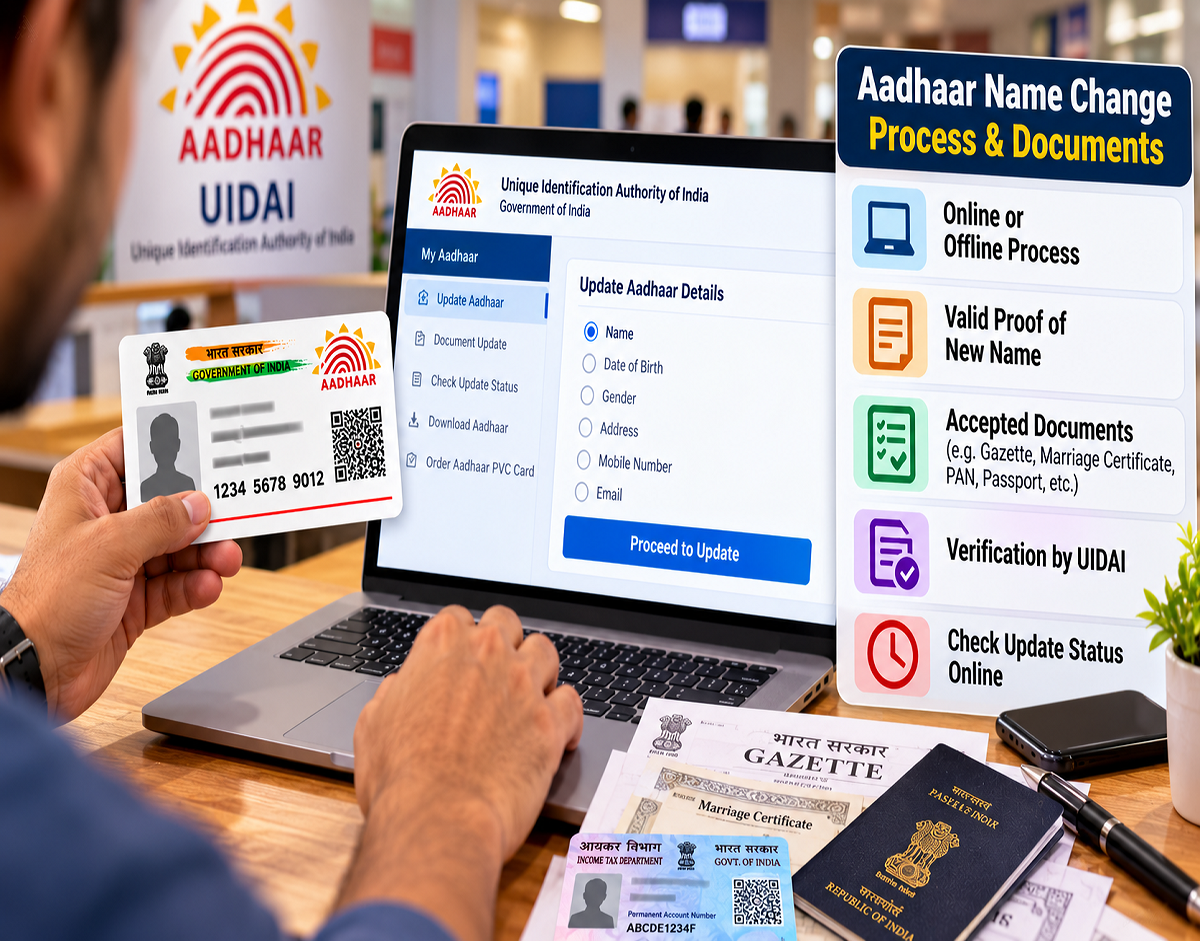
Changing or correcting a name on Aadhaar may now require closer attention to the type of correction being requested. Under UIDAI's updated Standard Operating Procedure (SOP), name-related changes are handled according to the nature and extent of the update rather than treating every request in exactly the same way.
This distinction is important for Aadhaar holders who have a spelling error, want to modify their name after marriage or divorce, or need to make a more substantial change.
According to the supplied information, the updated process is intended to make Aadhaar name corrections more structured and secure. Depending on the type of request, different supporting documents may be required, and some cases can require an affidavit or declaration.
Therefore, before visiting an Aadhaar centre, applicants should first determine what kind of name change they need and prepare the appropriate documents.
What Has Changed in Aadhaar Name Update Rules?
The key point under the updated procedure is that not every Aadhaar name correction is treated identically.
A small spelling correction is different from replacing or substantially changing a person's name.
Similarly, a change following marriage or divorce can have different documentary requirements from a correction caused by an earlier data-entry error.
This means Aadhaar holders should not assume that the documents accepted for one type of name update will automatically be sufficient for another.
Understanding the category of your request before starting the process can reduce the chances of rejection or repeated visits to an Aadhaar centre.
Minor Name Corrections May Follow a Different Process
Some Aadhaar holders only need a relatively small correction.
This could involve a spelling issue or another limited modification that does not fundamentally change the person's identity.
Under the updated framework, such cases may be treated differently from a complete or major name change.
Applicants should carry the identity documents required for their particular correction and make sure the name they want entered is supported by acceptable records.
Do not assume that a verbal request at the enrolment centre will be sufficient.
What About a Major Name Change?
A more substantial name change can require additional supporting evidence.
This is because UIDAI needs to establish that the request belongs to the same person and is backed by valid documentation.
Depending on the nature of the change, additional declarations, affidavits or other prescribed records may be required.
The exact requirement should be checked before visiting the Aadhaar centre.
For a significant change, applicants should not rely solely on their existing Aadhaar card as proof of the new name.
When Can an Affidavit Be Required?
The supplied report highlights that an affidavit or declaration may become relevant in certain name-change cases.
Its purpose is to support the requested change and establish the relationship between the existing identity and the updated name.
However, an affidavit should not be treated as a universal requirement for every minor spelling correction.
The requirement depends on the category of the name update and the supporting documentation prescribed for that situation.
Applicants should check which declaration format, if any, is required in their case before preparing a document independently.
Name Change After Marriage
Aadhaar holders may want to change their name after marriage, particularly when adding or changing a surname.
Such a request can fall under a specific category of name update and may require documents supporting the change.
The applicant should check which identity proof, marriage-related declaration or other prescribed documentation is acceptable under the applicable UIDAI process.
The same principle applies when changing a name following divorce.
Since these circumstances differ from an ordinary typographical correction, the documentation can also differ.
What If the Name Was Entered Incorrectly During Aadhaar Enrolment?
Sometimes the problem is not with the person's documents but with the information originally entered into the Aadhaar system.
For example, an applicant's supporting identity document may contain the correct name while the Aadhaar record contains a data-entry error.
Such cases can be handled differently from a voluntary name change.
Applicants should carry the original supporting documents showing the correct information and explain that the discrepancy resulted from an earlier entry error.
The Aadhaar centre will process the request according to the applicable correction procedure.
Check Aadhaar and Supporting Documents First
Before starting a name update, compare the name currently displayed on Aadhaar with the name you want to use.
Look carefully at:
- Spelling
- First and middle names
- Surname
- Order of names
- Initials or abbreviations
- Other differences in the identity record
Once you understand exactly what needs to change, identify the documents that support the requested version.
This is much better than reaching the Aadhaar centre first and discovering that an important document is missing.
Don't Carry Only Your Aadhaar Card
One of the most important lessons from the updated process is that the Aadhaar card itself may not be enough to support a requested name change.
Aadhaar shows the existing information, but UIDAI may need acceptable evidence for the new or corrected name.
Therefore, applicants should carry the relevant supporting documents required for their category of update.
Where an affidavit, declaration or additional identity proof is required, it should be prepared according to the prescribed format.
Incomplete documentation can result in the request not being processed successfully.
Small Correction and Full Name Change Are Not the Same
A minor spelling correction and a complete name change should not be treated as equivalent.
For example, correcting a small typographical error may involve a different level of documentation from replacing the existing name with a substantially different one.
This distinction helps UIDAI prevent unauthorised identity changes while still allowing genuine corrections.
Applicants should therefore accurately describe the type of correction they need rather than choosing an incorrect category merely because it appears easier.
Make Sure Your Documents Support the New Name
The name requested for Aadhaar should be supported by acceptable documentation wherever required.
If one document uses one spelling and another document uses a different version, the mismatch can create additional complications.
Applicants planning a name correction should review their key identity documents beforehand.
Where possible, determine which document will be used as the primary supporting proof and make sure it reflects the name that needs to appear on Aadhaar.
Avoid Agents Promising Aadhaar Changes Without Documents
Changes to Aadhaar should be completed through authorised channels.
Be cautious if someone claims that they can change your Aadhaar name without proper documents in exchange for an additional payment.
Similarly, do not hand over Aadhaar copies, OTPs or other sensitive information to an unknown person.
A genuine update request must follow the applicable UIDAI verification and documentation process.
Using false documents or deliberately providing incorrect information can create serious problems.
Aadhaar Name Update Is Not Automatically Approved
Submitting an update request does not mean that the new name will immediately appear on Aadhaar.
The request is subject to the applicable UIDAI validation and verification process.
If the submitted information or supporting documents do not satisfy the requirements, the update may not be accepted.
Applicants should therefore keep the acknowledgement or reference information provided after submitting the request and use the available status-checking facility where applicable.
Prepare Before Visiting the Aadhaar Centre
A little preparation can make the name-update process much easier.
First, identify whether your request is a minor correction, marriage- or divorce-related change, correction of an earlier error or a more substantial name change.
Next, check the documents prescribed for that category.
If an affidavit or declaration is required, prepare it in the correct format.
Then visit the authorised Aadhaar service location with the necessary original or acceptable supporting documents.
This approach can reduce repeated visits caused by incomplete paperwork.
Don't Trust Unverified Aadhaar Update Links
Aadhaar-related rule changes can also be used by scammers to target users.
A message may claim that your Aadhaar will be blocked unless you immediately update your name through a link.
Avoid entering Aadhaar details or OTPs on an unknown website.
Similarly, do not install unofficial mobile applications sent through WhatsApp or SMS for an Aadhaar update.
Use only authorised UIDAI services and approved Aadhaar centres for identity-related changes.
Check the Latest Rules Before Applying
The updated SOP makes one point particularly important: the documents and procedure can depend on the type of name change being requested.
A small spelling correction may not require the same process as a major change. Similarly, marriage, divorce and earlier data-entry errors can involve different supporting records.
Therefore, Aadhaar holders planning a name update should first compare the existing and proposed names, identify the correct category and collect the required documents.
For larger changes, additional documentation or a prescribed affidavit/declaration may be necessary.
Preparing the correct documents before visiting the Aadhaar centre can save time and reduce the risk of an unsuccessful update request.
Note: Aadhaar update requirements, accepted documents, fees and procedures can be revised by UIDAI. Applicants should check the latest applicable UIDAI instructions for their specific type of name change before submitting a request.