Business
UPI MDR Revenue Sharing: How Banks, PhonePe, Google Pay and Other Players Will Split the Fee
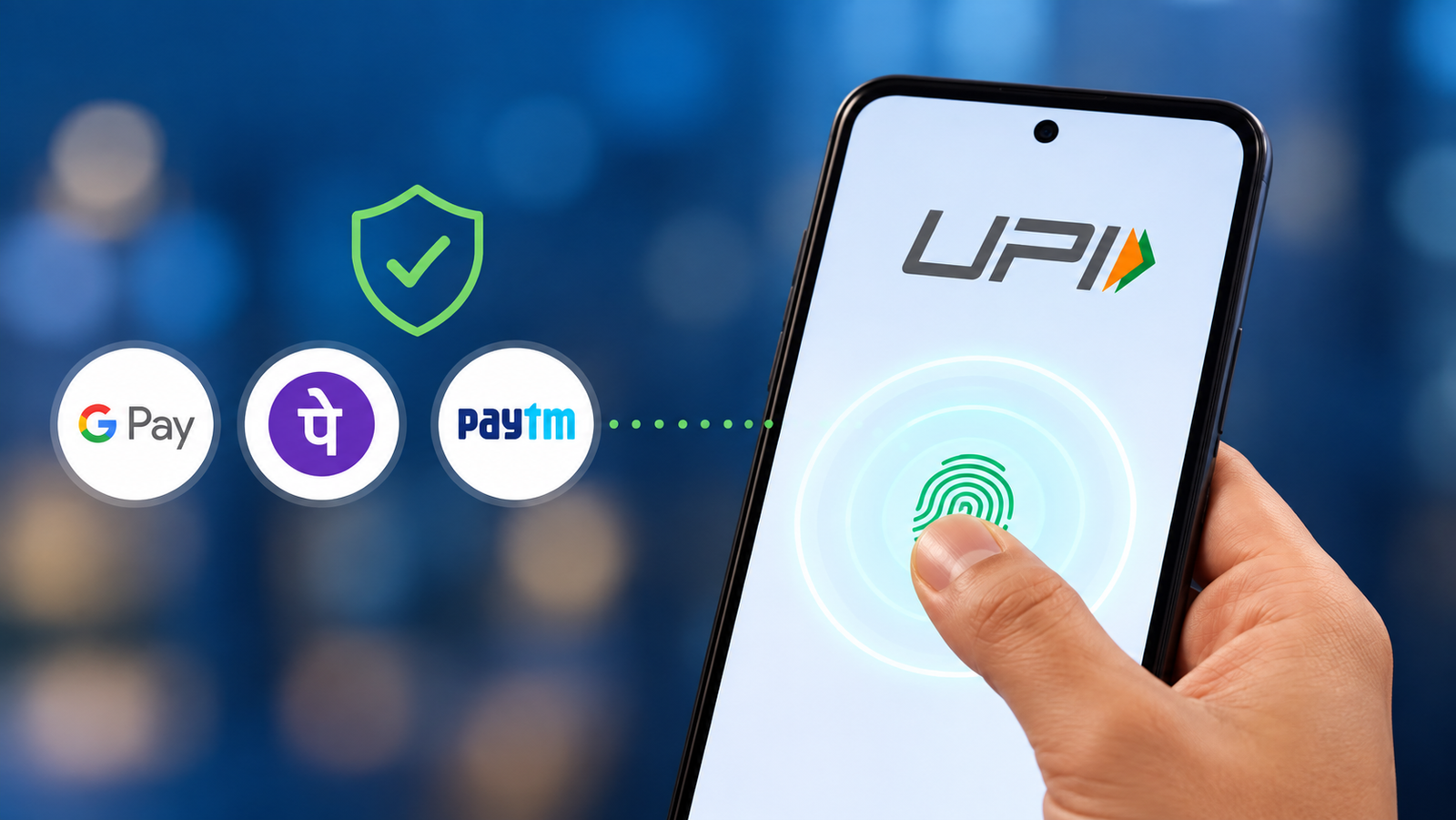
The introduction of Merchant Discount Rate (MDR) on certain UPI merchant payments has raised an important question: who actually receives the money collected as MDR?
According to the framework described in the source, a 0.40% MDR will apply to qualifying Person-to-Merchant (P2M) UPI transactions above ₹2,000 from October 15, 2026. However, the entire amount will not go to the UPI app used for the payment. Instead, the MDR revenue will be divided among different participants involved in processing the transaction.
The source states that banks collectively will receive 70% of the MDR revenue, while third-party UPI apps will get 20% and sponsor banks will receive the remaining 10%.
How Will UPI MDR Revenue Be Divided?
According to the revenue-sharing model provided in the source, the MDR will be distributed as follows:
| UPI Ecosystem Participant | Share of MDR |
|---|---|
| Issuing Bank | 40% |
| Acquiring Bank | 30% |
| UPI App | 20% |
| Sponsor Bank | 10% |
| Total | 100% |
This means the banking side collectively receives a significant share of the MDR generated from qualifying merchant transactions.
Issuing Bank Gets 40%
The largest individual portion goes to the issuing bank.
This is the bank where the customer making the UPI payment holds the account. According to the source, it will receive 40% of the total MDR collected on the transaction.
For example, if the total MDR on a payment is ₹40, the issuing bank's 40% share would be:
₹40 × 40% = ₹16
Therefore, ₹16 out of the ₹40 MDR would go to the customer's bank under the stated model.
Acquiring Bank Gets 30%
The acquiring bank receives the second-largest share at 30%.
This is generally the bank handling the merchant's side of the payment arrangement.
If the MDR collected is ₹40, its share would be:
₹40 × 30% = ₹12
The combined share of the issuing and acquiring banks would therefore be ₹28, or 70% of the total ₹40 MDR in this example.
The source specifically states that the banking sector collectively receives 70% under the described revenue-sharing model.
How Much Will PhonePe, Google Pay and Other UPI Apps Get?
Third-party UPI apps have been allocated 20% of the MDR revenue, according to the source.
It specifically mentions apps such as PhonePe, Google Pay and Paytm while describing this portion of the revenue-sharing structure.
If ₹40 is collected as MDR, the 20% share works out to:
₹40 × 20% = ₹8
Therefore, the UPI app's share in this example would be ₹8.
This also means that the full MDR should not be interpreted as revenue going directly to the app through which the customer made the payment.
Sponsor Bank Gets the Remaining 10%
The remaining 10% goes to the sponsor bank, according to the supplied source.
Sponsor banks provide backend banking support to UPI apps and other participants in the payment ecosystem.
On a ₹40 MDR:
₹40 × 10% = ₹4
The sponsor bank would therefore receive ₹4 under the stated revenue-sharing structure.
₹10,000 UPI Payment: Complete MDR Calculation
The source uses a ₹10,000 merchant payment to explain how the MDR works.
At the stated general MDR rate of 0.40%:
₹10,000 × 0.40% = ₹40
The ₹40 MDR would then be distributed according to the revenue-sharing percentages described above.
| Participant | Share | Amount From ₹40 MDR |
|---|---|---|
| Issuing Bank | 40% | ₹16 |
| Acquiring Bank | 30% | ₹12 |
| UPI App | 20% | ₹8 |
| Sponsor Bank | 10% | ₹4 |
| Total | 100% | ₹40 |
The source confirms that a ₹10,000 qualifying merchant payment would generate ₹40 in MDR at the 0.40% rate.
What About a ₹50,000 UPI Payment?
Using the same general rate, a ₹50,000 qualifying merchant payment would generate:
₹50,000 × 0.40% = ₹200 MDR
Applying the stated revenue-sharing model gives:
| Participant | Share | Amount From ₹200 MDR |
|---|---|---|
| Issuing Bank | 40% | ₹80 |
| Acquiring Bank | 30% | ₹60 |
| UPI App | 20% | ₹40 |
| Sponsor Bank | 10% | ₹20 |
| Total | 100% | ₹200 |
These amounts are calculations derived from the percentage-sharing model stated in the source.
Will Customers Have to Pay This MDR?
According to the supplied source, ordinary UPI customers will not be charged this MDR.
It states that banks and merchants cannot recover the specified MDR directly from customers. The source also says UPI apps are not permitted to impose a separate platform charge on consumers under the framework it describes.
The MDR burden is stated to remain with the merchant.
Therefore, if a customer purchases goods worth ₹10,000 and makes a qualifying UPI payment, the ₹40 MDR calculated in the example is not presented as an extra ₹40 that the customer must add to the bill.
Not Every UPI Merchant Payment Has a 0.40% MDR
Another important point is that the general 0.40% rate does not apply identically across every category mentioned in the source.
It states that essential-service categories such as fuel, train tickets, mobile recharges and insurance premiums will have a flat ₹5 MDR under the specified conditions.
Capital-market transactions, meanwhile, are described as having a much lower 0.02% MDR rate.
Consumers and merchants should therefore check the applicable transaction category rather than assuming that every UPI merchant payment above ₹2,000 will automatically be charged at 0.40%.
Why Is MDR Being Introduced?
The source says UPI has operated under a zero-MDR model since 2020 and presents the new framework as an effort to make the payment ecosystem more financially sustainable.
According to the report, revenue generated through these charges is intended to support areas such as digital payment infrastructure, additional server capacity and measures to combat cyber fraud.
Running a large-scale digital payment network involves banks, payment apps, backend infrastructure, cybersecurity systems and transaction-processing technology. The revenue-sharing structure described in the source distributes MDR across several of these participants rather than directing the entire fee to one company or bank.
Key Point for UPI Users
The biggest takeaway is that the MDR collected from qualifying merchant transactions is shared across the UPI payment ecosystem.
Under the model described in the source, the issuing bank receives 40%, the acquiring bank gets 30%, the UPI app receives 20%, and the sponsor bank gets 10%.
So, on a ₹10,000 qualifying payment carrying ₹40 MDR, the respective shares would be ₹16, ₹12, ₹8 and ₹4.
For consumers, however, the source states that the MDR is not an additional fee they are required to pay. The merchant bears the applicable MDR, while the collected amount is distributed among the participating banks and payment-service providers according to the stated revenue-sharing structure.
Disclaimer: This article is based on the MDR framework and revenue-sharing details provided in the supplied source dated September 16, 2026. Implementation rules and payment-category conditions may be revised, so merchants and users should refer to the latest applicable official guidelines.