Business
SCSS vs Post Office MIS: Which Scheme Offers More Regular Income? Check Returns on ₹5 Lakh to ₹30 Lakh
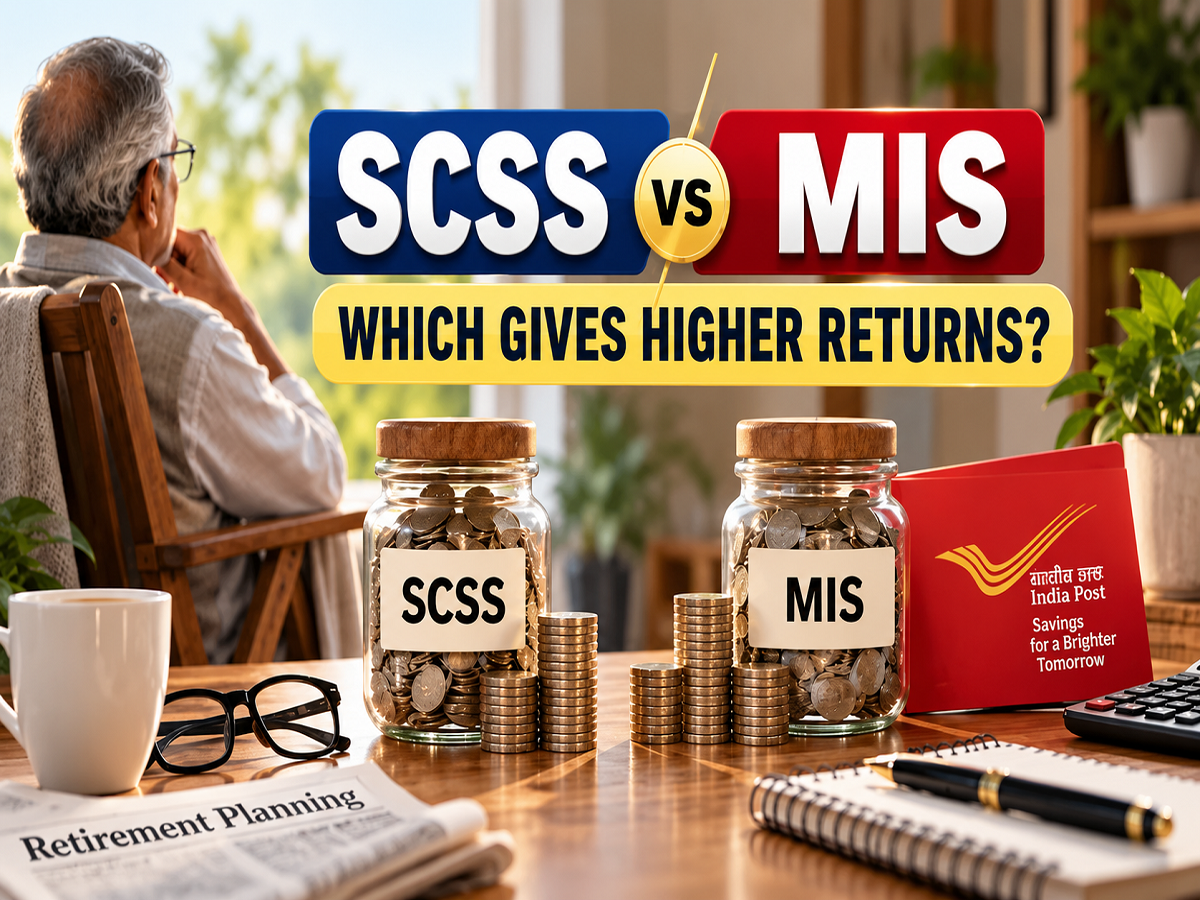
Investors looking for a predictable income from their savings often consider government-backed small savings schemes. Two popular options for this purpose are the Post Office Monthly Income Scheme (MIS) and the Senior Citizens Savings Scheme (SCSS). Although both provide interest income, their eligibility rules, investment limits, interest rates and payment frequencies are different.
According to the rates cited in the source, Post Office MIS currently offers an annual interest rate of 7.4%, while SCSS offers 8.2% per annum. MIS pays interest every month, whereas SCSS provides interest quarterly.
This difference becomes particularly important for people who depend on investment income to meet their regular expenses. Here is how the two schemes compare and how much income different investment amounts could generate at the stated interest rates.
Post Office MIS Offers Monthly Interest Payments
The Post Office Monthly Income Scheme is designed for investors who want interest to be paid every month.
The scheme has a tenure of five years. According to the details provided in the source, an individual account allows a maximum investment of ₹9 lakh, while the maximum deposit permitted in a joint account is ₹15 lakh.
At the stated annual interest rate of 7.4%, an investment of ₹9 lakh would generate ₹66,600 in interest over one year. Dividing this amount across 12 months gives an income of approximately ₹5,550 per month.
For someone primarily interested in receiving money every month, this payment structure can make MIS worth considering.
How Much Monthly Income Can MIS Generate?
The amount of monthly interest depends directly on the investment amount. Based on the 7.4% annual interest rate cited in the source, the calculations are as follows:
| Investment | Interest Rate | Annual Interest | Approx. Monthly Income |
|---|---|---|---|
| ₹5 lakh | 7.40% | ₹37,000 | ₹3,083 |
| ₹9 lakh | 7.40% | ₹66,600 | ₹5,550 |
| ₹15 lakh | 7.40% | ₹1,11,000 | ₹9,250 |
The ₹15 lakh figure applies to the stated joint-account investment limit. At 7.4%, this amount would generate annual interest of ₹1.11 lakh, equivalent to approximately ₹9,250 per month.
SCSS Offers a Higher Interest Rate
The Senior Citizens Savings Scheme follows a different structure.
According to the supplied article, SCSS currently offers an annual interest rate of 8.2%, which is higher than the 7.4% rate cited for MIS.
However, there is an important difference in how investors receive their money. Instead of paying interest every month, SCSS makes interest payments every three months.
The scheme has a five-year tenure and allows a maximum investment of ₹30 lakh, according to the source. It is primarily meant for eligible senior citizens, with the supplied article highlighting investors aged 60 years and above.
How Much Quarterly Income Can SCSS Provide?
Suppose an eligible investor deposits ₹10 lakh in SCSS. At an annual interest rate of 8.2%, the investment would generate ₹82,000 in interest over one year.
Since the interest is paid quarterly, that translates to approximately ₹20,500 every three months.
If the investment is increased to ₹20 lakh, annual interest would rise to ₹1.64 lakh, providing around ₹41,000 every quarter.
At the cited maximum investment of ₹30 lakh, annual interest would be ₹2.46 lakh. The quarterly payout would therefore be approximately ₹61,500.
| SCSS Investment | Interest Rate | Annual Interest | Approx. Quarterly Income |
|---|---|---|---|
| ₹10 lakh | 8.20% | ₹82,000 | ₹20,500 |
| ₹20 lakh | 8.20% | ₹1.64 lakh | ₹41,000 |
| ₹30 lakh | 8.20% | ₹2.46 lakh | ₹61,500 |
SCSS vs MIS: What Are the Main Differences?
The biggest distinction between these two savings options is not limited to their interest rates.
MIS provides monthly interest, making its cash-flow pattern suitable for someone who wants money credited more frequently. At the stated 7.4% rate, a ₹9 lakh individual investment generates approximately ₹5,550 per month.
SCSS, on the other hand, has a higher cited interest rate of 8.2% and a significantly higher maximum investment limit. But interest is distributed every quarter rather than monthly, and eligibility conditions apply.
Therefore, an investor comparing the two needs to consider more than just the headline interest rate.
What Should Investors Consider Before Choosing?
Investors seeking monthly interest payments can examine the Post Office MIS based on their financial requirements and eligibility. Its monthly payout structure may be useful for people who want a regular cash flow for recurring expenses.
Eligible senior citizens can separately evaluate SCSS, which carries the higher interest rate in the supplied comparison and allows a larger investment. However, its quarterly interest schedule means investors do not receive a payment every month.
Age, investment amount, required payment frequency, liquidity needs and tax position are therefore important considerations.
Do Not Compare the Schemes on Interest Rate Alone
A higher interest rate does not automatically make one savings option suitable for every investor.
For example, someone who specifically needs monthly cash flow may value the monthly payout structure of MIS. An eligible senior citizen who can manage expenses with quarterly payments may place greater importance on the higher stated SCSS rate.
Tax treatment should also be considered because interest income can affect an investor differently depending on their individual tax situation.
The calculations above are based on the 7.4% MIS and 8.2% SCSS annual interest rates provided in the source. Since small-savings interest rates and rules can be revised, investors should verify the latest official rates, eligibility conditions and account rules before investing.
Disclaimer: This article is intended for general information and awareness only. It does not constitute investment or tax advice. Consider your financial requirements and consult a qualified professional where necessary before making an investment decision.