Technology
New SIM Card Rules 2026: Verification Gets Stricter; Know Connection Limits and When a Number Can Be Disconnected
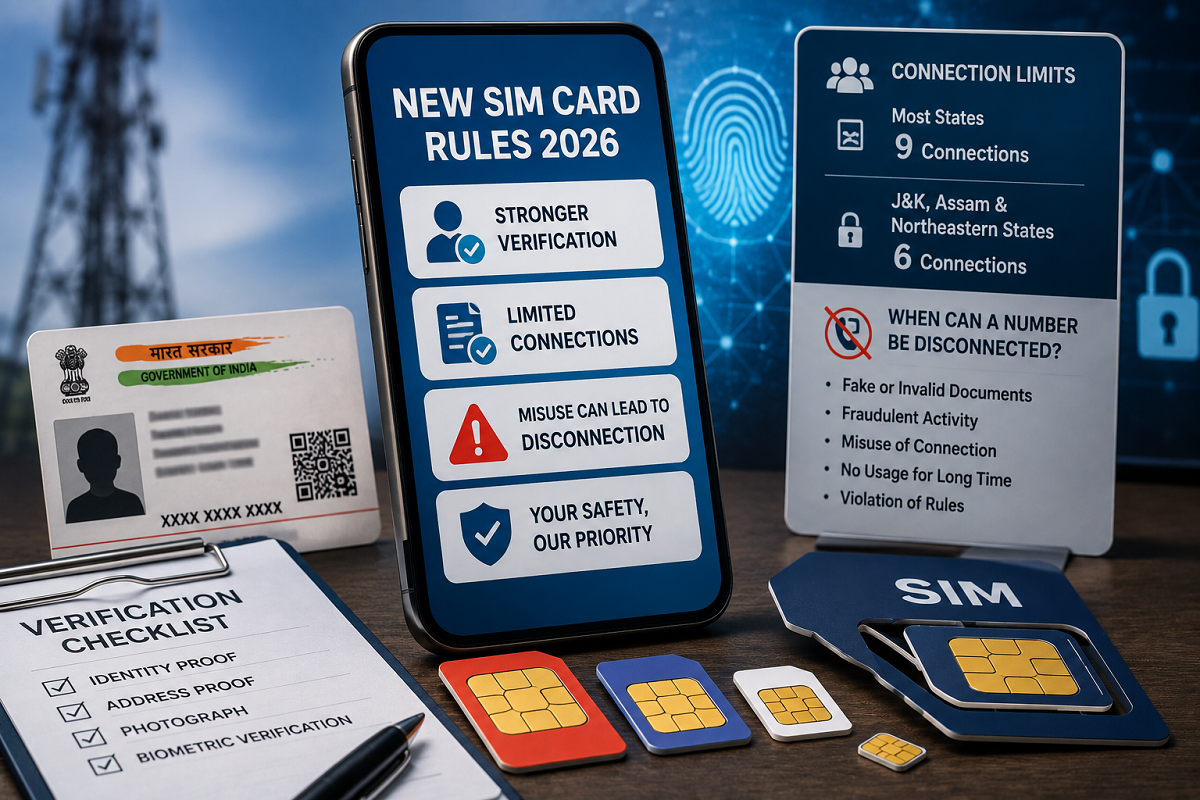
Buying and maintaining a mobile SIM connection in India is becoming more tightly regulated as the government strengthens customer identification and telecom-fraud controls. The Department of Telecommunications (DoT) has rolled out its new Telecommunications (User Identification) Rules, 2026 on its e-services system.
For mobile users, the key message is simple: SIM cards should be issued only against properly verified identities, and customers also need to ensure that they do not have unauthorised or excess mobile connections registered in their name.
So, does this mean your SIM will suddenly stop working from August 24? Not necessarily. Here's what consumers should understand.
Why Have SIM Rules Been Tightened?
Mobile numbers are increasingly linked to banking, UPI, Aadhaar-related services, social media accounts and OTP-based authentication. This also makes SIM connections attractive to cybercriminals.
Fake or improperly obtained SIM cards can be used for phishing, impersonation, financial fraud and other illegal activities.
The government has therefore been strengthening subscriber verification and systems designed to identify mobile connections obtained using fake identities or exceeding prescribed limits. DoT's own annual reporting refers to action against mobile connections taken on fake credentials or beyond the permitted individual limit. (Department of Telecommunications)
How Many SIM Cards Can One Person Have?
The number of mobile connections that can be issued in one person's name is restricted.
Under the prevailing subscriber-verification framework, the commonly applicable ceiling is nine mobile connections per individual, while a lower ceiling of six connections applies in Jammu & Kashmir, Assam and the North Eastern licensed service areas.
This limit relates to connections registered against an individual's identity—not simply the number of physical SIM cards currently inserted in their phones.
That distinction is important because an old or unused connection may still appear against your identity if it was never properly closed.
Will Your Number Be Disconnected If You Cross the Limit?
Consumers should not interpret the new framework as meaning every additional SIM will automatically stop working at midnight on August 24.
However, connections identified as exceeding the prescribed limit can be subjected to verification and regulatory action. DoT's 2025 year-end review specifically records disconnections relating to individual connection-limit violations.
Therefore, anyone who has accumulated several mobile numbers over the years should check how many active connections are actually registered in their name.
Stronger Identity Verification for New SIM Connections
One of the government's central objectives is to make it more difficult to obtain telecom connections using false or stolen identities.
DoT's new Telecommunications (User Identification) Rules, 2026 have now been made live on the official Telecom e-Service Portal.
Customers applying for a new connection should therefore be prepared to complete the prescribed identification and verification procedure.
If verification fails or the submitted identity information does not satisfy the applicable requirements, issuance of a new connection can be refused or delayed until the problem is resolved.
Check SIM Cards Registered in Your Name
One of the biggest risks is discovering that an unknown mobile connection has been issued using your identity.
Consumers should periodically check the mobile connections associated with their identity through official DoT facilities. If you find a number you do not recognise or no longer use, follow the official process to report or disconnect it.
This is particularly useful for people who have changed telecom operators or mobile numbers several times over the years.
What Should You Do With Old SIM Cards?
Simply throwing away an old SIM card is not the same as formally closing the mobile connection.
If you no longer need a number, contact the telecom operator and complete the prescribed disconnection procedure. Keeping unnecessary connections active can also make it harder to identify genuinely suspicious numbers registered against your identity.
Don't Share Your Documents for Someone Else's SIM
Never give your Aadhaar, identity documents, OTP or biometric authentication to another person so they can obtain a mobile connection in your name.
Even if the number is actually being used by a friend, employee or acquaintance, records may still show you as the registered subscriber.
That can create serious problems if the connection is later linked to fraud or another unlawful activity.
What Changes for Ordinary Mobile Users?
For most consumers who have only one or two legitimately registered SIM cards, there is little reason to panic.
The important precautions are to ensure that your mobile connections are genuinely registered in your name, complete verification whenever officially required and remove unknown or unnecessary numbers associated with your identity.
The government is also moving more telecom processes to the new 2026 regulatory framework, with DoT confirming that new telecommunications rules and user-identification provisions have been enabled on its official portals.
Don't Panic Over 'SIM Will Be Blocked Today' Messages
Messages claiming that your SIM will be disconnected immediately unless you click a link, install an app or make a payment should be treated with suspicion.
Never share OTPs, banking passwords or UPI PINs with someone claiming to be a telecom official. Verification should be completed only through your telecom operator or official government channels.
The safest approach is to check how many mobile connections are registered in your name and resolve any unknown or excess connections rather than waiting until verification becomes necessary.
Disclaimer: Telecom verification requirements and implementation procedures can be updated by the Department of Telecommunications and individual telecom operators. Consumers should check the latest official DoT/operator instructions before taking action.