
Health
How Much Cooking Oil Should Your Family Use in a Month? Experts Explain the Right Amount for Better Heart Health
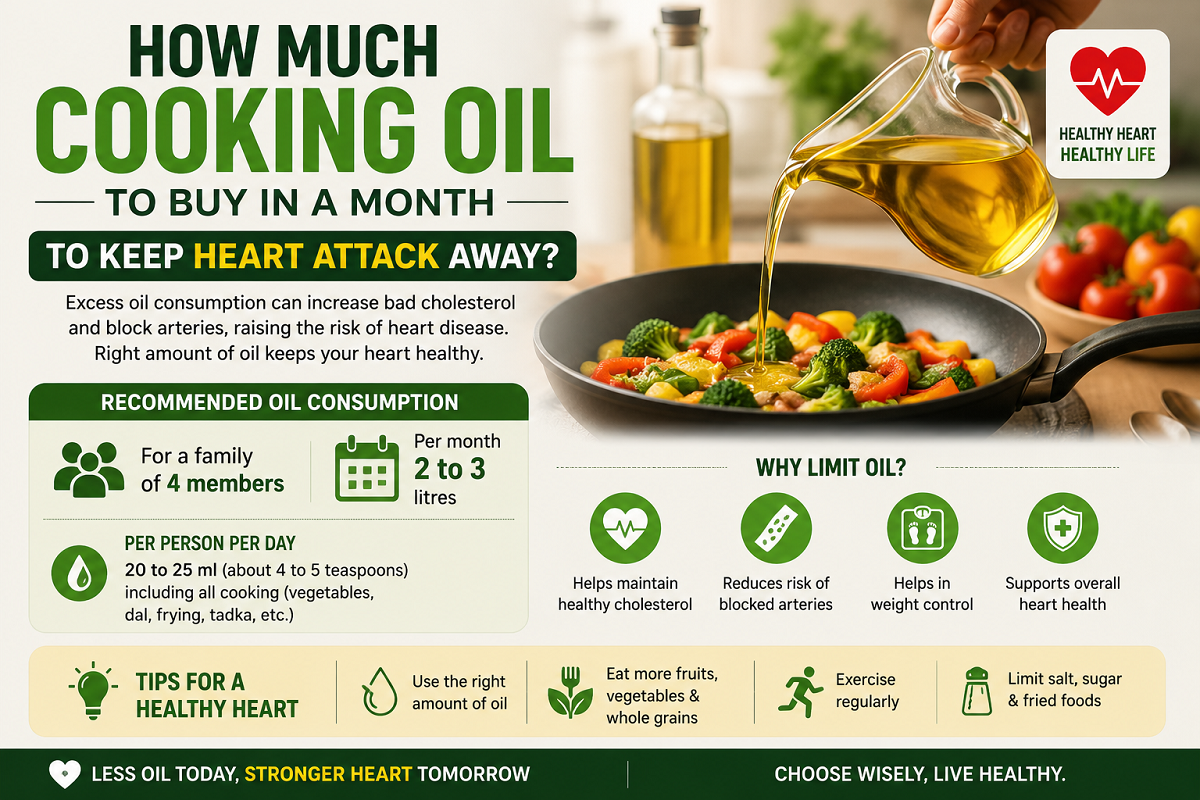
Using too much cooking oil can increase the risk of heart disease. Here's how much oil experts recommend and simple ways to keep your heart healthy.
Heart disease has become one of the leading health concerns worldwide, and lifestyle choices play a major role in determining your risk. Among them, excessive consumption of cooking oil is often overlooked. While healthy fats are essential for the body, consuming too much oil—especially through fried and processed foods—can contribute to obesity, high cholesterol, and cardiovascular problems.
So, how much cooking oil should a family use in a month? Here's what health experts generally recommend.
How Much Oil Is Recommended?
According to nutrition experts and public health recommendations, an adult should consume around 20–25 ml of visible fat (cooking oil) per day, which is roughly 4–5 teaspoons.
For a family of four, this translates to approximately:
- 2.5 to 3 litres of cooking oil per month
This estimate includes oil used for preparing vegetables, curries, dal, stir-frying, and other everyday meals. If your household frequently eats deep-fried foods, total oil consumption can easily exceed the recommended amount.
Why Limiting Oil Matters
Eating too much oil—particularly foods rich in saturated or trans fats—may increase the risk of several health problems, including:
- High LDL ("bad") cholesterol
- Weight gain and obesity
- High blood pressure
- Type 2 diabetes
- Heart disease and stroke
Maintaining moderate oil intake can help support heart health and improve overall well-being.
Choose Healthier Cooking Oils
Instead of relying on a single type of oil, experts often recommend rotating between oils with different fatty acid profiles.
Some commonly used heart-friendly options include:
- Mustard oil
- Groundnut oil
- Rice bran oil
- Olive oil (for light cooking or salads)
- Sunflower oil
- Soybean oil
Whichever oil you choose, moderation remains the key.
Tips to Reduce Daily Oil Consumption
You don't have to eliminate oil completely. Small changes in your cooking habits can make a big difference:
- Prefer steaming, boiling, grilling, or baking instead of deep-frying.
- Measure oil with a spoon instead of pouring directly from the bottle.
- Limit packaged snacks and fast food.
- Remove visible fat from meat before cooking.
- Add more vegetables, fruits, whole grains, and pulses to your meals.
Lifestyle Habits That Protect Your Heart
Healthy eating works best when combined with other heart-friendly habits.
Experts recommend:
- Exercising for at least 150 minutes per week
- Maintaining a healthy body weight
- Avoiding smoking and limiting alcohol
- Getting 7–8 hours of quality sleep
- Managing stress through yoga, meditation, or other relaxation techniques
- Monitoring blood pressure, cholesterol, and blood sugar regularly
Can Eating Less Oil Prevent Heart Attacks?
Reducing oil intake alone cannot guarantee protection from a heart attack. Heart disease is influenced by several factors, including genetics, age, physical activity, smoking, diabetes, blood pressure, and overall dietary habits.
However, keeping oil consumption within recommended limits as part of a balanced diet can significantly contribute to better heart health and lower the risk of cardiovascular disease over time.
The Bottom Line
Cooking oil is an important part of daily meals, but more is not always better. For most families of four, using around 2.5 to 3 litres of cooking oil per month is generally considered a reasonable target when combined with a balanced diet and healthy lifestyle.
If you have heart disease, diabetes, high cholesterol, or other medical conditions, consult a qualified doctor or registered dietitian for personalised dietary advice.