Technology
Hotel Check-In May Go Paperless: Aadhaar QR Verification Could Replace Photocopies for Guest Identity Checks
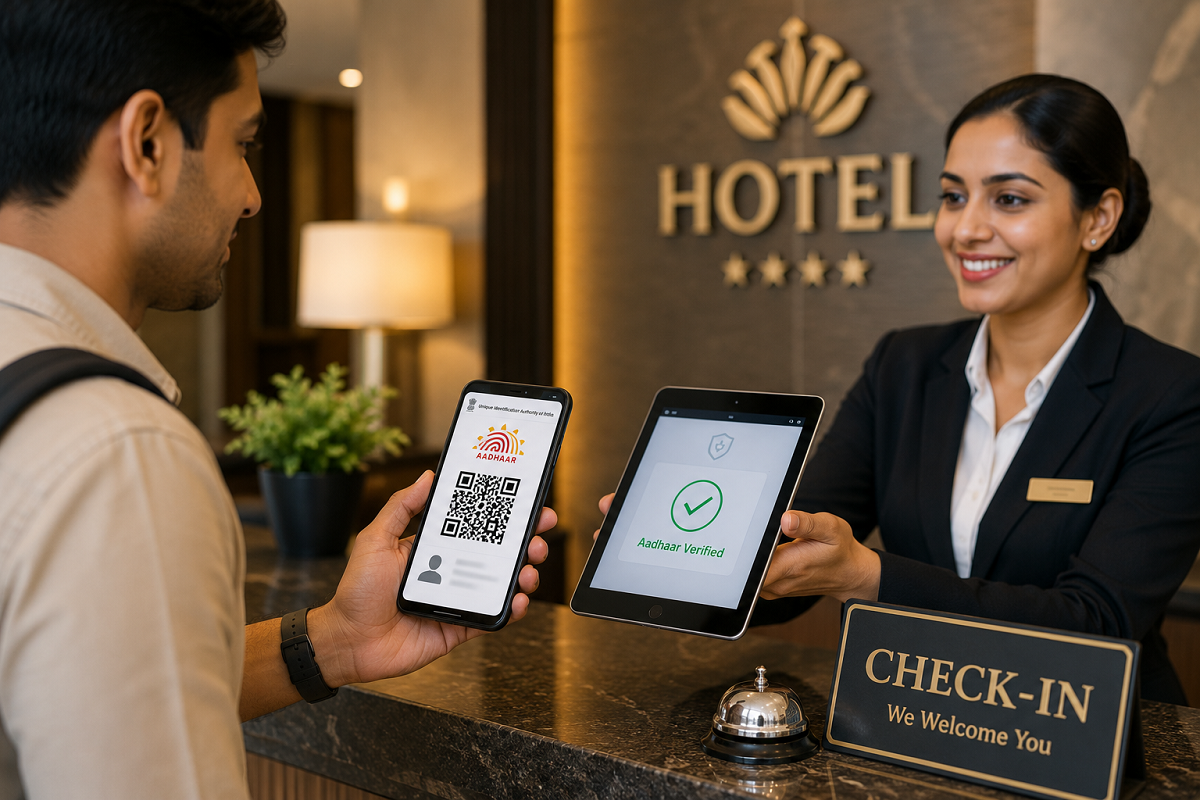
Checking into a hotel could become more convenient for travellers as Aadhaar-based identity verification increasingly shifts toward digital and paperless methods. Instead of routinely handing over a photocopy of an Aadhaar card at the reception desk, guests may be able to verify their identity through secure digital options such as QR-code scanning and other authorised Aadhaar verification mechanisms.
The Unique Identification Authority of India (UIDAI) has been expanding its Aadhaar offline verification framework, which allows service providers, including hotels, to confirm a person's identity without necessarily collecting or storing the full Aadhaar number. UIDAI specifically lists hotels among the organisations that can use Aadhaar's secure QR code for offline identity verification.
The move toward digital verification could reduce dependence on physical photocopies while also improving privacy and making hotel check-in faster.
Why Is Aadhaar Verification at Hotels Changing?
For years, many hotels have asked guests to provide a photocopy of an identity document during check-in. Aadhaar is commonly used for this purpose because it contains important identifying information.
However, handing over a physical copy can result in more personal information being shared than may actually be required for a basic identity check.
UIDAI's digital verification ecosystem is designed to reduce this dependency on physical documents. The authority's offline verification framework allows an eligible organisation to verify Aadhaar information through digitally signed data rather than simply retaining a photocopy.
This approach can help hotels confirm that an identity document is genuine while reducing the need to store unnecessary Aadhaar information.
How Can Aadhaar Be Checked Without Taking a Photocopy?
One of the main alternatives is the Secure Aadhaar QR Code.
Every Aadhaar format, including the Aadhaar letter, e-Aadhaar, PVC card and mAadhaar, carries a digitally signed QR code. UIDAI says this QR code can be used for offline identity verification.
Hotels and other authorised service providers can scan this code using supported verification tools.
Once scanned and digitally verified, the system can confirm relevant Aadhaar details and help establish whether the information is authentic.
This means the hotel does not necessarily need to keep a photocopy simply to validate the guest's identity.
What Information Is Available Through the Aadhaar QR Code?
According to UIDAI, the Secure QR Code contains selected demographic details along with the Aadhaar holder's photograph.
The information includes the last four digits of the Aadhaar number, name, address, gender, date of birth and photograph. It also contains masked mobile number and email information.
Importantly, the data is digitally signed by UIDAI, which enables the verification system to determine whether the QR information is genuine.
The QR code is therefore not simply an image printed on the card; it functions as a digitally verifiable identity record.
Hotels Are Specifically Allowed to Use Offline Aadhaar Verification
UIDAI has clearly stated that service agencies, including hotels, can use Aadhaar's Secure QR Code for offline verification.
This is significant because it provides a formal mechanism for hotels to verify Aadhaar without depending solely on a photocopy.
The broader Offline Verification Seeking Entity, or OVSE, framework is also expanding across sectors. In April 2026, the government said at least 100 entities had already been onboarded to use Aadhaar-based offline verification, including organisations from the hospitality sector.
The system is intended to support consent-based and paperless verification while reducing physical document handling.
Aadhaar App Can Also Support Hotel Check-In
UIDAI's newer Aadhaar App further expands digital identity verification.
According to an official UIDAI release, the app supports real-world uses such as hotel check-ins through QR-code scanning by Offline Verification Seeking Entities. It is designed to encourage data minimisation and selective sharing of information.
This could make the check-in experience simpler for travellers carrying a smartphone.
Instead of submitting a printed photocopy, a guest may be able to present a digital Aadhaar credential or QR code for verification, depending on the hotel's systems and the process it has implemented.
What About OTP-Based Aadhaar Verification?
Aadhaar authentication also supports OTP-based verification.
UIDAI's authentication framework allows a one-time password to be sent to the Aadhaar holder's registered mobile number or email. The OTP can then be used to authenticate the person electronically where such authentication is authorised and supported.
However, hotel verification processes may vary. Some establishments may use QR-based offline verification, while others may continue to rely on permitted identity-checking procedures depending on their technology and regulatory requirements.
Travellers should therefore not assume that every hotel will follow exactly the same check-in method immediately.
Paperless Aadhaar e-KYC Offers Another Privacy-Focused Option
UIDAI also provides Aadhaar Paperless Offline e-KYC.
This allows an Aadhaar holder to generate a digitally signed document that can be shared with a service provider for offline identity verification. UIDAI says this method enables verification without requiring the service provider to collect or store the full Aadhaar number.
The system can be useful where businesses need identity confirmation but do not require access to all of the information printed on a physical Aadhaar copy.
This reflects the broader principle of data minimisation—sharing only the information necessary for a particular transaction.
What Are the Benefits for Hotel Guests?
Paperless Aadhaar verification could provide several advantages.
Travellers may no longer need to repeatedly carry or arrange photocopies of their Aadhaar card for every stay. Digital verification can also make the reception process faster if the hotel's technology is properly integrated.
Privacy is another important benefit. Instead of leaving behind a physical copy containing several personal details, guests may be able to use a digitally verified credential that provides only the information required for identity confirmation.
For hotels, moving away from photocopies can also reduce the burden of storing and managing physical identity documents.
Does This Mean Every Hotel Has Stopped Taking Aadhaar Copies?
Not necessarily.
The important change is that UIDAI provides secure digital and offline alternatives that hotels can use for identity verification. Implementation can differ among hotels depending on their systems, onboarding status and applicable local requirements.
Therefore, travellers may still encounter hotels that follow existing document-check procedures while adoption of newer digital methods continues.
Guests should also remember that removing the need for a photocopy does not mean identity verification itself is being eliminated. Hotels may still need to confirm the identity of a person checking in, but that confirmation can increasingly be performed through digital methods rather than paper copies.
What Travellers Should Know Before Their Next Hotel Stay
The shift toward Aadhaar QR codes and paperless verification represents a move toward more secure and privacy-conscious hotel check-ins.
UIDAI's framework already allows hotels to use Secure Aadhaar QR Codes for offline verification, while the Aadhaar App and paperless offline e-KYC provide additional ways to establish identity digitally.
For travellers, the main takeaway is simple: carrying a physical Aadhaar photocopy may become less necessary as more hotels adopt digital verification systems.
However, check-in requirements can still differ between properties. It is therefore sensible to carry an accepted identification option and confirm the hotel's check-in policy when necessary.
As digital verification becomes more widely adopted, hotel stays could become quicker and more convenient while reducing unnecessary sharing of Aadhaar photocopies and improving control over personal information.