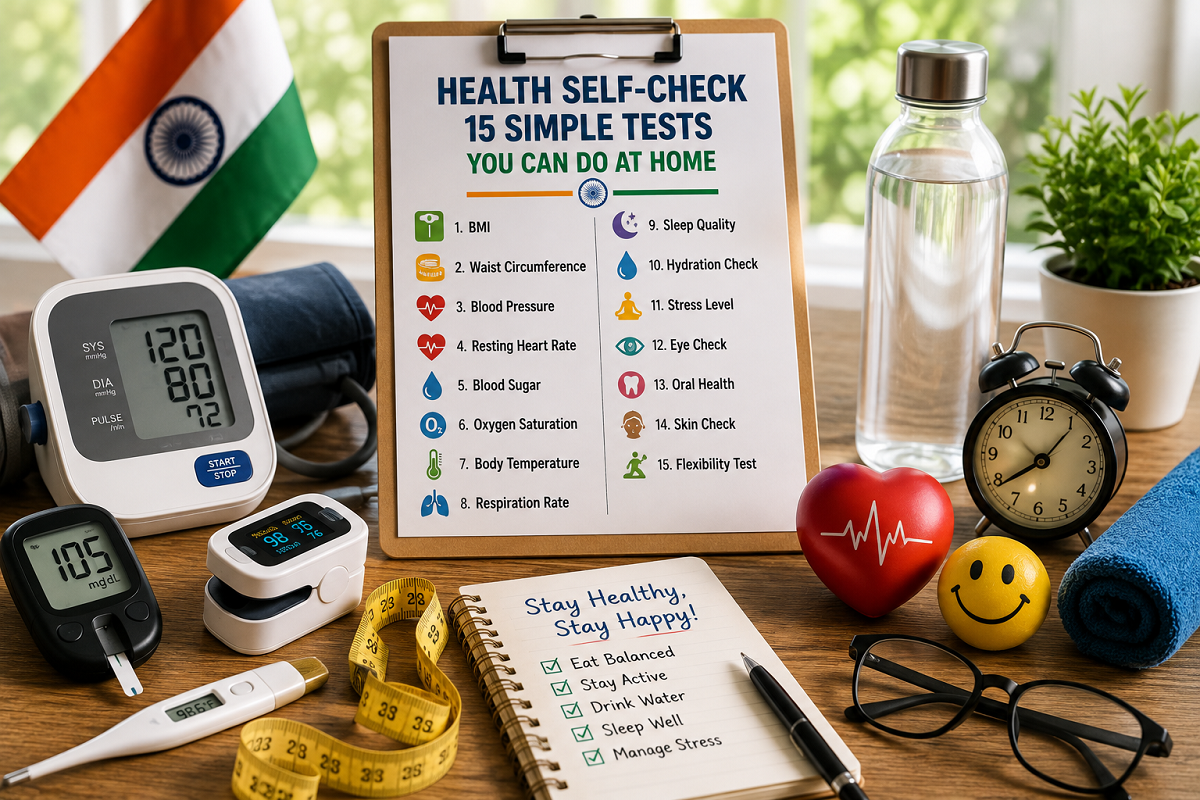
Health Self-Check: From BMI and waist size to blood pressure, blood sugar, sleep and mental well-being, these simple checks can help you better understand your overall health. However, home checks are only screening tools and cannot replace medical tests or professional advice.
Independence Day can be more than a day of celebration. It can also serve as a useful annual reminder to pay attention to your health. Many people wait for symptoms before checking basic health indicators, even though a few simple observations and measurements can help identify changes worth discussing with a healthcare professional.
Here are 15 health self-checks you can consider doing at home this August 15.
1. Calculate Your BMI
Body Mass Index, or BMI, compares your weight with your height. The formula is:
BMI = Weight in kilograms ÷ (Height in metres × Height in metres)
For most adults, a BMI between 18.5 and 24.9 is generally classified as the healthy-weight range. However, BMI does not directly measure body fat and can be misleading for muscular people, older adults and some population groups.
It should therefore be viewed as a screening measure rather than a diagnosis.
2. Measure Your Waist Circumference
Where body fat is stored can also matter. Excess fat around the abdomen is associated with a higher risk of metabolic conditions such as type 2 diabetes and cardiovascular disease.
Use a measuring tape around your waist, keeping it level and comfortably snug without compressing the skin.
Waist-risk thresholds can differ according to sex and ethnicity, so avoid relying on a single universal number without considering the appropriate clinical guidance.
3. Check Your Blood Pressure
If you have a validated home blood-pressure monitor, checking your BP can provide useful information.
Sit quietly for about five minutes before taking a reading. Keep your feet flat on the floor, support your back and position your arm so that the cuff is approximately at heart level.
A reading around 120/80 mmHg is often used as a familiar reference point, but a single reading does not determine whether someone has hypertension. Consistently unusual readings should be discussed with a healthcare professional.
4. Monitor Blood Sugar When Appropriate
People who have been advised to monitor glucose can use a glucometer to measure their blood sugar at home.
Fasting and post-meal readings can provide different information, so measurements should be taken according to medical advice.
A single high reading does not necessarily mean you have diabetes. Diagnosis generally requires appropriate laboratory testing and clinical assessment.
5. Measure Your Resting Heart Rate
Your pulse can be checked by placing two fingers over the wrist and counting the beats.
For most adults, a resting heart rate of roughly 60 to 100 beats per minute is commonly considered within the normal range, although athletes and physically fit people may have lower resting rates.
A persistently very fast, unusually slow or irregular heartbeat—particularly when accompanied by dizziness, chest discomfort, fainting or breathlessness—needs medical attention.
6. Review Your Sleep
Instead of simply counting hours, consider the quality of your sleep.
Ask yourself whether you sleep consistently, wake repeatedly during the night, struggle to fall asleep, snore heavily or remain tired despite apparently getting enough sleep.
Most adults generally need around 7–9 hours of sleep per night, although individual requirements vary.
7. Check Your Hydration Habits
Rather than following a rigid "eight glasses for everyone" rule, consider whether you are drinking enough fluid for your body, activity level and environment.
Fluid requirements change with temperature, exercise, diet, pregnancy and certain medical conditions.
Persistent thirst, very dark urine, dizziness or dry mouth can sometimes accompany dehydration, although these symptoms can have other causes too.
8. Do a Mental Well-Being Check
Physical measurements aren't the only indicators worth monitoring.
Think about how you have been feeling over the past few weeks. Persistent sadness, anxiety, irritability, difficulty concentrating, loss of interest in usual activities or changes in sleep and appetite may deserve attention.
If emotional difficulties persist or interfere with everyday life, consider speaking with a qualified mental-health professional.
9. Don't Rely on a Breath-Holding Test for Lung Health
You may see online challenges suggesting that the number of seconds you can hold your breath reveals how healthy your lungs are. This is not a reliable diagnostic test of lung function.
Breath-holding ability is affected by many factors and cannot rule out asthma, chronic lung disease or other respiratory problems.
Persistent cough, wheezing, breathlessness or unexplained difficulty exercising should be medically assessed rather than evaluated through a breath-holding challenge.
10. Test Your Flexibility
A simple flexibility check can help you notice changes in mobility.
For example, while keeping movements comfortable, see how easily you can bend forward or move major joints through their usual range of motion.
Being unable to touch your toes does not automatically indicate poor health. Flexibility varies considerably between people and depends on age, anatomy, activity levels and previous injuries.
11. Pay Attention to Digestion
Notice whether symptoms such as bloating, constipation, diarrhoea, heartburn or abdominal discomfort are becoming frequent.
An occasional digestive problem can occur for many harmless reasons. However, persistent symptoms, unexplained weight loss, blood in the stool, severe abdominal pain or repeated vomiting should not be ignored.
12. Check for Changes in Vision
Try reading familiar text at your usual distance and notice whether objects at a distance appear as clear as before.
Frequent headaches, blurred vision, difficulty reading, double vision or noticeable deterioration in sight are reasons to consider a professional eye examination.
A home vision check cannot detect many eye diseases, so regular eye examinations remain important.
13. Look at Your Skin and Nails
Changes in your skin and nails can sometimes provide clues about overall health, but they rarely point to one specific nutritional deficiency on their own.
Notice persistent rashes, unusual changes in moles, unexplained discoloration, wounds that do not heal or major changes in nail appearance.
Hair loss, brittle nails and dry skin can have numerous causes, so self-diagnosing a vitamin or mineral deficiency based solely on appearance is best avoided.
14. Assess Your Everyday Energy
Consider whether your energy level has changed noticeably.
Occasional tiredness after a busy day is normal. Persistent fatigue despite adequate rest, however, can have many causes, ranging from sleep problems and stress to anaemia, thyroid disorders or other health conditions.
Unexplained fatigue lasting for weeks deserves medical evaluation.
15. Observe Exercise Recovery
After your usual moderate physical activity, notice how your breathing and heart rate recover.
As fitness improves, recovery after comparable activity often becomes easier. However, there is no single home recovery-time number that proves someone is healthy.
Stop exercising and seek appropriate medical attention if activity causes chest pain, fainting, severe breathlessness or other concerning symptoms.
These Checks Are a Starting Point, Not a Health Certificate
Completing all 15 checks does not necessarily mean you are completely healthy. Conditions such as high cholesterol, early diabetes and some cancers may develop without obvious symptoms.
Age-appropriate medical check-ups, vaccinations and recommended screening tests therefore remain important even when you feel well.
Use this Independence Day health check as an opportunity to notice changes, improve everyday habits and identify anything that may deserve professional evaluation.
Disclaimer: This article provides general health information and is not a substitute for medical diagnosis or treatment. Consult a qualified healthcare professional if you have persistent symptoms, abnormal readings or concerns about your health.