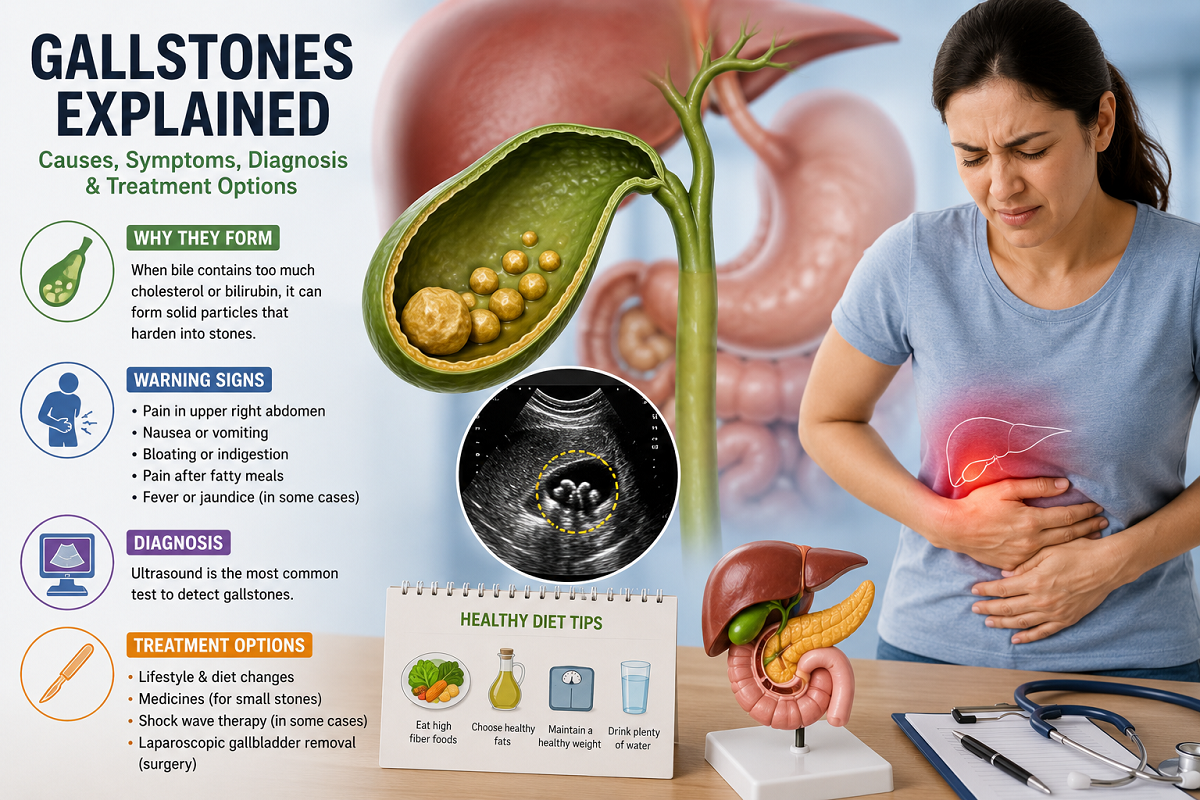
Gallstones are hardened deposits that develop inside the gallbladder, a small organ located beneath the liver. While some people can have gallstones for years without experiencing any problems, others may develop sudden and severe abdominal pain if a stone blocks the normal flow of bile.
The gallbladder stores bile, a digestive fluid produced by the liver that helps the body digest fats. Gallstones can develop when the chemical balance of bile changes or when the gallbladder does not empty effectively.
Gallstones are relatively common, and several factors can increase the likelihood of developing them. Understanding the symptoms is particularly important because a blocked bile duct can sometimes lead to complications requiring prompt medical attention.
What Exactly Are Gallstones?
Gallstones are solid deposits that form from substances contained in bile. They can vary considerably in size, ranging from tiny particles to much larger stones.
There are two main types: cholesterol stones and pigment stones.
Cholesterol gallstones are generally the most common type. They are usually associated with an imbalance in the substances that make up bile.
Pigment stones, meanwhile, are associated with bilirubin and may be more likely to occur in people with certain medical conditions.
Not everyone who develops gallstones needs treatment. Stones that do not cause symptoms are sometimes discovered accidentally during imaging performed for another reason.
Why Do Stones Develop in the Gallbladder?
One major factor is excess cholesterol in bile.
Normally, bile contains substances that help keep cholesterol dissolved. If the liver releases more cholesterol than the bile can adequately handle, the excess may begin to crystallize. Over time, these crystals can develop into gallstones.
Another possible factor is elevated bilirubin.
Bilirubin is produced when the body breaks down red blood cells. Certain conditions can cause bilirubin levels to rise, potentially contributing to the development of pigment gallstones.
Gallbladder function itself also matters. If the organ does not empty completely or frequently enough, bile can become concentrated, creating conditions that may encourage stone formation.
Who Is More Likely to Develop Gallstones?
Gallstones can affect anyone, but some people face a greater risk than others.
Women have a higher likelihood of developing gallstones, and the risk can also increase with age. Obesity, pregnancy and certain dietary or metabolic factors may contribute as well.
Rapid weight loss is another important risk factor. Losing a large amount of weight over a short period can alter bile composition and interfere with normal gallbladder emptying.
Family history, diabetes and certain blood or liver-related conditions may also influence risk.
Having one or more risk factors, however, does not mean a person will definitely develop gallstones.
What Are the Common Symptoms of Gallstones?
Many gallstones are "silent," meaning they produce no noticeable symptoms.
Problems typically begin when a stone moves and obstructs a bile duct. This can trigger what is commonly called a gallbladder attack or biliary colic.
A person may experience sudden, intense pain in the upper-right portion of the abdomen. Pain can also occur in the upper-middle abdomen and may spread toward the back or right shoulder.
Other possible symptoms include:
- Nausea or vomiting
- Abdominal discomfort after eating
- A feeling of fullness or bloating
- Pain that may last from several minutes to a few hours
Some symptoms can indicate that a complication has developed and should not be ignored.
Fever and Jaundice Can Be Warning Signs
Gallstones can occasionally cause inflammation, infection or obstruction of the bile ducts.
Seek prompt medical assessment if severe abdominal pain is accompanied by fever, chills or jaundice—a yellowing of the skin or whites of the eyes.
Dark urine and unusually pale or clay-colored stools can also occur when normal bile flow is obstructed.
Severe abdominal pain that makes it difficult to sit comfortably or find relief should also be medically evaluated.
These symptoms can be associated with complications such as acute cholecystitis, bile duct obstruction or pancreatitis.
How Are Gallstones Diagnosed?
If a doctor suspects gallstones, an abdominal ultrasound is commonly one of the first tests used.
Ultrasound can help detect stones inside the gallbladder and assess the organ for signs of inflammation or other abnormalities.
Blood tests may also be ordered, particularly when there are concerns about infection, inflammation or problems involving the liver or pancreas.
Depending on the symptoms and initial findings, doctors may recommend additional imaging or specialized tests to determine whether stones are present in the bile ducts.
The appropriate investigation depends on the individual's symptoms and clinical condition.
Do All Gallstones Need Treatment?
No.
Gallstones that are discovered incidentally and are not causing symptoms may not require immediate treatment. A doctor may instead recommend observation depending on the person's overall health and risk factors.
Treatment becomes more likely when gallstones repeatedly cause pain or lead to complications.
For symptomatic gallstones, removal of the gallbladder—known as cholecystectomy—is a common treatment. The operation is frequently performed using minimally invasive laparoscopic surgery, although the appropriate procedure depends on the patient's circumstances.
People can generally live without a gallbladder because bile produced by the liver can flow directly into the small intestine.
Medication may be considered in selected situations, but it is not suitable for every type of gallstone and can take considerable time to work.
Can Diet Help Prevent Gallstones?
There is no guaranteed diet that can prevent every case of gallstones, but maintaining healthy eating habits and body weight may help reduce risk.
A balanced diet that includes vegetables, fruits, whole grains and other fiber-rich foods can support overall digestive and metabolic health.
Rather than eliminating all dietary fat, the focus should generally be on a balanced eating pattern and healthier sources of fat.
Frequently consuming highly processed foods and diets high in unhealthy fats or refined carbohydrates may not be helpful for long-term health.
Avoid Crash Diets and Extremely Rapid Weight Loss
Maintaining a healthy body weight can reduce several health risks, but the way weight is lost matters.
Crash diets and extremely rapid weight loss can increase the likelihood of gallstone formation in susceptible individuals.
For people trying to lose weight, a gradual and sustainable approach involving appropriate nutrition and regular physical activity is generally preferable.
People undergoing bariatric surgery or medically supervised rapid weight-loss programmes may have different risks and should follow their healthcare team's recommendations.
Regular Activity May Support Overall Health
Regular physical activity is beneficial for weight management and metabolic health and may contribute to lowering gallstone risk.
There is no need to rely on extreme exercise routines. Consistency is generally more useful than suddenly adopting an unsustainable programme.
People with existing medical conditions should choose activities appropriate for their health and discuss major changes with a healthcare professional when necessary.
When Should You See a Doctor?
Occasional digestive discomfort does not automatically mean that gallstones are responsible. Many gastrointestinal conditions can produce similar symptoms.
However, recurrent pain in the upper-right abdomen—particularly after meals—deserves medical attention.
Urgent assessment is especially important when abdominal pain occurs with fever, chills, repeated vomiting, jaundice, dark urine or pale stools.
Early evaluation can help identify whether a gallstone is blocking a duct or causing inflammation and allow appropriate treatment before complications become more serious.
The Bottom Line
Gallstones develop when substances in bile become imbalanced or when the gallbladder does not empty normally, allowing hardened deposits to form.
Many people never experience symptoms, but stones that obstruct the bile ducts can cause severe abdominal pain, nausea and potentially serious complications.
Maintaining a healthy weight, eating a balanced fiber-rich diet, staying physically active and avoiding extremely rapid weight loss may help reduce the risk. Anyone experiencing severe or recurring abdominal pain—particularly with fever or jaundice—should seek medical evaluation rather than attempting to manage the symptoms solely with home remedies.
Disclaimer: This article is intended for general informational purposes only and should not be considered a substitute for professional medical advice, diagnosis or treatment. Consult a qualified healthcare professional for symptoms, diagnosis and treatment decisions.