
Business
EPFO Member Dies While in Service? Family Can Claim PF, Insurance and Pension—Know the Process
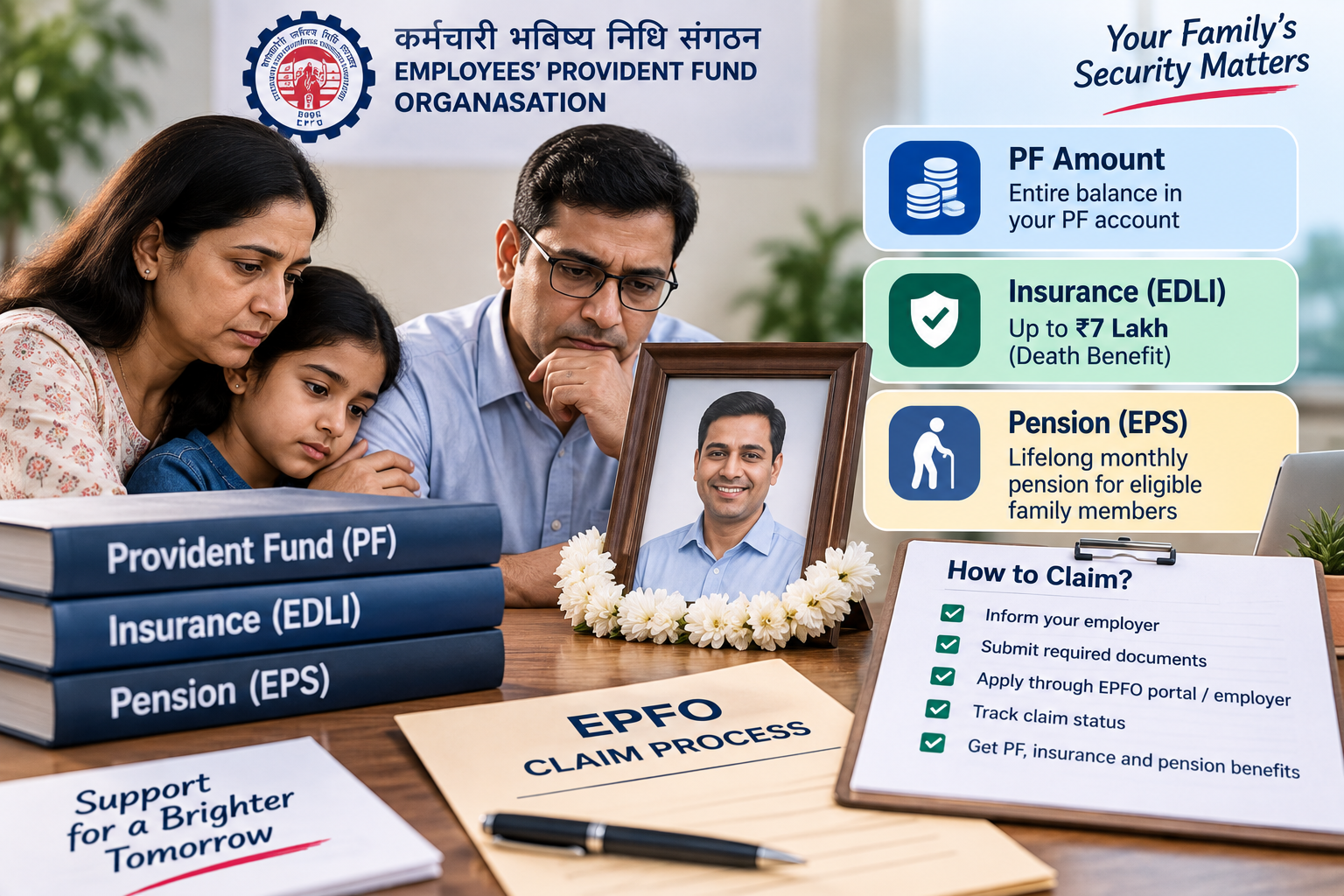
When an EPFO member dies while still employed, the financial impact on the family can be significant, particularly if the employee was the household's main earning member. However, eligible nominees and family members may be entitled to several benefits linked to the deceased employee's EPFO membership.
Depending on eligibility, these can include the accumulated Employees' Provident Fund (EPF) balance, insurance benefits under the Employees' Deposit Linked Insurance (EDLI) Scheme, and family pension benefits under the Employees' Pension Scheme (EPS), 1995.
The family should understand that these are separate benefits and may involve different claim forms and eligibility conditions. Keeping the employee's EPFO and personal records in order can make the settlement process easier.
First Step: Obtain the Death Certificate
One of the first documents the family will need is an official death certificate.
It can generally be obtained through the relevant local authority, such as the municipal body or gram panchayat, depending on where the death was registered. In hospital-related cases, the hospital documentation is also important for completing the registration process.
Families should keep several copies of the death certificate because it may be required not only for EPFO claims but also for bank accounts, insurance policies, investments, loans and other financial matters.
Once this document is available, the family can begin preparing the EPFO-related claims.
What Can the Family Claim From EPFO?
Following the death of an eligible EPFO member, the nominee or qualifying family members may have access to three major benefits.
These are the balance accumulated in the employee's EPF account, insurance coverage available under EDLI and pension benefits under EPS-95.
Each component serves a different purpose and should be understood separately.
1. Claiming the Deceased Member's PF Balance
The money accumulated in the deceased employee's EPF account can be claimed by the eligible nominee, family member or legal heir, as applicable.
The settlement generally includes the eligible EPF accumulation along with interest credited according to the applicable EPFO rules.
Form 20 is associated with the final settlement of a deceased member's provident fund account.
Depending on the available EPFO facility and circumstances of the claim, the process may be initiated through the prescribed online or offline route.
Having a valid nomination registered with EPFO can simplify the process because it clearly identifies the person nominated to receive the applicable benefit.
Cases where no valid nomination exists may require additional documentation to establish the claimant's entitlement.
2. EDLI Insurance Can Provide Up to ₹7 Lakh
Another important benefit is provided through the Employees' Deposit Linked Insurance Scheme (EDLI).
EDLI provides insurance protection linked to eligible EPFO membership without requiring the employee to separately purchase an individual life insurance policy for this particular benefit.
If an eligible employee dies while in service, the nominee or eligible family member can claim the insurance benefit according to the EDLI rules.
The maximum benefit can be up to ₹7 lakh, subject to the applicable calculation, eligibility requirements and scheme provisions. This means ₹7 lakh should not be interpreted as a fixed amount automatically paid in every death claim.
The prescribed claim form for an EDLI benefit following the death of a member is Form 5IF.
Families should check the applicable EPFO requirements because supporting documents may be required along with the claim.
3. Family Pension Under EPS-95
Eligible family members may also qualify for pension benefits under the Employees' Pension Scheme, 1995.
The surviving spouse may be entitled to a widow or widower pension in accordance with EPS-95 provisions.
Eligible children can also receive children's pension. Under the general provisions, benefits can be available for up to two children at a time and are ordinarily payable until the prescribed age, subject to EPS rules.
Special provisions can apply in cases involving eligible children with permanent and total disability.
The relevant pension claim is generally made using Form 10D.
Families should avoid assuming that every dependent automatically receives the same pension amount or that every pension continues for life. The type, amount and duration depend on the beneficiary category and applicable EPS provisions.
Keep EPFO Details and Nomination Updated
The claims process can become more complicated when an employee has not kept nomination and family information updated.
Employees should therefore periodically check their EPFO records and ensure that nomination details reflect their current family circumstances.
Correct details can reduce uncertainty for family members during an already difficult period.
Family members processing a death claim should also keep the deceased employee's UAN, PF account information, employment records and relevant bank details available.
What Happens to the Deceased Person's Loans?
EPFO benefits and outstanding loans are separate matters.
If the deceased had a home loan, car loan, personal loan or another outstanding borrowing, family members should contact the lender and determine whether the loan was covered by a credit-life or loan-protection insurance policy.
If suitable insurance coverage exists, the insurer may settle the covered outstanding liability according to the terms of the policy.
However, families should not assume that every loan is automatically cancelled after the borrower's death. The outcome depends on factors including insurance coverage, co-borrowers, guarantors, the nature of the loan and the lender's contractual rights.
The loan documents should therefore be reviewed before making payments or accepting liability.
Do Not Simply Withdraw Money Using the Deceased Person's ATM Card
Family members should also follow the proper procedure for money remaining in the deceased person's bank accounts.
Using the deceased account holder's ATM card, PIN or online banking credentials after death can create legal and procedural complications.
Instead, the nominee or eligible claimant should inform the bank and follow its deceased-account settlement procedure.
The bank may request documents such as the death certificate, claimant identification and account details. Additional documents may be necessary if there is no registered nominee or if competing claims exist.
One Death Can Involve Multiple Separate Claims
An EPFO member's death can result in more than one financial entitlement for the family, but these benefits should not be treated as a single automatic payment.
The deceased member's EPF accumulation, EDLI insurance benefit of up to ₹7 lakh, and EPS family pension are governed by their respective rules and claim procedures.
Families should first obtain the death certificate and then identify the employee's EPFO details, nomination status and eligible beneficiaries. Form 20 is used for the deceased member's PF settlement, Form 5IF is associated with the EDLI insurance claim, and Form 10D is used for eligible pension claims.
Knowing about all three components is important because claiming the PF balance alone could mean overlooking other benefits that eligible family members may be entitled to receive.