
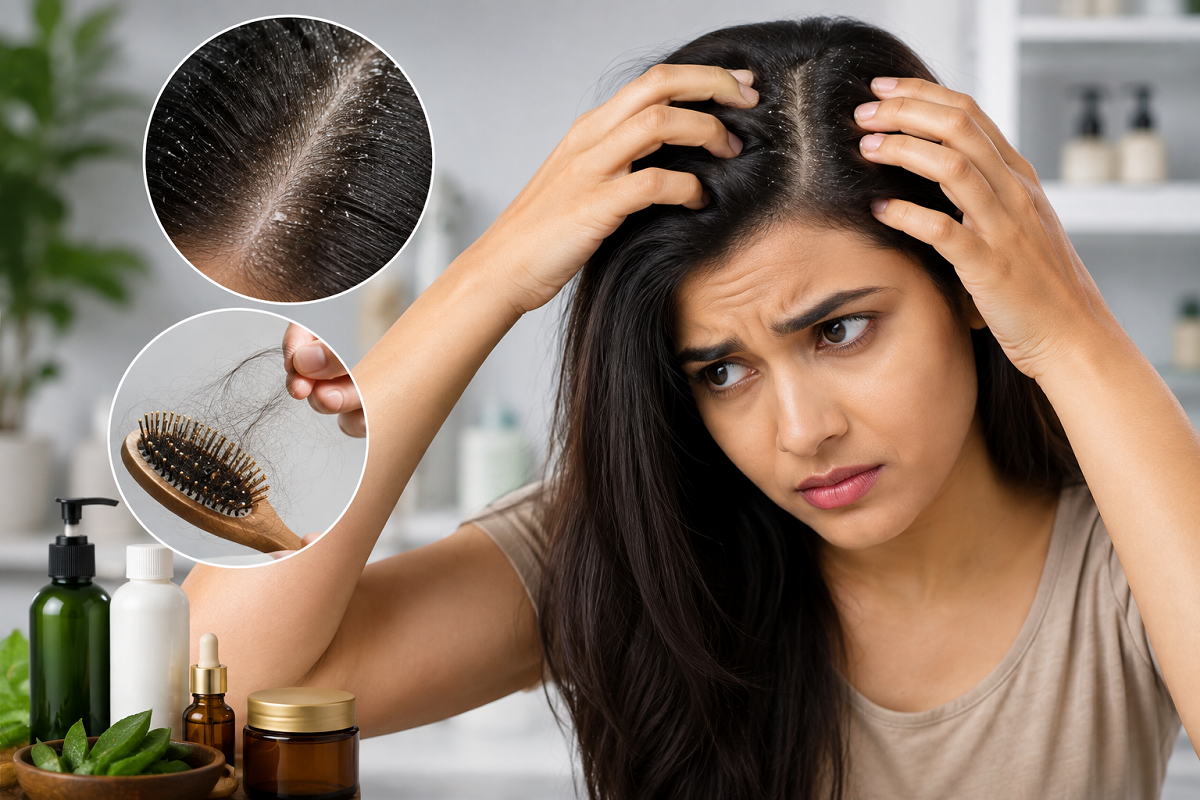
Finding flakes on your shoulders is frustrating enough, but noticing increased hair fall at the same time can make the situation more worrying. Many people immediately assume that dandruff is causing their hair loss. While scalp irritation and persistent scratching can contribute to increased shedding or hair breakage, dandruff is not necessarily the only reason someone may be losing hair.
It is normal to shed some hair every day as part of the natural hair-growth cycle. The concern arises when shedding suddenly increases, continues for a prolonged period, produces visible thinning or occurs along with significant scalp symptoms.
When dandruff and increased hair fall appear together, the first step is to understand what is happening on the scalp rather than treating every case as the same problem.
Does Dandruff Directly Cause Hair Loss?
Ordinary dandruff by itself does not typically cause permanent hair loss.
However, dandruff can cause itching. When the scalp becomes extremely itchy, repeated scratching may irritate the skin and increase inflammation. Aggressive scratching can also damage hair shafts and contribute to breakage.
In more severe scalp conditions, inflammation may be associated with increased shedding.
This is why controlling the underlying scalp problem is important. At the same time, it is equally important not to assume that dandruff explains every case of hair loss.
Someone can have dandruff and an unrelated cause of hair shedding simultaneously.
What Looks Like Dandruff May Be Another Scalp Condition
White or yellowish flakes do not always mean that a person has simple dandruff.
Seborrheic dermatitis, for example, can affect the scalp and cause flaking, itching, redness and sometimes greasy-looking scales. It may require a more targeted management approach depending on its severity.
Other conditions can also produce dandruff-like symptoms.
Scalp psoriasis can cause thicker, scaly patches, while eczema may result in dryness, itching and inflammation. Certain fungal infections of the scalp can also cause scaling and may sometimes be accompanied by areas of hair loss.
Because these conditions can resemble one another, persistent or severe symptoms are better assessed by a dermatologist instead of repeatedly experimenting with different home remedies.
Start by Getting Dandruff Under Control
For mild dandruff, an over-the-counter anti-dandruff shampoo may be sufficient for some people.
Products can contain active ingredients such as selenium sulfide or zinc-based compounds. Antifungal shampoos containing ketoconazole may also be recommended in appropriate cases.
However, the right product and frequency of use depend on the condition being treated.
One common mistake is applying an anti-dandruff shampoo and washing it off immediately. Some medicated shampoos need to remain in contact with the scalp for a specified period before rinsing.
Follow the directions provided on the product label or instructions given by your dermatologist rather than assuming that leaving a medicated product on for longer will make it more effective.
If dandruff remains severe or repeatedly returns despite appropriate shampoo use, professional evaluation may be needed.
Avoid Scratching an Itchy Scalp
Scratching may provide temporary relief from itching, but repeated or forceful scratching can make scalp irritation worse.
Try to avoid using fingernails to aggressively scratch or remove flakes. Similarly, excessively vigorous brushing or combing can place additional stress on already fragile hair.
Hair should be handled gently, particularly when you are experiencing increased shedding.
Very tight hairstyles should also be avoided. Hairstyles that repeatedly pull on the hair—such as tight ponytails, braids or buns—can put unnecessary tension on the hair follicles. Prolonged traction can itself contribute to a form of hair loss.
Hair Fall Can Have Causes Beyond Dandruff
If hair shedding continues after the dandruff improves, another cause may need to be investigated.
Hair loss is a symptom rather than a single disease, and there are many possible triggers. Genetics, hormonal changes, nutritional deficiencies, significant stress, recent illness, certain medicines and thyroid-related problems are among the factors that may contribute to increased shedding in some people.
Pattern hair loss and conditions such as alopecia areata can also occur independently of dandruff.
For this reason, treating the scalp alone may not solve the problem if another condition is responsible for the hair loss.
When Should You Visit a Dermatologist?
Professional evaluation becomes particularly important when hair starts coming out in unusually large amounts or when visible thinning develops.
You should also consider consulting a dermatologist if you notice bald patches, severe or persistent itching, significant scalp redness, pain, sores, pus or thick scaling.
Another warning sign is hair loss that continues even after the dandruff or scalp irritation has improved.
A dermatologist can examine the scalp and hair-loss pattern and decide whether additional evaluation is needed.
Don't Treat Every Case of Hair Fall as Dandruff
The key point is that dandruff and hair fall can occur together without necessarily having the same underlying cause.
Controlling dandruff and reducing scalp inflammation may help when itching and scratching are contributing to increased shedding or breakage. But persistent hair loss should not automatically be blamed on flakes.
Use an appropriate anti-dandruff shampoo as directed, avoid scratching the scalp, handle your hair gently and stay away from hairstyles that create excessive tension.
If the problem remains severe, keeps returning or hair loss continues despite improvement in dandruff, consult a dermatologist. Identifying the actual cause early is more useful than repeatedly switching shampoos or relying on unproven remedies.