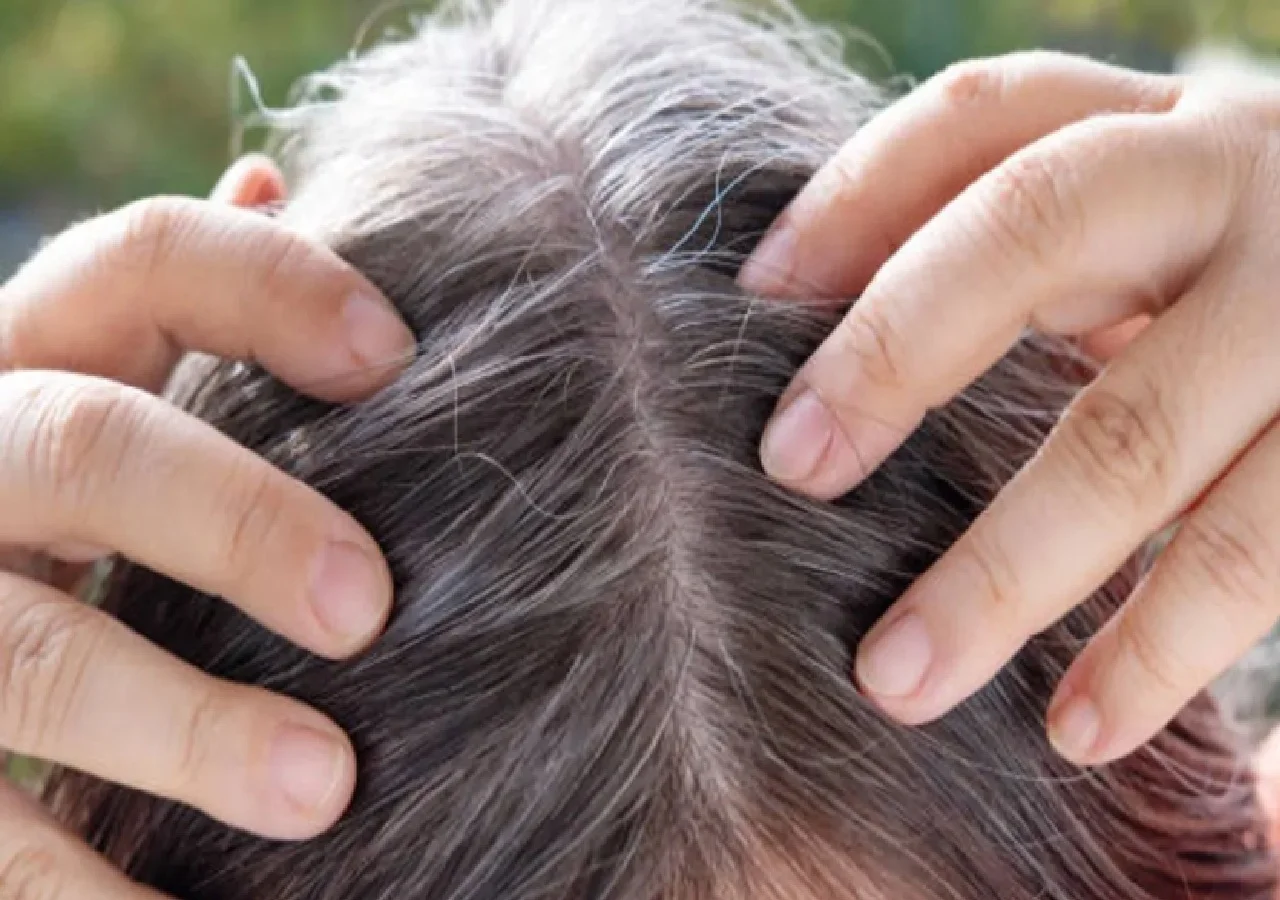
Grey hair is a natural part of ageing, but it can also appear at a relatively young age. When this happens, many people turn to hair dyes, henna or salon treatments to cover the greys. At the same time, interest in natural alternatives such as amla, aloe vera and nourishing hair oils has grown considerably.
Yoga guru Nityanandam Shree has shared his personal hair-care routine involving amla, oils, diet and homemade hair masks. However, it is important to distinguish personal experiences and traditional remedies from scientifically proven treatments. There is currently no established natural remedy that can reliably turn already-grey hair permanently black.
Here is what these commonly suggested remedies may actually do for your hair.
Why Does Hair Turn Grey?
Hair gets its natural colour from a pigment called melanin, which is produced by specialised cells in hair follicles. As people age, pigment-producing activity gradually declines, causing new hair to grow grey, silver or white.
Genetics plays a major role in determining when greying begins. If parents experienced premature greying, their children may also be more likely to develop grey hair earlier.
However, premature greying can sometimes be associated with other factors, including nutritional deficiencies and certain underlying health conditions. Therefore, blaming early grey hair entirely on an unhealthy lifestyle or poor diet can be misleading.
Can Grey Hair Become Naturally Black Again?
This is where claims about natural remedies need to be viewed carefully.
Once a strand of hair has grown grey because its follicle is no longer producing enough pigment, applying oils, aloe vera or other home remedies generally cannot restore melanin to that existing strand.
Some cases of premature greying associated with an underlying reversible problem may improve when that problem is identified and treated. But there is no home remedy proven to consistently reverse age-related or genetically determined grey hair.
Natural treatments may still improve hair texture, moisture and overall appearance, which can make hair look healthier.
Nityanandam Shree's Amla Routine
According to the routine shared by yoga guru Nityanandam Shree, he began including amla, or Indian gooseberry, regularly in his diet after noticing grey hair.
He reportedly consumed amla in different forms, including fresh amla, juice and chutney. He also incorporated amla oil into his hair-care routine and used it to massage his scalp approximately twice a week.
Amla has a long history of use in traditional Indian hair-care practices. It contains vitamin C and various plant compounds with antioxidant properties.
However, eating amla should not be presented as a guaranteed method for restoring grey hair to its original colour.
Can Amla Oil Help Your Hair?
Applying oil to the scalp and hair can have practical cosmetic benefits.
Oil may help reduce dryness, improve lubrication of the hair shaft and make hair feel softer and smoother. A gentle scalp massage can also be relaxing.
Amla-based hair oils are widely used for these purposes, but evidence that amla oil can reliably reactivate melanin production and permanently reverse established grey hair remains insufficient.
Therefore, use it primarily as a hair-care product rather than expecting it to work like a natural permanent dye.
Homemade Hair Mask With Aloe Vera, Curd and Oils
Another part of the routine involves a homemade hair mask prepared using ingredients such as:
- Fresh aloe vera gel
- Curd
- Almond oil
- Sesame oil
Such a mixture may function as a conditioning treatment for some people. Oils can help reduce dryness, while conditioning ingredients may leave the hair feeling softer.
However, a conditioning effect should not be confused with reversing greying.
Also remember that "natural" doesn't automatically mean allergy-free. Aloe vera, plant extracts, essential oils and other ingredients can trigger irritation or allergic reactions in some people.
A small patch test before applying a new preparation extensively to the scalp is a sensible precaution.
Does Diet Affect Premature Grey Hair?
Nutrition is important for normal hair growth and overall health. A balanced diet containing adequate protein, vitamins and minerals supports healthy hair follicles.
Instead of depending on one "superfood," focus on a varied diet containing vegetables, fruits, whole grains, pulses, nuts, seeds and adequate sources of protein.
Deficiencies in certain nutrients, particularly vitamin B12, have been associated with premature hair greying in some people. Other nutritional or medical factors may also be relevant depending on the individual.
Taking supplements without confirming a deficiency is not necessarily beneficial, however. If you develop significant premature greying, a doctor can decide whether nutritional testing is appropriate.
Be Careful With Black Henna and Strong Hair Dyes
Some people switch from conventional hair dye to products marketed as "black henna" because they assume these products are automatically natural.
That's not always the case.
Some products sold as black henna may contain para-phenylenediamine (PPD) or other ingredients capable of causing significant skin reactions in susceptible individuals.
If you use a colouring product, read its ingredient list and follow the manufacturer's allergy-testing and application instructions carefully.
When Should Premature Greying Be Checked?
A few grey hairs at a young age aren't automatically a sign of disease. Genetics may simply cause some people to grey earlier than others.
However, if your hair starts greying unusually early or changes rapidly—particularly alongside hair loss, fatigue, unexplained weight changes or other symptoms—it may be worth discussing the change with a dermatologist or healthcare professional.
They can determine whether there is any reason to investigate nutritional deficiencies, thyroid problems or another underlying condition.
Can You Expect Results in Five or Six Months?
Claims that a particular natural routine will make grey hair turn black within five or six months should be treated cautiously.
Hair grows slowly, so improvements in hair condition can certainly take months to become noticeable. But there isn't strong evidence showing that amla, aloe vera, curd or hair oils will reliably restore natural pigment to genetically or age-related grey hair within a fixed period.
Individual testimonials should therefore not be treated as guaranteed results.
Bottom Line
Amla, nourishing oils, aloe vera and a balanced diet can all form part of a healthy hair-care routine. They may help hair feel softer, better conditioned and healthier.
But there is no scientifically established natural treatment that guarantees already-grey hair will permanently turn black again without colouring it.
If premature greying concerns you, focus on good nutrition and gentle hair care and consider consulting a dermatologist—especially when the change is sudden or accompanied by other symptoms.