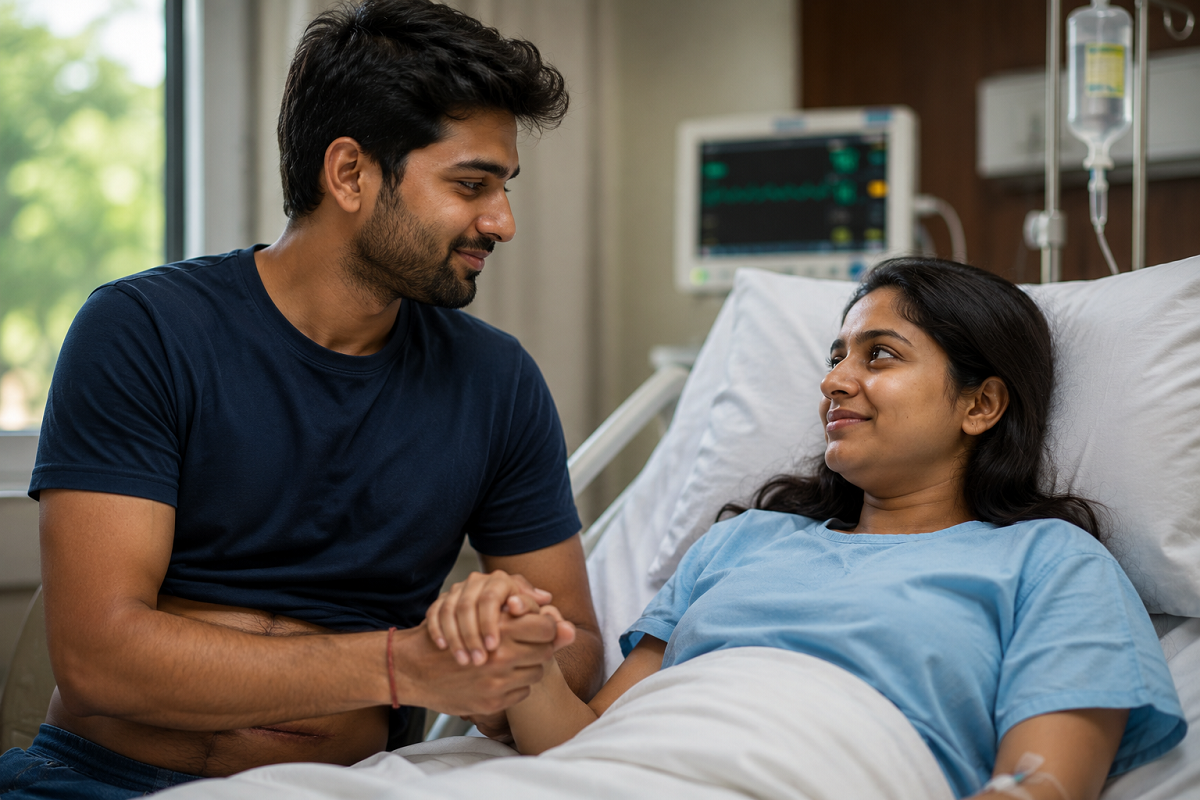
A remarkable living-donor liver transplant story from Gujarat has highlighted the bond between a brother and sister. A 32-year-old man reportedly lost around 12 kg over 45 days under medical supervision before becoming eligible to donate a portion of his liver to his 38-year-old sister, who needed a transplant.
The recipient, identified as Jalpa Shah, had developed serious liver disease and was advised to undergo transplantation earlier this year. Her younger brother Jatin decided to step forward as a potential living donor.
However, doctors reportedly found that his weight and excess fat in the liver needed to be addressed before the donation could safely proceed.
Rather than abandoning the plan, Jatin worked toward improving his health under medical guidance. He reportedly reduced his weight by approximately 12 kg in 45 days, after which the transplant process moved forward.
The siblings later celebrated Raksha Bandhan together following the surgery, turning the traditional festival celebrating the brother-sister bond into an especially meaningful occasion for the family.
Sister Was Diagnosed With Serious Liver Disease
According to the reported case, Jalpa is 38 years old and was diagnosed with liver cirrhosis in January 2026.
The report also states that she was found to have a rare form of autoimmune hepatitis. Autoimmune hepatitis is a condition in which the body's immune system attacks liver cells, causing inflammation. Without adequate control, persistent liver inflammation can lead to progressive damage and, in some patients, cirrhosis.
Not every patient with autoimmune hepatitis requires a liver transplant. Treatment depends on the severity and progression of the disease. However, transplantation may become necessary in cases of advanced or life-threatening liver failure when specialists determine that other treatment is insufficient.
For Jalpa, doctors reportedly recommended a liver transplant.
Jatin Decided to Donate Part of His Liver
Jalpa's 32-year-old brother Jatin volunteered to become a living liver donor.
Living-donor liver transplantation is possible because the liver has a remarkable capacity to regenerate. Surgeons can remove a carefully calculated portion of a healthy donor's liver and transplant it into the recipient.
Over time, the remaining liver in the donor and the transplanted portion in the recipient can increase in volume and adapt to their respective bodies.
However, willingness to donate is only the beginning of the process.
Potential living liver donors undergo extensive medical assessment to determine whether donation can be performed with an acceptable level of risk. Doctors consider several factors, including overall health, liver anatomy, liver quality, blood-group compatibility and whether the donor has conditions that could make major surgery unsafe.
Why Jatin Had to Lose Weight Before Donation
In Jatin's case, his weight and fatty changes in the liver reportedly became an obstacle during the initial evaluation.
Significant fat accumulation in the liver can affect whether a person is considered suitable for living liver donation. Doctors therefore assess liver health carefully before approving a donor.
Jatin reportedly took on the challenge and lost approximately 12 kg over a period of 45 days before donating.
However, his experience should not be interpreted as a general recommendation to lose 12 kg in 45 days.
Rapid weight loss is not appropriate or safe for everyone. A potential organ donor should never begin an aggressive diet, fasting programme or intense exercise routine simply to meet transplant eligibility requirements without supervision.
Any weight reduction required before living organ donation should be planned and monitored by the transplant team and qualified healthcare professionals.
Brother and Sister Celebrate Raksha Bandhan After Transplant
Around two months after Jatin donated part of his liver, Jalpa was reportedly able to return toward her normal routine.
The siblings subsequently celebrated Raksha Bandhan together.
Traditionally, the festival symbolises the affection and protective bond shared by brothers and sisters. For Jatin and Jalpa, the occasion carried an additional emotional significance following the transplant.
Jatin's decision to undergo donor evaluation, improve his health and eventually donate a portion of his liver became an extraordinary expression of that bond.
What Happens After Living Liver Donation?
Living liver donation involves major surgery, and recovery requires appropriate medical supervision.
In the early recovery period, donors need adequate rest and must carefully follow instructions from their transplant team. Regular follow-up appointments are important so doctors can monitor recovery and address any complications promptly.
The timing for returning to work, exercise and other normal activities can vary between individuals and should be determined by the treating medical team.
A balanced diet can support recovery. Depending on individual needs, this may include adequate protein, fibre-rich foods, fruits, vegetables and other nutrient-dense foods recommended by healthcare professionals.
Sleep and gradual physical activity, once cleared by doctors, are also important parts of recovery.
Alcohol and Smoking Need Special Attention
After liver donation, lifestyle choices deserve particular attention.
Donors should follow their transplant team's specific instructions regarding alcohol. Smoking is also harmful to overall health and can increase several health risks, so avoiding tobacco is strongly advisable.
Donors should also be cautious about medicines, supplements and herbal products. Products marketed as “natural” are not automatically safe for the liver, and some supplements can cause liver injury.
It is therefore sensible to discuss medications and supplements with a doctor during recovery.
Living Liver Donation Requires Extensive Medical Evaluation
Stories such as Jatin and Jalpa's can be inspiring, but living organ donation should never be viewed as a simple procedure.
A healthy person undergoes major surgery for another individual's benefit, which makes careful donor selection and informed consent essential. Transplant teams evaluate both donor and recipient before deciding whether the procedure is appropriate.
The Gujarat siblings' story is particularly meaningful around Raksha Bandhan. Jatin's willingness to make major changes to his health and undergo surgery so that he could donate part of his liver gave the traditional promise of protecting a sibling a very real meaning.
At the same time, the case carries an important health message: anyone considering living liver donation should follow only a specialised transplant team's advice, particularly when weight loss or other health changes are required before surgery.