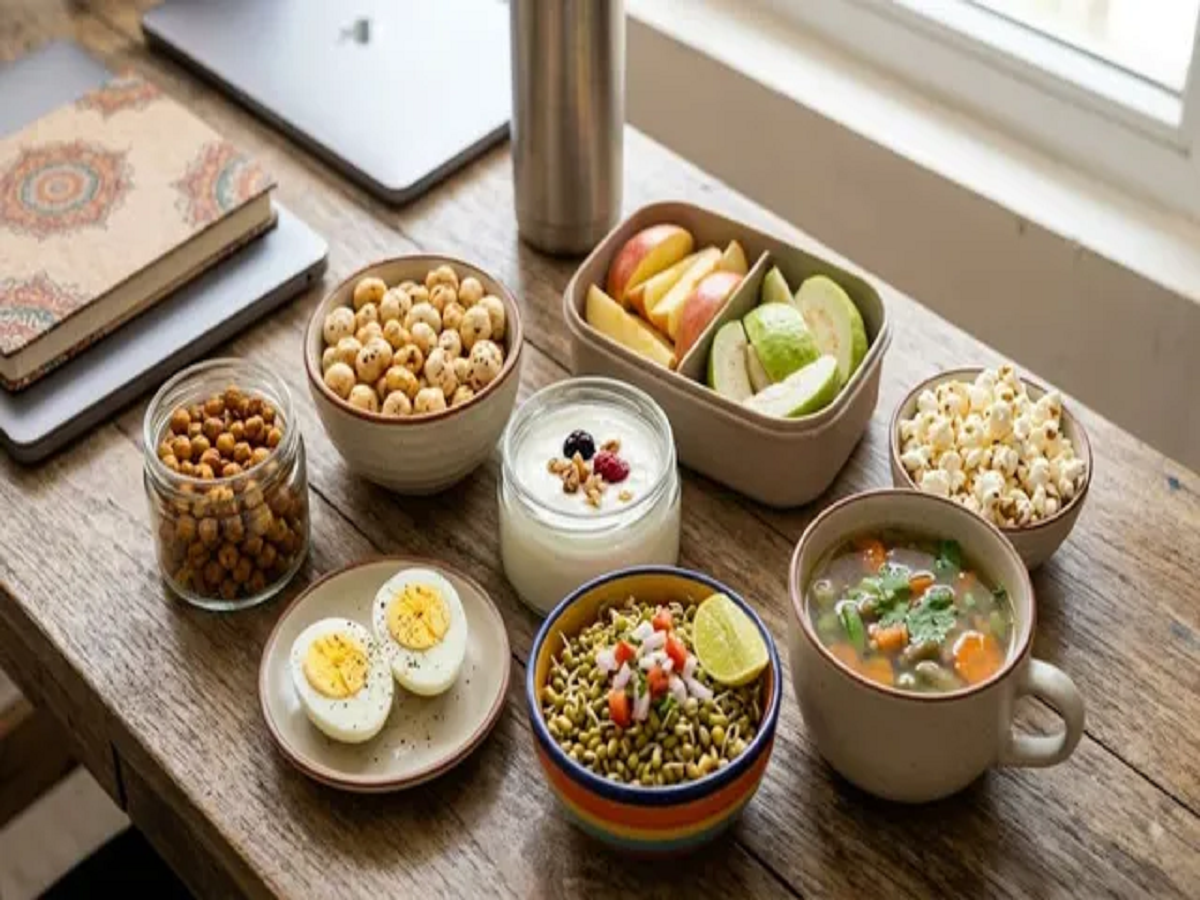
Healthy Snacks for Office and Travel: Choosing the right snack can make a big difference when hunger strikes between meals. Instead of reaching for fried foods, sugary treats or packaged junk food, options such as roasted chickpeas, makhana, boiled eggs, fresh fruit, Greek yogurt and sprouts can provide protein, fibre and other nutrients while helping you stay satisfied for longer.
Feeling hungry a few hours after breakfast or lunch is common, especially during a busy workday, long commute or travel. The problem often begins when convenience takes over and people repeatedly choose biscuits, chips, sweets or other highly processed foods.
Smart snacking does not necessarily mean eating less. It means choosing foods that offer more nutrition for the calories they contain.
Snacks with a good balance of protein, fibre and water can help control hunger more effectively than foods that are high in refined carbohydrates or added sugar. They may also support more stable energy levels throughout the day.
Here are eight simple snack ideas that can fit easily into office routines, travel plans and everyday schedules.
1. Roasted Chickpeas Make a Convenient High-Fibre Snack
Roasted chickpeas, or roasted chana, are one of the easiest snacks to carry in a small container or pouch.
They provide both protein and dietary fibre, which can help make a snack more satisfying. Since they require no refrigeration, they are also practical for office desks, road journeys and train travel.
Choosing plain or lightly seasoned roasted chickpeas may be preferable to heavily salted or flavoured varieties.
Portion size still matters because even nutritious foods can add significant calories when eaten in large quantities.
2. Makhana Can Replace Fried Evening Snacks
Makhana, also known as fox nuts, has become a popular alternative to chips and fried namkeen.
Dry-roasting makhana can give it a crisp texture without requiring large amounts of oil or butter. It also contains minerals and can be incorporated into a calorie-conscious snack plan when eaten in reasonable portions.
People who enjoy savoury snacks can flavour roasted makhana with mild spices instead of using heavy coatings or excessive salt.
Its portability makes it particularly useful for people who frequently experience late-afternoon hunger at work.
3. Boiled Eggs Offer a Protein-Rich Option
A boiled egg is a simple snack for people looking to increase their protein intake.
Protein generally takes longer to digest than many refined carbohydrate-based snacks, which can help people feel satisfied for longer. Eggs can therefore be useful between meals or after exercise.
They also require little preparation: eggs can be boiled in advance and stored safely in the refrigerator until needed.
However, proper refrigeration is important. Boiled eggs should not be left unrefrigerated for extended periods, especially during warm weather or travel.
4. Fresh Fruit Can Help Satisfy Sweet Cravings
When the urge to eat something sweet appears, whole fruit can be a practical alternative to sweets, cakes or sugary beverages.
Fruits such as apples, guavas and papaya provide fibre, water and naturally occurring sugars along with vitamins and minerals.
Whole fruit is generally more filling than fruit juice because it retains its fibre content and requires chewing.
Apples and guavas are also easy to carry, making them suitable for office or travel. Softer fruits such as papaya may work better when stored and packed appropriately.
5. Greek Yogurt Combines Protein With Convenience
Greek yogurt can be another satisfying snack, particularly for people who prefer something creamy.
It generally provides more protein than many conventional sweetened yogurts and can also contain live bacterial cultures depending on the product.
For a healthier option, plain or unsweetened Greek yogurt can be paired with fresh fruit, seeds or a small amount of nuts.
Sweetened varieties can contain substantial amounts of added sugar, so checking the nutrition label before buying is useful.
Because yogurt requires refrigeration, it is more practical at the office or during short journeys where cold storage is available.
6. Sprouts Chaat Adds Fibre and Variety
Sprouted moong or chickpeas can be turned into a quick chaat with chopped vegetables, lemon juice and mild seasoning.
Sprouts contribute fibre, plant protein, vitamins and minerals, while vegetables can add volume without dramatically increasing calories.
This makes sprouts chaat a useful option for people who prefer a more substantial snack.
Food safety deserves particular attention with raw sprouts, as they can sometimes carry harmful bacteria. People who are pregnant, elderly, immunocompromised or otherwise at higher risk from foodborne illness may prefer thoroughly cooked sprouts rather than raw ones.
7. Vegetable Soup Can Work for Evening Hunger
A bowl of homemade vegetable or clear soup can be useful when you want something warm and filling.
Vegetables and broth provide water, while vegetables can contribute fibre and micronutrients. This combination may help create fullness without making the snack excessively heavy.
The nutritional quality depends heavily on preparation. Cream-heavy soups, large amounts of butter or high-sodium packaged soup mixes can significantly change the calorie and salt content.
A homemade clear vegetable soup is therefore often the simpler option for people watching their overall calorie intake.
8. Air-Popped Popcorn Can Be a Smart Crunchy Snack
Popcorn is often associated with butter-heavy cinema snacks, but plain air-popped popcorn is very different nutritionally.
Because popcorn is a whole grain, it contains fibre and can provide considerable volume for a relatively modest calorie intake when prepared without large amounts of oil, butter or sugary coatings.
Its volume also makes it useful for people who enjoy eating a larger-looking portion.
The benefit can quickly disappear, however, if popcorn is loaded with butter, cheese powder, caramel or excessive salt.
Why Protein and Fibre Matter in Snacks
Many people experience repeated hunger because their snack consists mainly of rapidly digested refined carbohydrates.
For example, a sugary biscuit or sweetened drink may provide quick energy but may not remain satisfying for very long.
Protein and fibre generally slow digestion and can make meals and snacks more filling. Foods containing water, such as fruits and soups, can also add volume and help improve satiety.
A balanced snack does not need to be complicated. Combining a protein-rich food with fibre is often enough.
Examples include yogurt with fruit, roasted chickpeas with a piece of fruit or an egg with vegetables.
Healthy Snacks Do Not Automatically Guarantee Weight Loss
It is important to avoid the misconception that eating any particular snack will prevent weight gain.
Body weight is influenced by overall calorie intake, physical activity, sleep, health conditions and many other factors. Even nutritious foods can contribute to weight gain if total calorie intake consistently exceeds what the body uses.
The better approach is to select nutrient-dense foods, control portions and consider the entire day's diet rather than focusing on one snack.
Prepare Snacks Before Hunger Hits
One reason people choose junk food is simply that it is available when hunger appears.
Keeping healthier options ready can reduce impulsive eating. A small box of roasted chana or makhana can stay in an office bag, while fruit, yogurt or boiled eggs can be prepared before leaving home.
Travellers should choose foods that can be stored safely without refrigeration unless they are carrying an insulated container.
Planning snacks in advance can make it easier to avoid repeatedly buying fried or sugary foods simply because nothing else is available.
The Bottom Line
Healthy snacking can be both simple and enjoyable. Roasted chickpeas, makhana, boiled eggs, fresh fruit, Greek yogurt, sprouts chaat, vegetable soup and air-popped popcorn are versatile choices that can help manage hunger between meals.
The key is to focus on sensible portions, minimal added sugar, moderate salt and appropriate preparation methods.
No single snack can guarantee weight loss, but regularly replacing calorie-dense processed foods with more nutritious options can support a healthier overall eating pattern and help maintain steady energy during work, travel and busy days.
Disclaimer: This article provides general nutrition information and is not a substitute for personalised medical or dietary advice. People with allergies, diabetes, kidney disease, digestive disorders or other health conditions should consult a qualified healthcare professional or dietitian before making significant dietary changes.