Technology
Why Do Mobile Phone Batteries Explode? Warning Signs, Common Causes and Safety Tips You Should Never Ignore
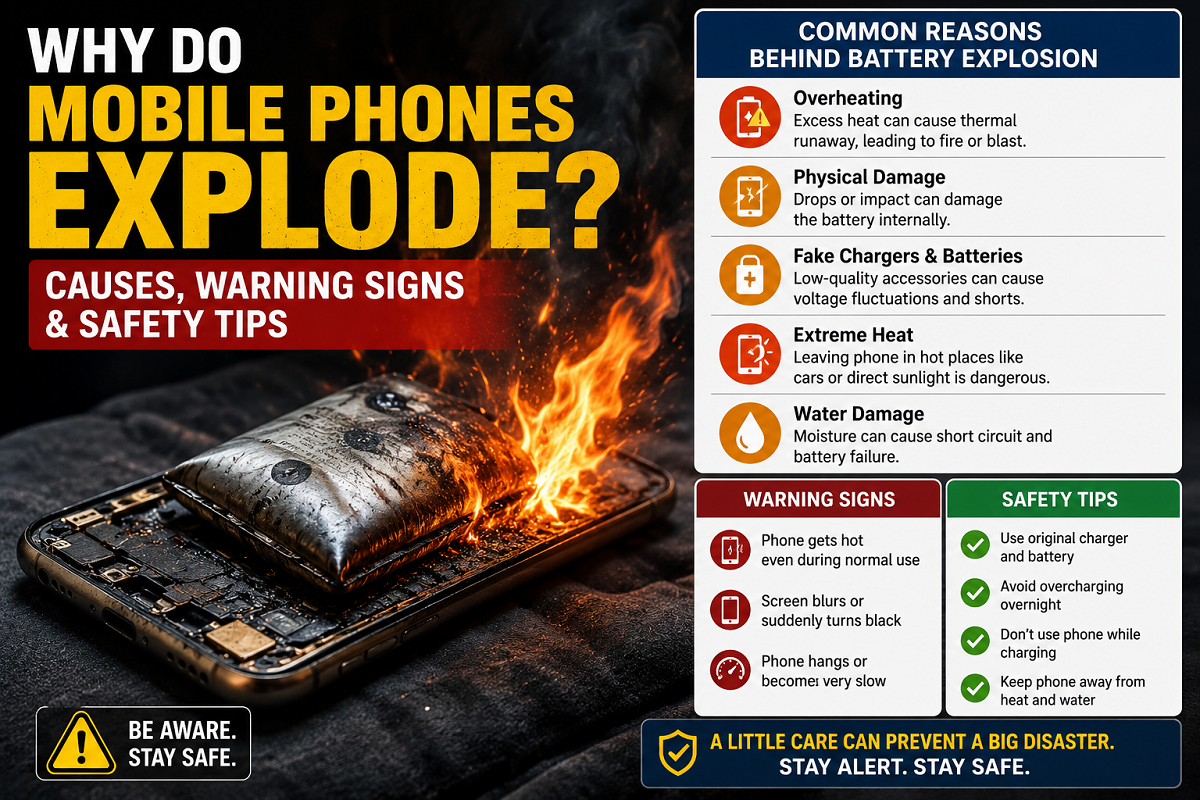
A smartphone battery explosion can happen without warning. Learn the major reasons behind battery failures, early warning signs, and simple steps to reduce the risk.
Smartphones have become an essential part of everyday life, helping people stay connected, work remotely, make payments, and access important information. While modern smartphones are designed with multiple safety features, battery-related accidents can still occur in rare situations. Recent reports of mobile phones overheating or catching fire have once again raised concerns about battery safety and proper smartphone usage.
Most smartphones today use lithium-ion batteries, which are lightweight, rechargeable, and capable of storing large amounts of energy. However, if these batteries become damaged, overheated, or develop internal faults, they can pose serious safety risks.
Understanding why mobile phone batteries fail, recognizing the early warning signs, and following basic safety precautions can significantly reduce the chances of an accident.
What Causes a Mobile Phone Battery to Explode?
Battery explosions are usually the result of excessive heat, internal damage, or electrical failure rather than a sudden or random event.
One of the most common causes is a condition known as thermal runaway. During this process, the battery's internal temperature rises rapidly, creating a chain reaction that generates even more heat. If the temperature continues to increase unchecked, the battery may swell, release gases, catch fire, or, in severe cases, explode.
Several factors can trigger this dangerous condition.
1. Manufacturing Defects
Although uncommon, defects during battery production or smartphone assembly can create hidden weaknesses inside the battery cells.
Poor insulation, microscopic contamination, or damaged internal components may increase the risk of short circuits over time. Certified manufacturers follow strict quality control standards, which is why purchasing genuine devices from trusted brands is always recommended.
2. Physical Damage After Accidental Drops
Dropping a smartphone repeatedly can damage the battery even if the phone appears to function normally.
Internal battery cells may crack or deform, increasing the possibility of overheating or internal short circuits. If the battery begins to swell or the back panel starts lifting, the device should be inspected immediately by an authorized service center.
3. Using Low-Quality or Fake Chargers
Charging accessories play an important role in battery safety.
Counterfeit or uncertified chargers may fail to regulate voltage and current correctly, increasing stress on the battery. Over time, inconsistent power delivery can shorten battery life and increase the likelihood of overheating.
Experts recommend using the original charger supplied with the device or a certified replacement approved by the manufacturer.
4. Overnight Charging Without Proper Protection
Many newer smartphones include intelligent charging systems that slow or stop charging once the battery reaches full capacity.
However, older devices or low-cost smartphones may not have advanced battery management features. Leaving such devices connected to power throughout the night can expose them to unnecessary heat, especially if they are covered by blankets or pillows while charging.
5. Heavy Workloads That Generate Excessive Heat
Running graphics-intensive games, recording long videos, editing large files, or using multiple demanding applications simultaneously can cause the processor and battery to heat up significantly.
Although smartphones include thermal management systems, continuous high temperatures may affect battery health over time.
If the device becomes unusually hot, it is advisable to stop using it temporarily and allow it to cool naturally.
6. Exposure to High Temperatures
Leaving a smartphone inside a parked car, under direct sunlight, or near other heat sources can expose the battery to temperatures beyond its safe operating range.
Extreme heat may cause the battery to expand and accelerate chemical degradation, increasing the possibility of failure.
7. Water or Moisture Damage
Water-resistant phones offer some protection, but no smartphone is completely immune to moisture-related damage.
If water enters a device—particularly one with an already damaged battery—it may cause internal corrosion or electrical short circuits. Never charge a phone that has been exposed to water until it has been properly inspected and dried.
Warning Signs You Should Never Ignore
Most battery failures show warning symptoms before a serious incident occurs.
Watch for these signs:
- The phone becomes unusually hot during normal use.
- The battery drains much faster than usual.
- The device charges slowly or inconsistently.
- The back panel begins to bulge or separate.
- The battery appears swollen.
- The phone shuts down unexpectedly or restarts frequently.
- The screen flickers, turns black, or becomes unresponsive.
- A burning smell or unusual noise comes from the device.
If you notice any of these symptoms, stop using the phone immediately and have it examined by an authorized service technician.
How to Reduce the Risk of Battery Failure
Following a few simple habits can significantly improve battery safety.
- Always use the original or manufacturer-certified charger.
- Avoid counterfeit batteries and charging accessories.
- Keep your phone away from direct sunlight and excessive heat.
- Never charge a wet or moisture-damaged device.
- Remove thick phone cases if the device becomes excessively hot while charging.
- Avoid charging the phone under pillows, blankets, or other materials that trap heat.
- Replace swollen or damaged batteries immediately.
- Protect the phone from repeated drops and impacts.
- Use a properly grounded wall socket instead of overloaded extension boards whenever possible.
- Avoid exposing the device to extreme temperatures for extended periods.
Battery Safety Starts with Small Precautions
Modern smartphones are generally safe when used correctly, but lithium-ion batteries require proper care. Most battery-related accidents are linked to overheating, physical damage, poor-quality accessories, or neglected warning signs rather than spontaneous failures.
Paying attention to unusual heat, battery swelling, charging issues, or physical damage can help prevent serious incidents. Using genuine accessories, avoiding excessive heat, and replacing damaged batteries promptly are simple but effective ways to protect both your smartphone and your personal safety.
A few careful habits today can go a long way toward preventing costly repairs—or even dangerous accidents—in the future.