Technology
Wedding Invitation APK Scam 2026: Fake WhatsApp Wedding Cards Can Hack Your Phone, NPCI Issues Safety Alert
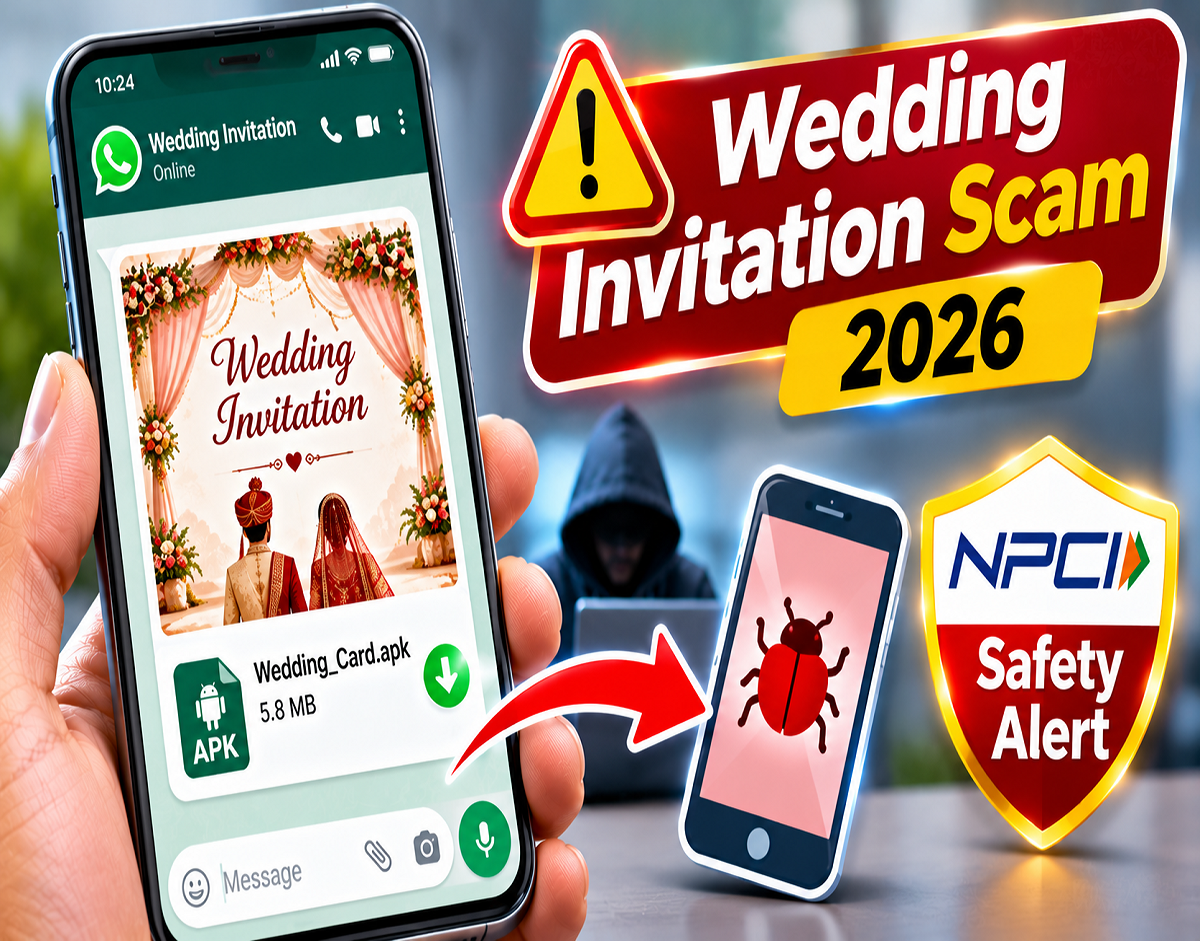
Wedding Invitation APK Scam 2026: Receiving a wedding invitation through WhatsApp or another messaging application may seem completely normal, especially during India's wedding season. However, cybercriminals are increasingly using fake digital wedding invitations to trick smartphone users into downloading potentially harmful applications.
The National Payments Corporation of India (NPCI), through its UPI safety awareness communication, has warned users that scammers can disguise malicious Android application files (APKs) as wedding invitations. These files may be designed to compromise smartphones, access sensitive information or facilitate financial fraud.
The advisory encourages people to think carefully before opening unfamiliar attachments and avoid downloading files sent by unknown numbers.
NPCI has also reminded users that financial cyber fraud can be reported through the national helpline 1930, while UPI-related assistance is available through its official support platform.
What Is the Wedding Invitation APK Scam?
The wedding invitation APK scam is a form of cyber fraud in which criminals send malicious Android application files disguised as digital marriage invitations.
A victim may receive a WhatsApp message claiming that a friend, relative or acquaintance is getting married.
The message may include an attachment with a name suggesting that it contains wedding details, venue information or an invitation card.
However, instead of a normal image or PDF document, the attachment may be an APK file.
APK stands for Android Package Kit, a file format used to distribute and install Android applications.
Although APK files are not inherently malicious, installing an application from an unknown source can expose users to serious security risks.
Fraudsters exploit this confusion by encouraging recipients to install unfamiliar applications under the pretext of viewing wedding invitations.
How Does the Fake Wedding Invitation Scam Work?
Cybercriminals generally rely on social engineering to convince people to install suspicious files.
A typical scam may involve the following stages.
Step 1: A Wedding Invitation Message Arrives
The victim receives a message from an unfamiliar mobile number, often containing a friendly greeting and an invitation to a wedding ceremony.
Step 2: An APK File Is Attached
The message includes a file with a wedding-related name, but its extension is .apk rather than a standard document or image format.
Step 3: The Recipient Is Asked to Install It
The sender may claim that installing the application is necessary to view the invitation or access the wedding venue details.
Step 4: The Application Requests Permissions
If installed, the application may ask for access to SMS messages, notifications, contacts, accessibility services or other sensitive phone functions.
Step 5: Personal or Financial Information May Be Compromised
Depending on the malware's capabilities and permissions, criminals may attempt to obtain confidential information, intercept authentication messages or misuse financial applications.
Not every suspicious file has the same capabilities, and merely receiving an APK does not mean that a phone has been compromised.
The main danger arises when a malicious application is installed and given access to sensitive device functions.
Why Are Cybercriminals Using Wedding Invitations?
Wedding invitations are familiar and socially important in India.
People frequently receive digital invitations through WhatsApp, SMS and other messaging platforms.
During the wedding season, recipients may open invitations quickly without carefully checking the sender's identity or the file type.
Fraudsters take advantage of this familiarity.
A message that appears to contain a marriage invitation may seem less suspicious than an unexpected banking notification or investment offer.
Criminals may also use emotional or social pressure by suggesting that the recipient has been personally invited to an important family event.
This approach increases the likelihood that someone will interact with the attachment.
How Can a Malicious APK Affect Your Smartphone?
A malicious Android application can potentially interfere with several functions of a smartphone.
Its impact depends on the software's design, the permissions granted and the device's security protections.
Possible risks include:
- SMS access: Malware with relevant permissions may attempt to read messages containing sensitive information.
- Notification monitoring: Certain malicious applications may misuse notification access to capture information.
- Contact theft: An application may attempt to collect stored contact details.
- Accessibility abuse: Criminals may misuse powerful accessibility permissions to interact with the device.
- Credential theft: Some malware attempts to capture login information through deceptive screens or other techniques.
- Financial fraud: Compromised information or unauthorised device control may be used in attempts to access financial services.
These risks explain why users should avoid installing unfamiliar applications simply to view an invitation.
How to Identify a Fake Wedding Invitation
Several warning signs can help users recognise suspicious wedding invitation messages.
| Warning Sign | Why It Is Suspicious |
|---|---|
| Invitation from an unknown number | Sender identity cannot be confirmed |
File ending in .apk | It is an application installer, not an ordinary invitation image |
| Request to enable unknown app installation | May bypass normal app-store safeguards |
| Pressure to open immediately | Encourages rushed decisions |
| Unusual permission requests | May expose sensitive phone functions |
| Unfamiliar download links | Could lead to malicious websites or files |
| Sender refuses identity verification | May indicate impersonation or fraud |
A legitimate digital wedding invitation is commonly shared as an image, PDF, video or website link.
However, even familiar file formats and links should be treated cautiously when they come from suspicious sources.
What Should You Do if You Receive a Suspicious Wedding Invitation?
NPCI's safety message encourages users to avoid downloading unknown files.
If you receive an unexpected wedding invitation, take the following precautions.
- Verify the sender: Contact the person through a known phone number if the invitation appears to come from someone familiar.
- Check the attachment type: Be particularly cautious about files ending in
.apk. - Avoid installing unknown applications: Do not install software merely to view a wedding card.
- Do not grant unnecessary permissions: Be suspicious of applications requesting SMS, notification or accessibility access without a clear reason.
- Avoid suspicious links: Do not open unfamiliar websites or download pages without verification.
- Keep your phone updated: Install security updates and use available device protection features.
- Report suspected fraud: Use the appropriate official reporting channels if you believe a scam is involved.
What if You Have Already Installed a Fake Wedding Invitation APK?
If you suspect that you installed a malicious application, immediate action can help reduce further risks.
First, stop interacting with the suspicious application.
If you believe the device is compromised, disconnecting it from mobile data and Wi-Fi may help limit further communication while you seek assistance.
Use a separate trusted device to change important account passwords, particularly for email and financial services.
Contact your bank immediately if you notice suspicious transactions or believe your banking information may have been exposed.
You should also review installed applications and permissions.
Removing the suspicious application may help, but it does not guarantee that every security issue has been resolved.
If the device continues behaving abnormally or sensitive permissions have been abused, seek qualified technical assistance and consider a properly backed-up factory reset when appropriate.
Do not restore unknown applications from an untrusted backup.
Can Fake Wedding Invitation APKs Lead to UPI Fraud?
Malicious applications may be used as part of broader attempts to compromise financial information or misuse mobile devices.
For example, malware that obtains access to sensitive messages or device functions could assist criminals in attempting financial fraud.
However, installing an APK does not automatically give a criminal unrestricted access to every UPI account.
UPI applications use multiple security mechanisms, including device binding and transaction authentication.
Users should nevertheless protect their UPI PINs, banking credentials and registered mobile numbers.
Never share a UPI PIN or OTP with someone claiming to help remove malware, recover money or secure a bank account.
Where to Report Financial Cyber Fraud in India
NPCI has reminded users that financial cyber fraud should be reported promptly.
| Reporting Facility | Contact Details |
|---|---|
| National Cyber Financial Fraud Helpline | 1930 |
| National Cyber Crime Reporting Portal | https://cybercrime.gov.in/ |
| NPCI UPI Help Portal | https://upihelp.npci.org.in/ |
| Bank or UPI App Support | Official customer service channels |
If money has been transferred fraudulently, contact your bank or UPI application provider immediately.
Keep transaction IDs, screenshots, messages and other relevant information available when filing a complaint.
Early reporting may improve the chances of timely intervention, but recovery of stolen money is not guaranteed.
The NPCI UPI Help portal provides UPI-related assistance; suspected financial crimes should also be reported through the appropriate cybercrime channels.
Why Smartphone Users Should Avoid Unknown APK Files
Android users can install applications through various distribution methods, including APK files.
While some APK files come from legitimate developers, files distributed through unknown messages may be unsafe.
Applications downloaded from unverified sources may not have undergone the same screening as those distributed through established application stores.
Users should therefore verify the developer, source and purpose of any application before installing it.
A wedding invitation, courier notification or banking message should not normally require installation of an unfamiliar application with extensive device permissions.
NPCI's Message: Think Before You Click
The latest UPI safety awareness communication focuses on a simple but important precaution: do not trust unexpected digital attachments merely because they appear familiar.
Fraudsters can disguise harmful software as invitations and other everyday documents.
Verifying the sender, checking file extensions and refusing suspicious installation requests can help prevent device compromise.
Cybersecurity awareness is particularly important when people regularly use smartphones for banking, digital payments and personal communication.
Conclusion
NPCI has warned smartphone users about fake wedding invitation messages that may contain malicious APK files.
Such scams exploit the familiarity of digital wedding cards to persuade recipients to install potentially harmful applications.
Users should never download unknown APK attachments, grant unnecessary device permissions or share confidential financial information.
Anyone who experiences financial cyber fraud should immediately contact their bank and report the incident through 1930 or the National Cyber Crime Reporting Portal.
The key safety message is clear: A wedding invitation should not put your phone or savings at risk. Verify the sender, check the file and think before you click.
Source Credit: National Payments Corporation of India (NPCI) — Official UPI Safety Awareness Communication on fake wedding invitation APK scams. Additional references: NPCI UPI Help Portal (upihelp.npci.org.in) and National Cyber Crime Reporting Portal (cybercrime.gov.in).