Technology
Cyber Fraud Alert 2026: Government Warns Against Fake Money Requests, Follow These Safety Tips Before Sending Money
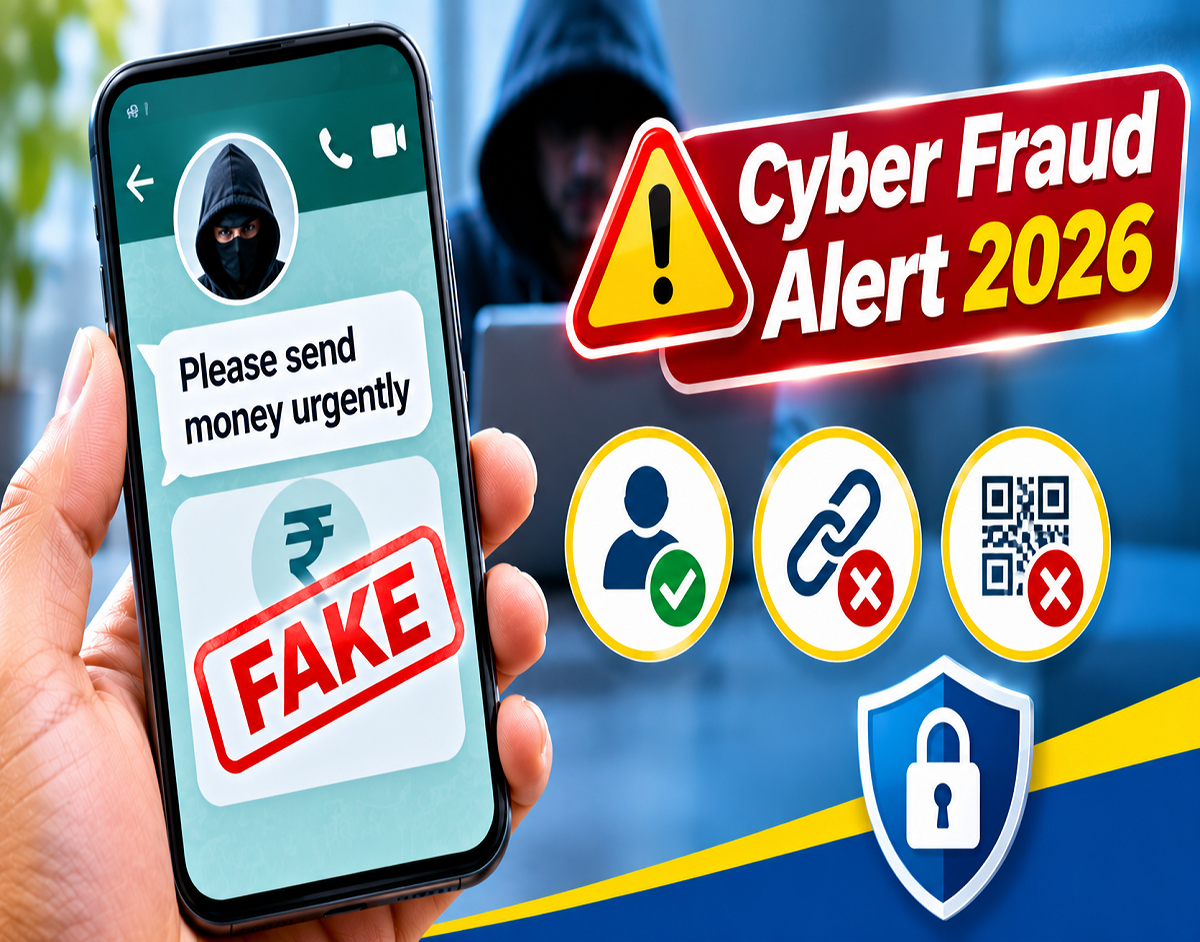
Online Payment Fraud Alert 2026: The Department of Telecommunications (DoT), Government of India, has issued an important cybersecurity warning about fraudulent money requests circulating through mobile messages and digital communication platforms. In its November 14 awareness message, the department cautioned citizens against transferring money without first verifying the identity of the person requesting payment.
The advisory highlights how cybercriminals can exploit trust, urgency and digital payment systems to deceive individuals into sending money to fraudulent accounts. Scammers may impersonate friends, relatives, colleagues or representatives of trusted organisations to make their requests appear genuine.
The government has advised citizens to verify suspicious payment requests through a direct phone call, avoid trusting unfamiliar messages and never disclose confidential banking information or one-time passwords (OTPs).
Government Issues Warning About Fake Money Requests
The Department of Telecommunications has drawn attention to the growing concern surrounding fake payment requests.
According to its public awareness message, individuals should exercise caution whenever they receive unexpected requests to transfer money.
Fraudsters may contact potential victims through SMS, WhatsApp, social media or other messaging platforms.
These messages can appear convincing because scammers sometimes use familiar names, profile photographs or information obtained from publicly available sources.
In some cases, criminals may gain unauthorised access to a person's messaging account and send payment requests to their contacts.
The government has therefore emphasised the importance of independent verification before completing any financial transaction.
How Do Fake Money Request Scams Work?
Fake money request scams generally involve criminals persuading individuals to transfer funds by pretending to be someone trustworthy.
A scammer may send a message claiming to be a friend who urgently needs financial assistance.
Another common approach involves impersonating a family member who supposedly requires money for a medical emergency or an unexpected expense.
Fraudsters may also claim that a payment is necessary to resolve a banking problem, complete a delivery or avoid a penalty.
The objective is to create a sense of urgency so that the recipient transfers money without checking whether the request is genuine.
Once the money reaches the fraudster's account, recovering it can become difficult.
Why You Should Verify Payment Requests Through a Direct Call
One of the most important recommendations in the DoT advisory is to confirm the sender's identity before transferring money.
A message appearing to come from a known contact does not necessarily mean that the person actually sent it.
Messaging accounts can be compromised, phone numbers can be impersonated in certain circumstances, and fraudulent profiles can be created using someone else's name or photograph.
If you receive an unexpected request for money, contact the person using a phone number you already know and trust.
Do not rely exclusively on a new contact number provided in the suspicious message.
A direct conversation can help establish whether the request is genuine.
For unusually large or suspicious transactions, additional verification may be appropriate.
Common Tricks Used by Cybercriminals to Request Money
Cybercriminals use different tactics to convince people to make payments.
Some common examples include:
1. Fake Emergency Messages
Fraudsters claim that a friend or relative has been involved in an accident or needs urgent medical treatment.
They may demand an immediate transfer and discourage the recipient from contacting anyone else.
2. Impersonation of Friends or Family Members
A scammer may use a familiar profile photograph and name to send a payment request.
The message may claim that the person's regular bank account is temporarily unavailable.
3. Fraudulent Bank or Government Messages
Criminals sometimes pretend to represent banks, government departments or payment service providers.
They may claim that a fee must be paid immediately to prevent account suspension or complete mandatory verification.
4. Fake Refund and Payment Requests
A fraudster may promise a refund or cashback reward while asking the recipient to approve a payment request.
Victims may be tricked into entering their UPI PIN under the mistaken belief that they are receiving money.
5. Suspicious Business Payment Requests
Scammers may impersonate sellers, delivery representatives or customer service agents and demand additional charges for a transaction.
Such requests should be independently verified before any payment is made.
Never Share OTPs, UPI PINs or Banking Passwords
The Department of Telecommunications has also reminded citizens not to share sensitive financial information with unknown individuals.
Confidential banking information can be misused to gain unauthorised access to accounts or approve fraudulent transactions.
Customers should never disclose their ATM PIN, internet banking password, UPI PIN or OTP to someone claiming to provide financial assistance.
Legitimate banks do not require customers to reveal confidential authentication credentials to unknown callers.
People should also avoid entering banking information on websites accessed through suspicious messages.
Whenever possible, open the bank's official application or type its verified website address directly into the browser.
Important Online Payment Safety Tips for 2026
| Safety Measure | Why It Matters |
|---|---|
| Verify requests through a direct call | Helps identify impersonation scams |
| Check the recipient's name | Reduces the risk of transferring money to the wrong account |
| Never share OTPs or PINs | Protects confidential authentication details |
| Avoid suspicious payment links | Reduces exposure to phishing websites |
| Question urgent payment demands | Helps prevent decisions made under pressure |
| Use official banking applications | Limits exposure to fraudulent platforms |
| Enable transaction alerts | Helps detect unexpected account activity |
| Report suspected fraud quickly | Supports timely investigation and protective action |
Following these precautions can reduce the risk of financial loss, although no single measure can eliminate every type of online fraud.
What Should You Check Before Making a UPI Payment?
UPI has made digital transactions convenient, but users must remain cautious when authorising payments.
Before transferring money, verify the recipient's identity and check the name displayed in the payment application.
Confirm that the payment amount is correct.
Do not approve unfamiliar collect requests or enter a UPI PIN simply because someone claims that doing so will allow you to receive money.
A UPI PIN is generally required to authorise outgoing payments and certain secure banking operations, not to receive an ordinary incoming transfer.
If a payment request appears suspicious, cancel the transaction and independently contact the intended recipient.
What to Do if You Have Already Sent Money to a Scammer
Individuals who suspect that they have transferred money to a fraudulent account should act immediately.
First, contact the bank or payment service provider through its official customer support channel.
Provide the transaction reference number, payment amount, date and other relevant details.
In India, victims of cyber financial fraud can call the national cybercrime helpline at 1930.
They can also register a complaint through the National Cyber Crime Reporting Portal at https://cybercrime.gov.in/.
Victims should preserve screenshots, transaction records, phone numbers and messages connected with the suspected scam.
Prompt reporting may help authorities initiate action, although recovery of transferred money is not guaranteed.
How Sanchar Saathi Helps Citizens Report Suspicious Communications
The Department of Telecommunications operates the Sanchar Saathi platform to strengthen telecom-related security and public awareness.
Through its Chakshu facility, citizens can report suspected fraudulent communications received through supported channels.
The platform is designed to help authorities identify potentially suspicious telecom activity.
Users can access the official website at https://sancharsaathi.gov.in/.
However, the Chakshu facility is intended for reporting suspected fraudulent communications and is not a replacement for formal cybercrime complaints when financial loss or another crime has already occurred.
In such cases, victims should use the appropriate cybercrime reporting channels.
Why Cyber Awareness Is Important for Digital Payment Users
India's increasing reliance on mobile banking, UPI and online financial services has made digital payments an essential part of daily life.
These technologies provide convenience, but cybercriminals continue to develop methods that exploit users' trust.
Fraudulent money requests are particularly dangerous because they can appear to come from people the recipient knows.
A moment of urgency or emotional pressure may cause someone to approve a transaction without sufficient verification.
Public awareness campaigns encourage individuals to recognise suspicious behaviour and adopt safer financial habits.
The Department of Telecommunications' latest warning reinforces the importance of checking payment requests before transferring funds.
Conclusion
The Department of Telecommunications has warned citizens against responding to unexpected money requests without confirming the sender's identity.
Fraudsters may impersonate trusted contacts, create false emergencies or use misleading messages to persuade individuals to transfer money.
To protect themselves, digital payment users should independently verify suspicious requests, avoid sharing confidential banking details and carefully check transaction information.
The government's key message is simple: Verify the sender, protect your banking credentials and never transfer money under pressure.
Remaining alert and reporting suspicious activity can help individuals protect their savings and contribute to a safer digital environment.
Source Credit: Department of Telecommunications (DoT), Ministry of Communications, Government of India — Official Cyber Scam Alert published on November 14, 2026, through the DoT India X account (@DoT_India). Original Post: https://x.com/DoT_India/status/2121453065697886594