
Trending
Viral Video Shows Green Chilli Prices in the US, Indian Woman's Reaction Sparks Online Debate
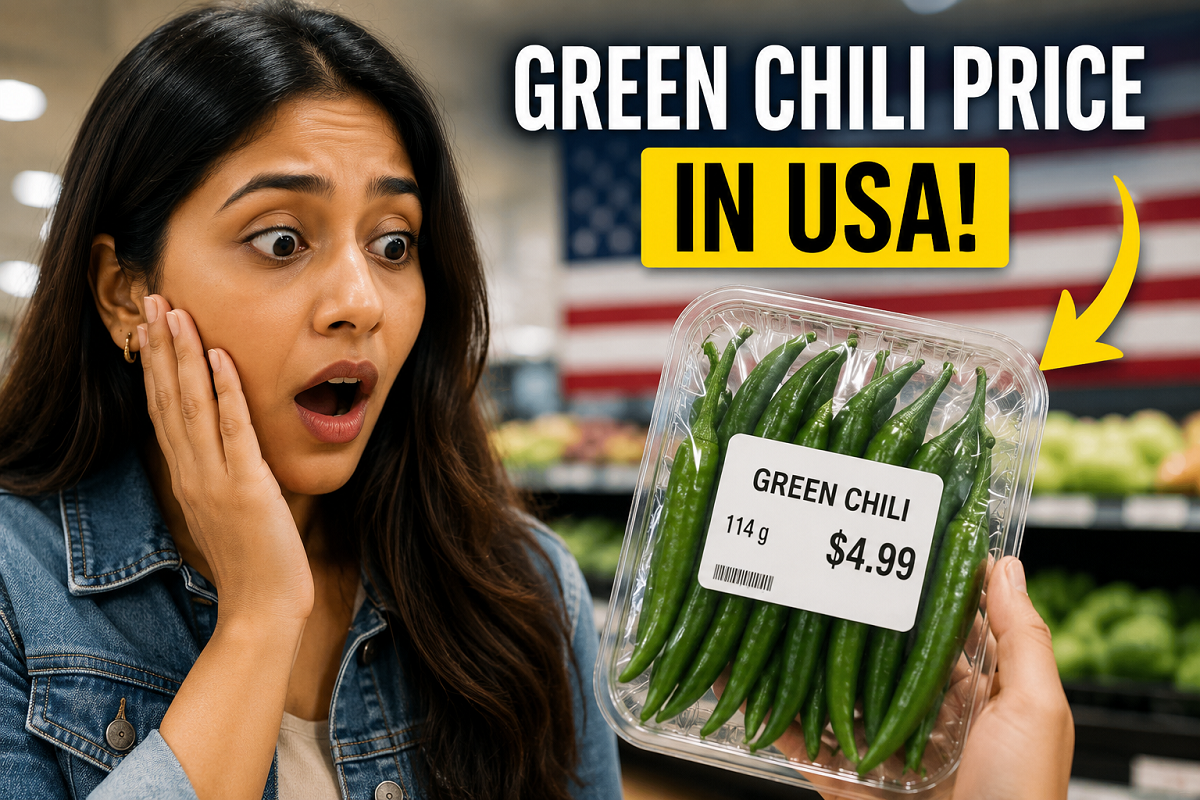
America Green Chilli Price: A video showing the price of green chillies at a supermarket in the United States has gone viral on social media after an Indian woman expressed surprise at how expensive the everyday ingredient was compared to prices in India. The clip has triggered a lively discussion online, with users comparing grocery costs, purchasing power, and food prices in different countries.
Indian Shopper Surprised by Green Chilli Prices
In the viral video, an Indian woman visits a supermarket in the United States to buy vegetables. While browsing the produce section, she notices the price of a small pack of green chillies and reacts with visible surprise.
She records the price tag and comments that purchasing green chillies in the US feels far more expensive than in India, where they are often inexpensive and are sometimes even included free with vegetable purchases at local markets.
Her reaction quickly resonated with social media users, leading the video to gain widespread attention.
What the Video Shows
According to the video, the packaged green chillies weighed approximately 114 grams.
The woman estimated that, when converted to a per-kilogram rate, the price would be close to ₹700 per kilogram. She also remarked that a small pack containing roughly 15 to 20 chillies was priced at around ₹400 after currency conversion.
The comparison surprised many viewers familiar with vegetable prices in India, where green chillies are generally available at much lower rates.
Why Are Prices Higher in the US?
Several factors contribute to the higher retail price of fresh produce in the United States compared to India.
These include:
- Higher labour costs
- Packaging and transportation expenses
- Import or sourcing costs
- Retail operating expenses
- Different supply chain structures
In addition, grocery prices should be viewed alongside average household incomes and purchasing power, as salaries and living costs vary significantly between countries.
Social Media Users Share Mixed Reactions
The video generated thousands of reactions, with users offering a range of opinions.
Some viewers joked that farming green chillies in the US could become a profitable business, while others pointed out that salaries in the United States are generally much higher than in India, making direct price comparisons less meaningful.
Many Indian users also recalled how local vegetable vendors often include small quantities of green chillies or coriander free of charge with purchases, making the contrast even more striking.
Others emphasized that grocery prices should be considered within the broader context of each country's economy rather than comparing individual products alone.
Price Comparisons Can Be Misleading
Experts note that comparing the price of a single grocery item across countries without considering income levels, taxes, transportation costs, and local market conditions can sometimes create a misleading impression.
For example, while certain vegetables may appear expensive after currency conversion, consumer purchasing power, wages, and overall cost of living differ substantially between nations.
As a result, the affordability of a product often depends on local economic conditions rather than the price alone.
Everyday Grocery Videos Continue to Go Viral
Videos highlighting differences in food prices between countries have become increasingly popular on social media.
Indian creators living abroad frequently share shopping experiences featuring vegetables, fruits, spices, and dairy products that cost significantly more—or sometimes less—than similar items available in India. These comparisons often attract attention because they showcase everyday cultural and economic differences.
The Bottom Line
The viral video of an Indian woman reacting to green chilli prices in an American supermarket has sparked widespread discussion about grocery costs across countries. While the price difference surprised many viewers, experts suggest considering broader factors such as income levels, local market conditions, and purchasing power before drawing conclusions from international price comparisons.
As the clip continues to circulate online, it has become another example of how simple shopping experiences can quickly turn into global conversations on social media.