Business
Sugar Prices 2026: Government Reportedly Gives Importers Two More Months to Bring in 10 Lakh Tonnes of Raw Sugar
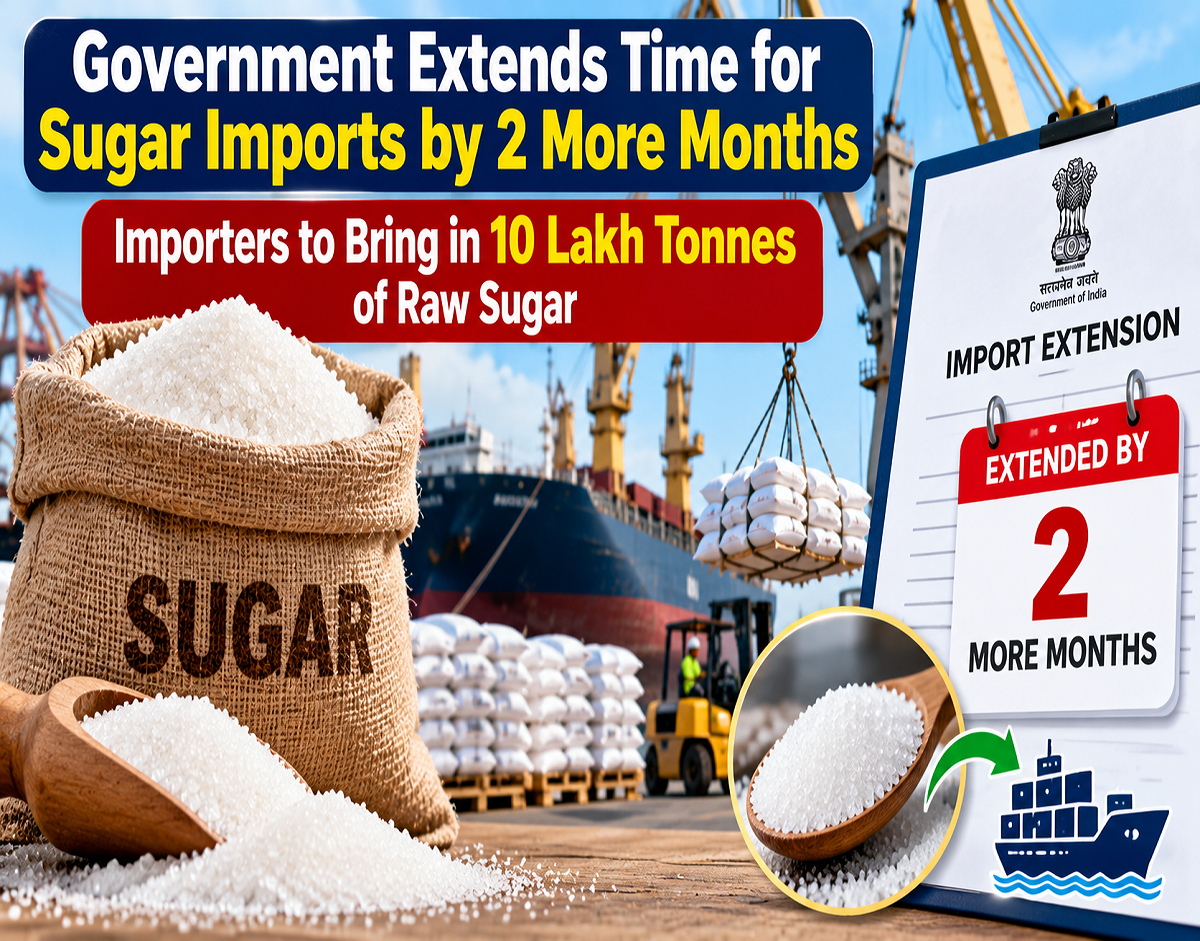
India Sugar Market Update 2026: The central government has reportedly extended the permitted import period for a specified quantity of raw sugar until December 31, 2026, as concerns grow over lower domestic production estimates and seasonal demand. The move could give sugar processors and importers additional time to arrange overseas purchases while helping authorities manage domestic supplies.
According to a report published on October 23, the Ministry of Finance has extended the deadline for importing up to 10 lakh metric tonnes of raw sugar under a duty-free tariff rate quota arrangement. The earlier deadline was October 31, 2026.
The reported decision comes at a time when India's sugar production outlook has been revised downward. Although projected output remains above estimated annual consumption, the government is reportedly seeking additional flexibility to manage market availability.
The specific extension and applicable customs conditions should be verified against the relevant official government notification before being treated as final.
What Has Changed in India's Sugar Import Policy?
The reported amendment gives eligible importers an additional two months to bring raw sugar into the country under the specified quota arrangement.
A tariff rate quota, or TRQ, permits a defined quantity of goods to be imported at a preferential customs duty rate, subject to applicable conditions.
The report describes the arrangement as duty-free for up to one million metric tonnes of raw sugar.
Here are the main figures.
| Particulars | Reported Details |
|---|---|
| Commodity | Raw sugar |
| Permitted import quantity | 10 lakh metric tonnes |
| Equivalent quantity | 1 million metric tonnes |
| Previous import deadline | October 31, 2026 |
| Revised deadline | December 31, 2026 |
| Additional time | Two months |
| Reported imports completed | Approximately 2.6 lakh metric tonnes |
| Remaining quota, based on reported figures | Approximately 7.4 lakh metric tonnes |
| Reported authority | Ministry of Finance |
The remaining quota calculation assumes that the reported imports are counted against the same one-million-tonne allocation and that no other adjustments apply.
Why Is the Government Keeping the Import Window Open?
Sugar is an essential household commodity and an important input for several food-processing industries.
Its demand comes from individual consumers as well as confectionery manufacturers, bakeries, beverage producers and other commercial users.
Seasonal increases in consumption can place additional pressure on distribution networks, particularly when production estimates are lower than initially expected.
The reported extension is intended to provide importers with greater flexibility to secure raw sugar from international suppliers.
However, an extended import deadline does not automatically mean that the full permitted quantity will enter India.
Actual purchases will depend on commercial viability, international prices, freight costs, availability and compliance with import conditions.
Sugar Production Forecast Reduced by 37 Lakh Tonnes
One of the most important developments mentioned in the report is the reduction in India's projected sugar production for the 2025–26 marketing year.
The initial estimate was 343 lakh metric tonnes.
The revised projection stands at approximately 306 lakh metric tonnes.
This represents a reduction of 37 lakh metric tonnes, equivalent to about 10.8% of the earlier estimate.
Reported sugar production estimates, 2025–26
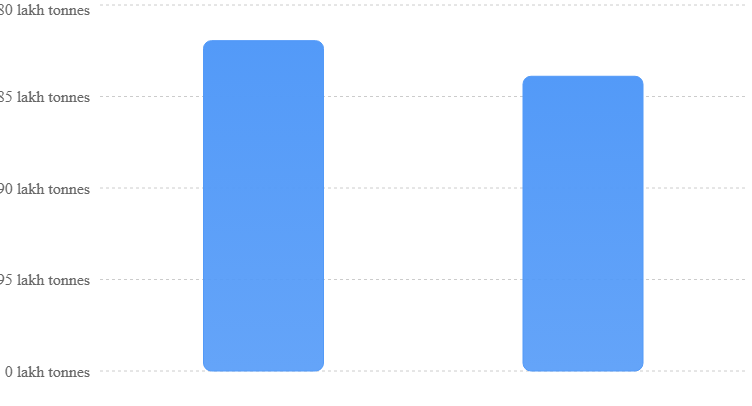
Figures from the supplied report; not independently verified.
The revision suggests that less sugar may be available than previously anticipated.
However, production estimates alone do not determine whether a country faces a shortage.
Opening stocks, industrial requirements, distribution patterns, exports, imports and government reserve policies also influence market availability.
Is India's Sugar Production Enough to Meet Domestic Demand?
The supplied report estimates India's annual domestic sugar consumption at approximately 280–285 lakh metric tonnes.
Against this, the revised production estimate is 306 lakh metric tonnes.
A comparison of these figures suggests that projected output could still exceed estimated annual consumption.
| Market Indicator | Estimated Quantity |
|---|---|
| Revised sugar production | 306 lakh tonnes |
| Lower estimate of annual demand | 280 lakh tonnes |
| Upper estimate of annual demand | 285 lakh tonnes |
| Production above estimated demand | 21–26 lakh tonnes |
This difference is a simplified comparison, not a calculation of the country's actual surplus.
It does not account for opening inventories, exports, industrial diversions, losses or minimum stock requirements.
For that reason, a production figure above domestic consumption does not necessarily eliminate the need for supply-management measures.
Why Have Sugar Imports Progressed Slowly?
Although the reported import quota covers 10 lakh metric tonnes, only about 2.6 lakh metric tonnes had reportedly been imported by the time of the source report.
That represents approximately 26% of the permitted quantity.
The report attributes the relatively slow import activity primarily to unfavourable price differences between international and domestic sugar markets.
Importers generally compare the total cost of obtaining sugar from overseas suppliers with the price at which it can be sold or processed domestically.
Even when customs duty is waived, importing sugar may involve substantial additional expenses.
These can include shipping, insurance, port handling, inland transportation, financing and processing costs.
If the total landed cost is too high relative to domestic market prices, importing sugar may not be commercially attractive.
Extending the deadline gives businesses more time to assess market conditions and arrange shipments when the economics are more favourable.
What Does Price Parity Mean for Sugar Importers?
Price parity refers to the relationship between the cost of imported sugar and the price of comparable sugar available in the domestic market.
For example, a trader may be reluctant to purchase sugar internationally if the landed cost exceeds the amount recoverable through domestic sales.
On the other hand, if international prices fall or domestic prices rise sufficiently, overseas purchases may become more attractive.
Exchange-rate movements also matter because international commodity transactions are often priced in foreign currencies.
A change in the rupee's value can affect the cost of imports even when global sugar prices remain unchanged.
The reported deadline extension may therefore provide additional time for importers to respond to changing market conditions.
Could the Decision Help Control Retail Sugar Prices?
Increasing the potential availability of raw sugar can support market supply, but the effect on retail prices is not automatic.
Raw sugar generally requires further processing before it becomes suitable for many retail and industrial uses.
The availability of refining capacity, transportation arrangements and distribution networks can affect how quickly imported supplies reach the market.
Retail prices also depend on domestic production, existing stocks, regional demand and commercial pricing decisions.
If additional imports are economically viable and reach the domestic market, they may help reduce supply pressure.
However, there is no basis in the supplied report for predicting a specific reduction in sugar prices per kilogram.
Consumers should not assume that the deadline extension will immediately make sugar cheaper.
Government Reportedly Tightens Monitoring of Sugar Stocks
Alongside the reported import extension, the source mentions stock-control measures intended to discourage hoarding and artificial shortages.
Stock limits are regulatory restrictions that can apply to the quantity of a commodity held by specified categories of businesses.
Such measures are generally intended to improve transparency and prevent excessive accumulation of essential goods during periods of market concern.
However, the report does not identify the exact stock-limit notification, applicable business categories or permitted quantities.
Any claim about currently enforceable limits should therefore be checked against the relevant government order.
What Could This Mean for Sugar Mills and Refineries?
For refiners and other eligible businesses, the reported extension may provide additional time to arrange international supplies.
The actual benefit will depend on whether importing raw sugar is commercially viable.
Domestic sugar mills may also monitor the policy closely because additional imports can influence market expectations and pricing conditions.
The broader impact on the industry will depend on the quantity actually imported, the timing of shipments and domestic production trends.
The extension should not be interpreted as a guarantee that the entire remaining quota will be utilised.
Why Sugar Supply Management Matters Beyond Household Purchases
Sugar is used extensively in packaged foods, sweets, beverages and other processed products.
Changes in wholesale sugar prices can therefore influence production costs for businesses that rely heavily on the commodity.
Small confectionery shops and larger food manufacturers may both be affected by sustained price movements.
At the same time, the sugar industry is closely linked to sugarcane farming, making market management important for producers as well as consumers.
Policy decisions must balance supply availability, consumer affordability and the financial conditions facing agricultural and industrial stakeholders.
What Should Consumers Expect in the Coming Months?
The reported import-policy extension suggests that authorities want to preserve flexibility while monitoring domestic sugar availability.
However, consumers should distinguish between permission to import sugar and actual imports reaching the market.
The extension does not establish that shortages are inevitable or that retail prices will rise sharply.
Similarly, it does not guarantee a price reduction.
The market outlook will depend on production, inventories, demand and the commercial response of importers.
Official data on stocks, output and import arrivals will provide a clearer picture of supply conditions.
Final Takeaway
India has reportedly extended the deadline for importing up to 10 lakh metric tonnes of raw sugar under a preferential tariff arrangement from October 31 to December 31, 2026.
The move comes against a backdrop of reduced production expectations, with the reported 2025–26 forecast falling from 343 lakh tonnes to 306 lakh tonnes.
Only about 2.6 lakh tonnes of the permitted import quantity had reportedly arrived, suggesting that commercial pricing conditions have limited overseas purchases.
The additional time could help importers assess international prices and secure supplies if market conditions become favourable.
For consumers, the main point is that the reported policy aims to support sugar availability, but its effect on retail prices will depend on actual import volumes and domestic market conditions.
Disclaimer: This article is an independently restructured and substantially rewritten version of the supplied October 23, 2026, report. The reported import deadline extension, quota conditions, production estimates and stock-control measures have not been independently verified against official government notifications.