Technology
SBI Data Leak Alert 2026: Hackers Claim 3.75 Lakh Customer Records Exposed, KYC Documents at Risk
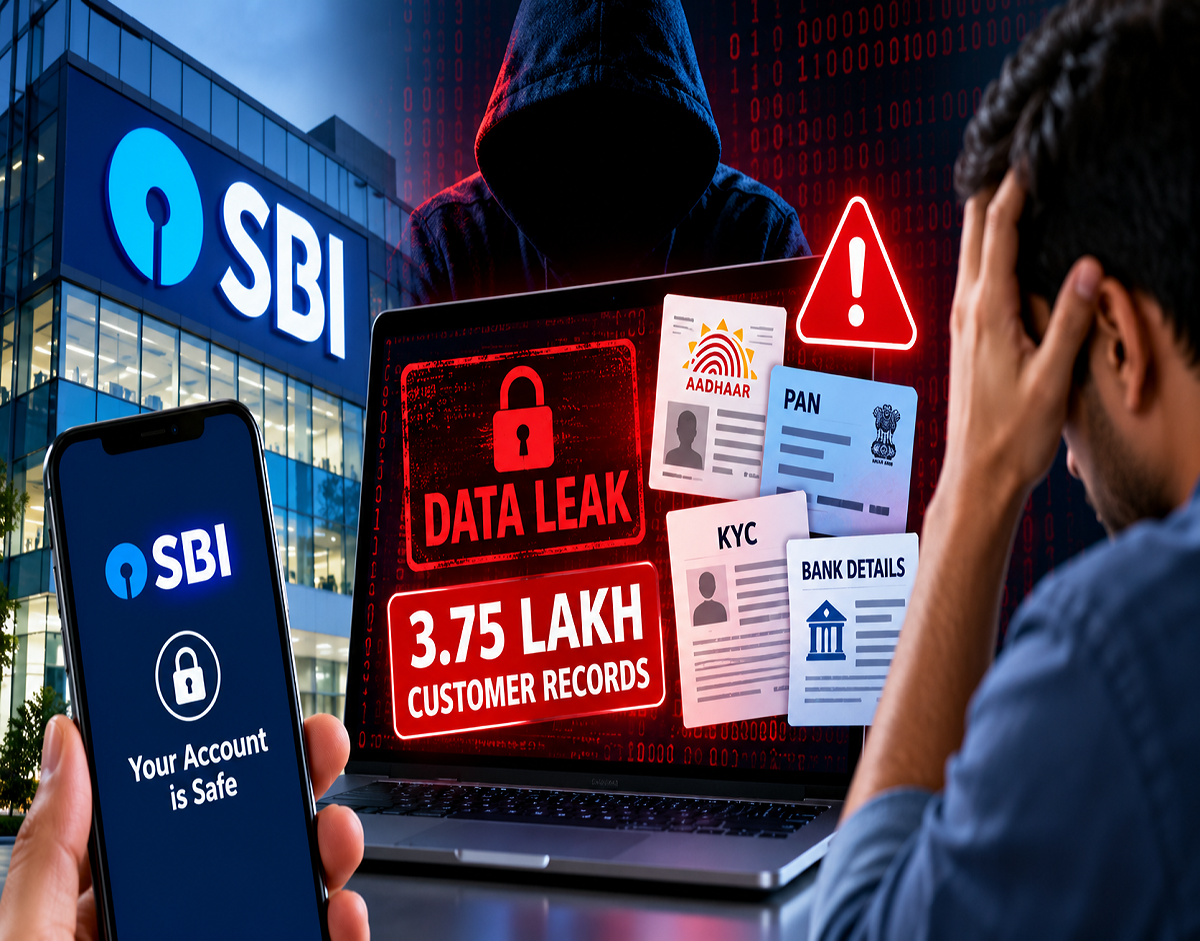
SBI Data Breach News 2026: A reported cyberattack claim involving the State Bank of India (SBI) has raised concerns about the security of customers' personal and financial information. According to media reports published on October 19, 2026, a hacker group has claimed to possess records belonging to more than 3.75 lakh SBI customers.
The group, reportedly identified as Siriusim, has allegedly claimed access to personal details, Know Your Customer (KYC) documents, loan applications and paperwork submitted during bank account opening.
The claim has prompted concerns about possible identity theft, phishing attempts and banking-related cyber fraud.
However, there is an important distinction between a hacker's allegation and a confirmed security breach. As of the publication of the supplied October 19 report, SBI had not officially confirmed that its systems were breached or that the claimed customer records were authentic.
Customers should therefore treat the information as an unverified data leak claim rather than an established breach.
Here is what has been reported, what information may be at risk and how SBI customers can protect themselves from potential scams.
SBI Data Leak 2026: What Has Been Claimed?
According to the report, the alleged incident came to attention after a hacker group named Siriusim posted claims about SBI customer data on a dark-web-associated forum.
The group reportedly claimed that it possessed a large collection of records connected to customers of India's largest public-sector bank.
The alleged information includes personal identification details and documents that customers may have submitted while opening accounts or applying for financial products.
However, the origin of the data remains unclear.
It has not been independently established whether the records came directly from SBI's internal systems, an external service provider, another source or a combination of sources.
This distinction matters because a collection of documents bearing a bank's name does not, by itself, prove that the bank's core systems were compromised.
Hackers Claim to Have 3.75 Lakh Records and 2,722 PDF Documents
One of the most significant allegations concerns the size of the reported dataset.
According to the media report, the group claimed to possess a CSV file containing more than 375,000 records, along with 2,722 PDF documents.
A CSV file is a common format used to store structured information, such as names, account-related fields or other records, in rows and columns.
PDF documents may contain scanned forms, identity documents or other paperwork, depending on their contents.
The group reportedly shared samples that it described as customer records.
However, the authenticity, completeness and age of those documents have not been established in the supplied report.
SBI Alleged Data Leak: Key Details
| Particulars | Reported Information |
|---|---|
| Bank Named | State Bank of India (SBI) |
| Hacker Group | Siriusim |
| Claimed Customer Records | More than 3,75,000 |
| Claimed PDF Documents | 2,722 |
| Reported File Format | CSV and PDF |
| Allegedly Exposed Information | Personal details, KYC records, loan and account-opening documents |
| Official SBI Confirmation | Not confirmed in the supplied report |
| Status | Unverified data exposure claim |
These figures represent the hacker group's reported allegations and should not be interpreted as verified findings.
What Is KYC and Why Are These Documents Sensitive?
KYC stands for Know Your Customer.
Banks use KYC procedures to verify customers' identities and comply with applicable financial regulations.
Depending on the product and verification requirements, customers may provide identity documents, address information, photographs and other personal details.
If authentic KYC information falls into the wrong hands, criminals may attempt to misuse it for impersonation or targeted fraud.
For example, someone possessing a customer's name, address and partial banking information could use those details to make a fraudulent phone call appear convincing.
However, possession of identity documents does not automatically provide access to a customer's bank account.
Banking transactions generally require additional authentication, and the actual risk depends on what information has been exposed and how it is misused.
Can Hackers Withdraw Money Using Leaked KYC Documents?
A leaked KYC document does not automatically allow a criminal to withdraw money from an SBI account.
However, personal information can potentially help fraudsters carry out social engineering attacks.
In these scams, criminals pretend to represent a trusted organisation and persuade the victim to disclose confidential information or authorise a transaction.
For example, a fraudster might call a customer and claim that their bank account has been affected by a data breach.
The caller may then request an OTP, UPI PIN or internet banking password under the pretext of protecting the account.
Such requests should be treated as warning signs.
SBI customers should never share OTPs, ATM PINs, UPI PINs or internet banking passwords with anyone claiming to represent the bank.
A genuine banking security process does not require customers to disclose these confidential credentials over an unsolicited phone call.
SBI Customers Should Watch Out for Fake KYC Update Messages
One possible consequence of publicity surrounding a data leak claim is an increase in fraudulent messages exploiting customer anxiety.
Scammers may send SMS messages, WhatsApp texts or emails claiming that an SBI account will be blocked unless the customer completes an urgent KYC update.
These messages may contain links leading to fake banking websites.
The pages can resemble legitimate bank portals while attempting to collect usernames, passwords or other sensitive information.
Customers should avoid opening unfamiliar links, especially those accompanied by threats of immediate account suspension.
If a KYC update is genuinely required, customers should verify the request through SBI's official website, banking application, branch or authenticated customer support channels.
Seven Safety Measures Every SBI Customer Should Follow
Customers do not need to assume their information has been compromised because of the reported claim. However, basic digital banking precautions remain important.
1. Never disclose confidential credentials. Keep OTPs, passwords, ATM PINs, card security codes and UPI PINs private.
2. Avoid suspicious KYC links. Do not click on unknown links received through SMS, email or WhatsApp, even if they use SBI branding.
3. Use official banking applications. Download SBI's banking apps only from verified app stores and check the publisher before installing.
4. Enable transaction alerts. Keep your registered mobile number and email address updated so you can receive account activity notifications.
5. Review account statements. Regularly check for transactions you do not recognise.
6. Keep your phone secure. Install official operating system and application updates, and avoid granting unnecessary permissions to unfamiliar apps.
7. Report suspicious activity immediately. Contact the bank through an official channel if you notice an unauthorised transaction or suspect that your credentials have been compromised.
What Should You Do if You Receive a Call About the SBI Data Leak?
Customers may receive calls from individuals claiming that their personal information has appeared in a leaked database.
Such calls should be treated cautiously.
Do not assume that a caller is genuine simply because they know your name, address or other personal details.
If someone asks you to verify your identity by sharing an OTP or transferring money to a so-called safe account, end the call.
Contact SBI independently using a verified customer service number or visit a branch.
Do not rely on a telephone number or website address provided by the suspicious caller.
How to Report SBI Banking Fraud in India
If a customer experiences an unauthorised transaction or suspects financial cyber fraud, prompt reporting is important.
The first step is to notify SBI through an official banking channel and request appropriate protective action.
Customers can also report suspected financial cybercrime through India's national cybercrime helpline at 1930.
A complaint can also be submitted through the official National Cyber Crime Reporting Portal.
When reporting an incident, customers should preserve relevant evidence, including transaction details, suspicious messages, telephone numbers and screenshots.
The sooner unauthorised transactions are reported, the better the opportunity for banks and authorities to take timely action.
Customer liability for unauthorised electronic banking transactions is governed by applicable RBI rules and depends on factors such as the cause of the incident and the time taken to report it.
Has SBI Confirmed the Alleged Data Breach?
According to the October 19 report provided, SBI had not issued an official confirmation of the alleged exposure at the time of publication.
This means several important questions remain unanswered.
It is not yet established whether the claimed records are genuine, whether they relate to current customers or whether any SBI-controlled system was compromised.
It is also unclear whether the alleged information originated from the bank, an outside organisation or another source.
Until verified findings or an official statement become available, the incident should continue to be described as an alleged data exposure.
SBI Data Leak 2026: What Customers Need to Know
The reported claim involving more than 3.75 lakh SBI customer records and 2,722 PDF documents has highlighted the importance of protecting banking and identity information.
The hacker group Siriusim has reportedly claimed possession of customer-related documents, including KYC and account-opening records.
However, the allegations remain unverified in the supplied report, and there is no established evidence that every customer mentioned in the alleged dataset has suffered financial loss.
For SBI customers, the immediate priority is to remain alert to phishing attempts, avoid suspicious links and never share confidential banking credentials.
Anyone noticing unusual account activity should report it to the bank without delay and contact the cybercrime helpline if financial fraud is suspected.
Disclaimer: This article is based on media reports dated October 19, 2026. The alleged SBI data exposure has not been independently verified, and the reported figures are claims rather than confirmed breach findings.