Business
SBI Data Leak Alert 2026: 3,897 Customer Records Flagged on Dark Web; Check Details and Safety Steps
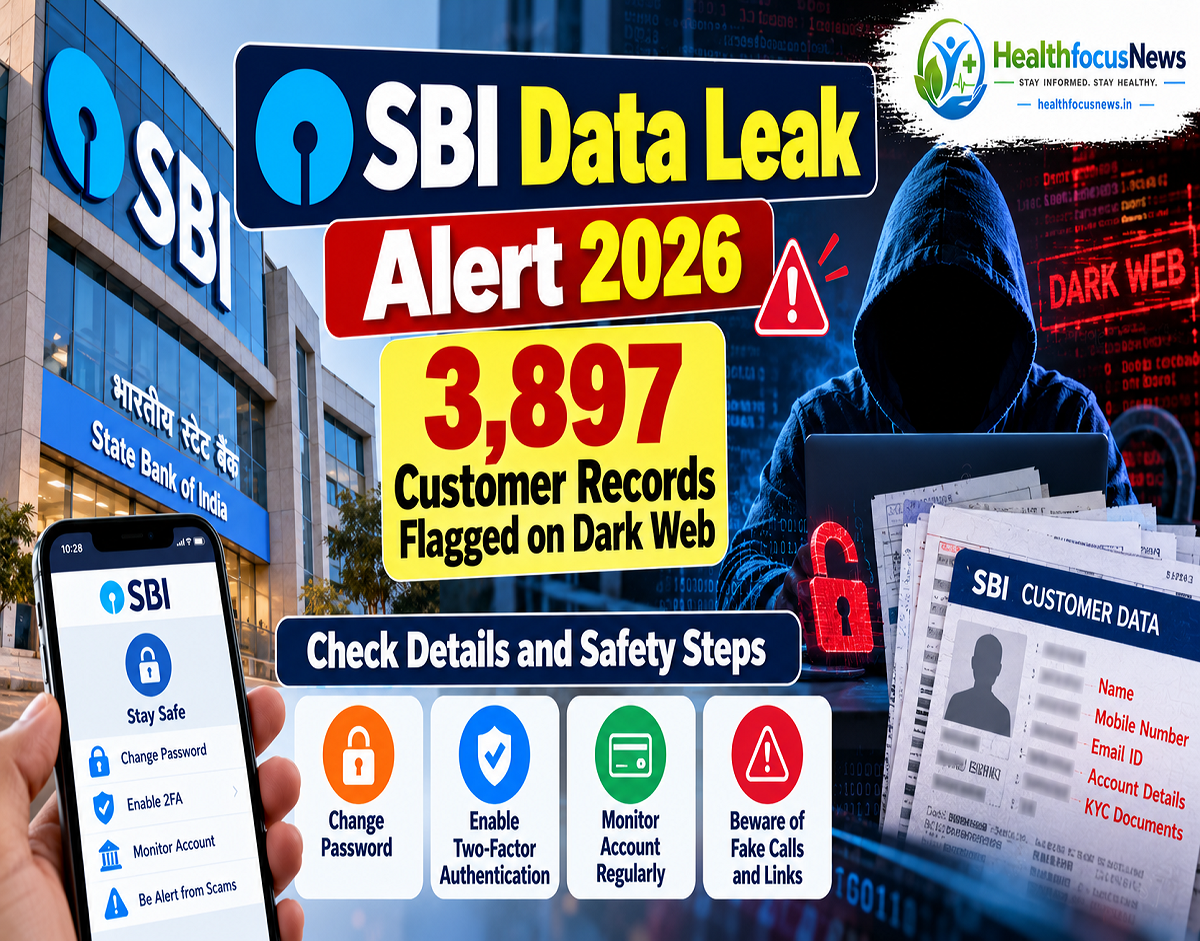
SBI Data Leak October 2026: State Bank of India (SBI) has reportedly identified 3,897 customer records containing personal information during a preliminary examination of a much larger dataset circulating on the dark web. The records are said to include names, mobile numbers, dates of birth, email addresses, residential addresses and certain customer-related banking details. SBI reportedly received an alert on October 16, 2026, and initiated an investigation with cybersecurity assistance. While the bank has indicated that its operations remain unaffected, customers have been advised to remain cautious about suspicious calls, phishing messages and fraudulent KYC requests.
SBI Customers Warned After Suspected Dark Web Data Exposure
A cybersecurity alert involving customer information associated with State Bank of India has raised concerns about the possible misuse of personal data.
According to a report published on October 21, 2026, approximately 3,897 customer records containing personal information were identified during an initial examination of data reportedly available on the dark web.
The broader dataset is said to contain around 3.75 lakh records.
However, an important distinction must be made between the number of records circulating online and the number of records preliminarily identified as containing customer information.
The reported findings do not establish that all 3.75 lakh records represent verified SBI customers or that the bank's core banking systems were compromised.
The source and authenticity of the data remain matters for investigation.
SBI Data Leak 2026: Key Details
| Particular | Reported Information |
|---|---|
| Bank | State Bank of India |
| Initial Alert Date | October 16, 2026 |
| Report Date | October 21, 2026 |
| Approximate Records in Broader Dataset | 3.75 Lakh |
| Customer Records Flagged in Initial Analysis | 3,897 |
| Reported Data Categories | Names, Contact Details, Addresses and Other Customer Information |
| Possible Risk | Phishing, Impersonation and Social Engineering |
| Investigation Status | Under Examination |
| Banking Operations | No Major Disruption Reported |
| Official Website | https://sbi.co.in |
Note: The figures are based on the supplied news report. The investigation's final findings and the origin of the records have not been independently established here.
What Happened in the SBI Data Exposure Case?
According to the report, SBI received information about a suspected customer data exposure on October 16, 2026.
The alert reportedly came through cybersecurity and threat intelligence channels, including references to CERT-In.
The information concerned a dataset circulating on the dark web that allegedly contained records associated with SBI customers.
During an initial examination of approximately 3.75 lakh records, investigators reportedly identified 3,897 records containing personal customer information.
Following the alert, the bank began taking steps to assess the incident.
Cybersecurity assistance was reportedly sought to determine whether the information was genuine, identify its possible source and evaluate the potential impact on customers.
The investigation is particularly important because data appearing on criminal marketplaces does not automatically prove that it was obtained through a direct breach of a bank's internal systems.
Information can sometimes originate from external service providers, previously exposed databases or other sources.
The precise origin in this case has not been confirmed in the supplied report.
What Customer Information May Have Been Exposed?
The reported dataset contains several categories of personal and customer-related information.
These details could potentially be used by fraudsters to create convincing impersonation attempts.
| Information Category | Details Reportedly Found |
|---|---|
| Personal Identification | Customer Names and Gender |
| Contact Information | Registered Mobile Numbers |
| Date of Birth | Customer Birth Dates |
| Email Information | Email Addresses |
| Residential Information | Home Addresses |
| Branch Information | Bank Branch-Related Details |
| Customer Reference | CIF or Customer File Numbers |
| Lead Information | Lead IDs |
| Loan-Related Information | Certain Loan and Lead Records |
The presence of these fields in a reported dataset does not necessarily mean that every record contains every category of information.
The supplied report also does not establish that account passwords, UPI PINs or online banking credentials were exposed.
Customers should avoid assuming that such sensitive credentials have been compromised without verified evidence.
What Is a CIF Number in SBI?
CIF stands for Customer Information File.
Banks use customer identification references to organise and manage information associated with their customers.
A CIF number is not the same as an ATM PIN, UPI PIN or internet banking password.
However, customer identification information can still be sensitive when combined with other personal details.
For example, a fraudster who knows a customer's name, mobile number, branch and other account-related references may attempt to impersonate a bank representative.
This is why personal information should be protected even when it cannot directly authorise a financial transaction.
Did SBI's Banking Services Stop Working?
According to the supplied report, SBI indicated that the incident had not caused a major disruption to its banking operations and services.
This is an important distinction.
A suspected exposure of customer information does not necessarily mean that payment systems, ATMs, branches or digital banking services have stopped functioning.
The report does not establish a shutdown of SBI's core banking infrastructure.
However, the absence of operational disruption does not eliminate the need to investigate potential privacy and security risks.
Customers should continue using official banking services while remaining alert to suspicious activity.
Why Can a Personal Data Leak Be Dangerous?
A data exposure involving names, contact information and other personal details can increase the risk of targeted fraud.
Cybercriminals may use such information to make fraudulent communications appear more credible.
For example, a scammer may call a customer and correctly mention their name, date of birth or bank branch.
The caller may then claim to be contacting the customer from SBI's customer support or security department.
Because the caller knows certain personal details, the customer may mistakenly believe that the communication is genuine.
The fraudster may then attempt to obtain an OTP, password, UPI PIN or other confidential information.
This type of deception is known as social engineering.
The primary danger is not that a name or address alone allows money to be withdrawn, but that the information can be used to manipulate a person into authorising a fraudulent transaction.
Beware of Fake SBI KYC Update Calls
One common banking fraud technique involves fake Know Your Customer (KYC) update requests.
A caller or message may claim that a customer's account will be blocked unless identity verification is completed immediately.
The fraudster may send a link to a fake banking website or ask the customer to install an application.
Some scammers may also request an OTP under the pretext of confirming the customer's identity.
Customers should remember that a genuine bank representative should not ask them to reveal confidential banking credentials.
If a message claims that urgent action is required, verify the information through SBI's official app, website or branch.
Do not use the contact number or link provided in a suspicious message.
Can Fraudsters Withdraw Money Using Only Your Name and Mobile Number?
Possessing someone's name and mobile number is generally not sufficient to authorise a bank transfer.
Financial transactions normally require additional authentication.
However, criminals may combine personal information with fraudulent calls, phishing links or other techniques to obtain access.
The risk becomes more serious when a victim shares an OTP, approves an unauthorised payment request or installs malicious software.
Therefore, customers should not panic merely because personal information may have been exposed.
Instead, they should focus on protecting their credentials and monitoring account activity.
Seven Important Safety Measures for SBI Customers
Customers can reduce the risk of fraud by following these precautions.
1. Never Share OTPs or Banking Passwords
Do not disclose OTPs, ATM PINs, UPI PINs or internet banking passwords to anyone claiming to represent the bank.
These details should remain confidential.
2. Ignore Threatening Account Closure Messages
Fraudsters often create urgency by claiming that an account will be suspended immediately.
Verify such claims through official SBI channels.
3. Avoid Suspicious Links
Do not open unknown links received through SMS, email, WhatsApp or social media.
A fraudulent website may resemble SBI's official website while attempting to collect login details.
4. Monitor Bank Transactions
Check account statements and transaction alerts regularly.
Investigate any debit or transfer that you do not recognise.
5. Use Official Banking Applications
Access banking services through SBI's official website or authorised mobile applications.
Avoid downloading apps from links sent by unknown callers.
6. Be Careful With Screen-Sharing Requests
Do not install remote-access applications or share your screen at the request of an unknown caller.
Such tools can be misused to observe confidential information or interfere with financial transactions.
7. Report Suspicious Activity Immediately
If you notice an unauthorised transaction, inform the bank without delay and use the appropriate cybercrime reporting channel.
Prompt reporting can be important in limiting financial losses.
What Should You Do If You Receive a Suspicious SBI Call?
Suppose a caller introduces themselves as an SBI employee and claims that your account requires urgent verification.
Even if the caller correctly mentions your name or other personal details, do not assume the call is authentic.
End the conversation if you are asked to reveal confidential information or make a payment.
Then contact SBI independently using a verified official channel.
You can also visit your home branch if necessary.
Do not call back a suspicious number simply because it appears to belong to the bank.
Caller identification information can be misleading, and a familiar-looking number or name does not guarantee authenticity.
How to Report SBI Banking Fraud in India
If you suspect a financial cybercrime, take action as quickly as possible.
| Reporting Channel | Purpose |
|---|---|
| SBI Official Website | https://sbi.co.in |
| National Cybercrime Reporting Portal | https://cybercrime.gov.in |
| Cybercrime Helpline | 1930 |
| SBI Branch or Official Customer Support | Report Suspicious Banking Activity |
If money has already been transferred fraudulently, report the transaction to SBI and the national cybercrime helpline immediately.
Keep transaction references, screenshots and relevant messages for the complaint process.
If you have disclosed a password or other sensitive credential, change it using an official banking channel and follow the bank's security instructions.
What If Your Personal Details Are Among the 3,897 Records?
The supplied report does not identify the affected customers or provide a verified public tool for checking whether an individual's record is included.
Customers should therefore avoid websites or messages claiming to offer a list of affected SBI account holders.
Such claims could themselves be used to collect more personal information.
If SBI provides an official customer notification or verification process, customers should follow the instructions published through authorised channels.
Until then, monitoring accounts and maintaining good security practices are sensible precautions.
Is This the Same as the Reported 3.75 Lakh SBI Data Breach?
The figures mentioned in the report refer to different stages of the same reported investigation.
Approximately 3.75 lakh records were said to be present in the broader dataset under examination.
Of those, 3,897 customer records containing personal information were reportedly identified during the preliminary review.
These numbers should not be presented as interchangeable.
In particular, the report does not confirm that 3.75 lakh SBI customers suffered a verified data breach.
Further investigation is needed to establish the authenticity, origin and scope of the information.
SBI Data Leak 2026: Frequently Asked Questions
How many SBI customer records were reportedly identified?
The preliminary analysis reportedly identified 3,897 records containing customer information.
Were 3.75 lakh SBI customers affected?
The report refers to approximately 3.75 lakh records in a broader dataset, but it does not establish that all those records belong to verified affected SBI customers.
When did SBI reportedly receive the alert?
According to the source report, the alert was received on October 16, 2026.
What information may have been exposed?
The reported information includes names, mobile numbers, dates of birth, email addresses, home addresses and certain customer-related banking references.
Were SBI account passwords or UPI PINs leaked?
The supplied report does not confirm exposure of passwords or UPI PINs.
Are SBI banking services affected?
The bank reportedly indicated that its operations had not experienced a major disruption.
What should customers do?
Customers should avoid suspicious links, never share confidential credentials, monitor transactions and report unauthorised activity promptly.
Final Takeaway
The reported discovery of 3,897 SBI customer records within a larger dark web dataset has raised concerns about personal data security.
The records allegedly contain contact information, identification details and certain banking-related references.
SBI reportedly received a cybersecurity alert on October 16 and began examining the authenticity and origin of the information.
While the bank has indicated that its operations remain unaffected, customers should remain vigilant against fraudulent calls, fake KYC messages and phishing attempts.
The most important precaution is to never share OTPs, PINs or passwords, even when a caller appears to know your personal or banking details.
Disclaimer: This article is based on the supplied October 21, 2026, news report. The alleged data exposure, record counts and investigation details have not been independently verified against a primary bank disclosure. The presence of customer information in a reported dataset does not establish a breach of SBI's core banking systems. Customers should consult official SBI communications for confirmed updates.
Tighten repeated explanations and FAQsAdd a sharper opening with key numbers