Technology
New Calling Rules From November 1, 2026: Unknown Callers' Names May Appear Without Truecaller
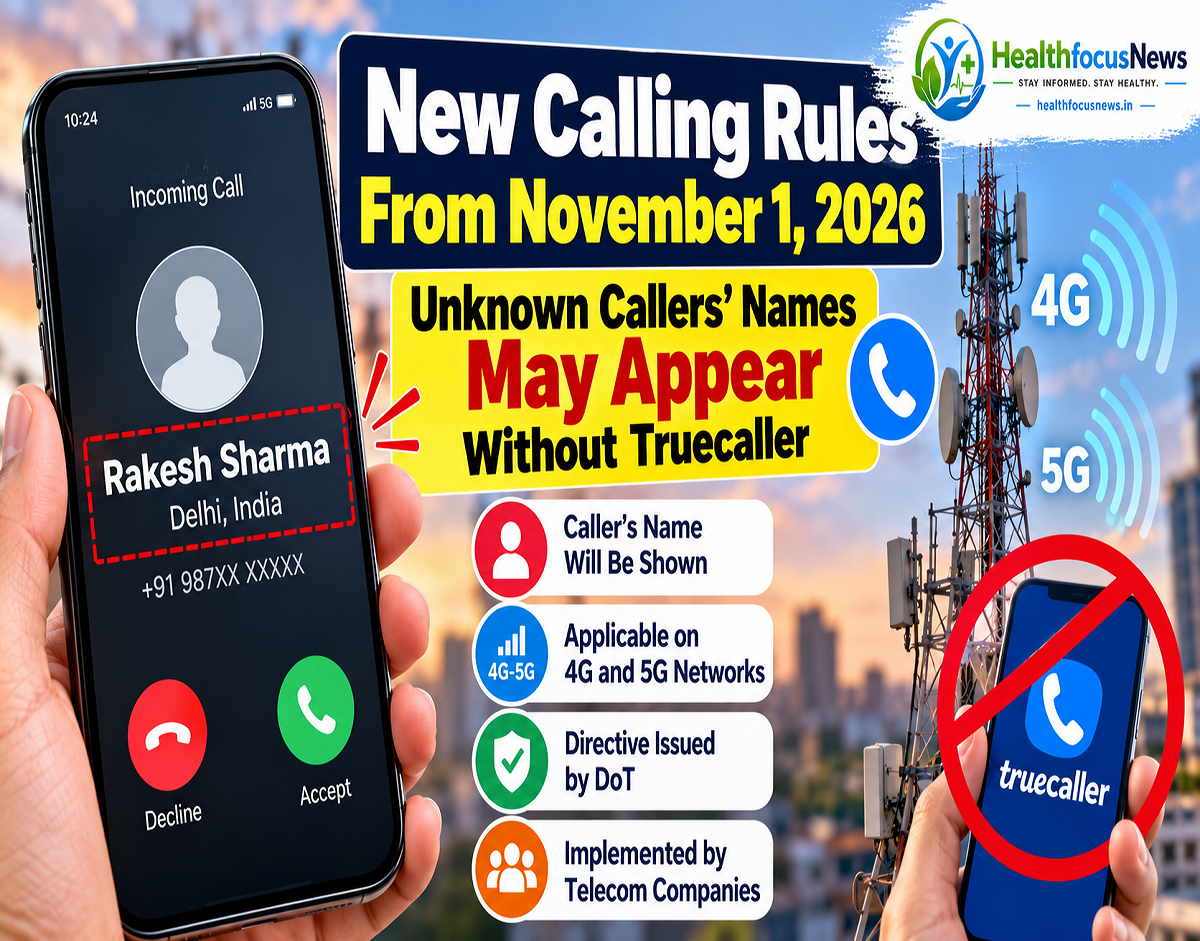
CNAP Service India 2026: Mobile users in India could soon see the names of unknown callers directly on their phone screens without installing third-party caller identification applications. According to a reported directive from the Department of Telecommunications (DoT), telecom operators have been instructed to introduce the Calling Name Presentation (CNAP) facility from November 1, 2026, on supported 4G and newer mobile networks. The service is intended to display caller names using telecom subscriber records, although its availability will depend on network implementation and device compatibility.
Major Change in Mobile Calling Rules From November 1
Receiving calls from unfamiliar mobile numbers is a common experience for smartphone users.
Until now, people have generally relied on saved contacts, caller identification applications or manual searches to identify unknown callers.
A new telecom network feature could change this experience.
The Department of Telecommunications has reportedly directed telecom service providers to introduce Calling Name Presentation, commonly known as CNAP, beginning November 1, 2026.
Under the proposed arrangement, an incoming call may display both the caller's phone number and the name associated with the number in the telecom operator's subscriber records.
The facility is expected to work on supported 4G and newer networks, including 5G.
However, November 1 should be understood as the reported implementation date rather than a guarantee that every mobile subscriber will receive the feature simultaneously.
CNAP Service 2026: Key Details
| Particular | Information |
|---|---|
| Service Name | Calling Name Presentation |
| Short Form | CNAP |
| Responsible Department | Department of Telecommunications |
| Reported Implementation Date | November 1, 2026 |
| Supported Networks | 4G and Newer Technologies |
| Main Purpose | Display Caller Identity Information |
| Caller Name Source | Telecom Subscriber Records |
| Third-Party App Required | Not for Network-Based CNAP |
| International Calls | May Be Labelled as International Call |
| Availability | Subject to Operator and Device Support |
What Is CNAP?
CNAP stands for Calling Name Presentation.
It is a network-based caller identification facility designed to display the name associated with an incoming phone number.
The service differs from conventional caller identification applications because the information is intended to come from telecom operators' subscriber records.
For example, when an unknown number calls a user, the network may provide the caller's registered name alongside the mobile number.
This could help recipients identify unfamiliar calls more easily.
However, the displayed name should not be treated as proof that the person speaking is necessarily the registered subscriber.
A SIM card may be used by another family member, employee or authorised user.
The accuracy of the information will therefore depend on subscriber records and the circumstances in which the number is being used.
How Will CNAP Work on Your Smartphone?
The proposed CNAP system involves information exchange between telecom networks.
When a person makes a call, the receiving network may obtain the name associated with the originating number through the supported telecom infrastructure.
That information can then be presented on the recipient's phone screen.
The expected process is:
Step 1: A person calls your mobile number.
Step 2: The telecom network processes the incoming call.
Step 3: Where CNAP is supported, the network obtains the relevant caller name information from the subscriber record.
Step 4: The caller's number and associated name may appear on your screen.
Step 5: You can use the displayed information as an additional clue before answering.
The exact presentation may vary depending on the telecom operator, smartphone and calling interface.
What Happens When the Caller Is Already Saved in Your Contacts?
If the incoming number is saved in your phone's contact list, the device may continue displaying the name you have saved.
For example, suppose you have saved a contact as "Office Manager."
When that person calls, your phone may display "Office Manager" rather than the name recorded in the telecom subscriber database.
The supplied report indicates that saved contact names are expected to take precedence.
This would allow users to continue using personalised contact names.
For unsaved numbers, CNAP may display the subscriber name provided through the telecom network.
What Information Will Appear During an Incoming Call?
According to the reported instructions, the service is intended to provide two main pieces of information.
| Information | Expected Display |
|---|---|
| Caller Number | Incoming Mobile Number |
| Caller Name | Registered Subscriber Name, Where Available |
| Saved Contact | Name Stored in Your Phone May Take Priority |
| International Call | International Call Identification, Where Supported |
The exact appearance will depend on implementation.
Users should not assume that every international call will display a verified personal name.
Will Truecaller Become Unnecessary?
CNAP could reduce the need to use third-party applications solely to identify the registered names associated with unknown domestic numbers.
However, it would not necessarily replace every feature offered by caller identification applications.
The two systems use different information sources and may provide different functions.
| Feature | CNAP | Third-Party Caller ID Apps |
|---|---|---|
| Information Source | Telecom Subscriber Records | App-Specific Databases and Other Sources |
| Requires Separate App | Generally No | Usually Yes |
| Registered Caller Name | Intended Core Feature | May Display Available Name Data |
| Spam Reports | Not Automatically Equivalent to Spam Detection | May Offer Spam Labels |
| Community Feedback | Not the Primary CNAP Function | Available in Some Apps |
| Network Dependence | Requires Operator Support | Depends on App and Service Functionality |
CNAP is primarily intended to present subscriber name information.
It should not automatically be described as a complete spam-blocking or fraud-detection system.
Some users may still prefer additional features provided by dedicated applications.
Will CNAP Help Prevent Fraud Calls?
The feature could help users recognise certain unfamiliar callers by showing a name associated with the number.
This may provide an additional layer of information when deciding whether to answer a call.
However, displaying a name does not establish that a caller is trustworthy.
Fraudsters may use numbers registered in someone else's name, compromised connections or other deceptive techniques.
A familiar-looking name also does not guarantee that the caller genuinely represents a bank, government department or company.
Therefore, CNAP should be viewed as a caller identification aid rather than a foolproof security measure.
Users should continue to verify suspicious requests independently.
Important Warning: Never Share OTPs or Banking Details
Even after CNAP becomes available, users should remain cautious about financial fraud.
A caller claiming to represent a bank or government department should not be trusted solely because a name appears on the screen.
Never disclose confidential information such as:
- Banking passwords
- UPI PINs
- One-time passwords
- Debit or credit card PINs
- Internet banking login credentials
If a caller asks for sensitive information, disconnect and contact the organisation through its verified official channel.
CNAP cannot guarantee that the person making the call is authorised to request confidential information.
Which Mobile Networks Will Support CNAP?
The supplied report states that the service is intended for 4G and newer mobile networks.
This includes supported 5G calling environments.
However, availability may depend on the operator's network infrastructure and the device's technical capabilities.
Some devices may require software or network configuration support before the caller name can be displayed.
The report does not establish that every 4G or 5G smartphone will support the feature from the first day.
Users should wait for official operator announcements regarding compatible devices and rollout arrangements.
Will Jio, Airtel, Vi and BSNL Users Get CNAP?
The reported DoT instructions concern telecom service providers implementing the network-based caller name facility.
Subscribers of major Indian operators may benefit as the necessary systems are deployed.
However, the supplied report does not provide confirmed operator-wise launch schedules for Reliance Jio, Bharti Airtel, Vodafone Idea or BSNL.
Therefore, it would be premature to claim that all subscribers of these networks will receive CNAP on November 1.
Availability should be confirmed through each operator's official communications.
How Will International Calls Be Identified?
The report states that international calls may be identified with an "International Call" label.
This could help recipients distinguish certain overseas calls from domestic calls.
However, the availability of international call identification will depend on the final technical arrangements and applicable network rules.
Users should also remember that identifying a call as international does not automatically establish whether it is genuine or fraudulent.
Legitimate international calls may come from family members, employers, customers and other contacts.
The label is intended to provide information, not to determine the caller's intentions.
What About Privacy and Caller Name Data?
The proposed CNAP system relies on subscriber information held by telecom operators.
This makes data handling an important part of implementation.
According to the supplied report, operators have been instructed not to retain the caller name obtained through the CNAP exchange after the call ends.
This requirement is intended to limit unnecessary retention of caller identification information during network processing.
However, the report does not provide a complete technical privacy specification.
Users should distinguish between temporary network handling of CNAP information and other records that operators may be required to maintain under applicable law.
The introduction of caller name display also raises questions about how subscriber information is verified and how inaccurate records can be corrected.
Can CNAP Display an Incorrect Name?
Yes, inaccuracies are possible.
The displayed information is expected to be linked to telecom subscriber records.
If a number is registered in one person's name but used by someone else, the name on the screen may not match the individual making the call.
Similarly, outdated or incorrect subscriber records could affect the displayed information.
This is why users should treat CNAP as an identification clue rather than conclusive proof of identity.
If a subscriber encounters an incorrect name, the appropriate correction process would depend on the telecom operator's procedures.
Do Users Need to Download an App to Activate CNAP?
CNAP is intended to operate through supported telecom networks rather than requiring a separate caller identification application.
Therefore, users should not need to install an unfamiliar third-party app merely to obtain network-based CNAP functionality.
However, the supplied report does not confirm whether individual devices will require software updates, configuration changes or other steps.
Users should follow instructions from their telecom operator or smartphone manufacturer.
They should avoid downloading unofficial applications that claim to activate CNAP in exchange for payment or access to sensitive information.
CNAP Service India 2026: Frequently Asked Questions
What is the full form of CNAP?
CNAP stands for Calling Name Presentation.
When is CNAP expected to launch in India?
According to the reported DoT instructions, implementation is scheduled to begin on November 1, 2026.
Will unknown callers' names appear automatically?
On supported networks and devices, CNAP is intended to display the name associated with an incoming number when the information is available.
Will users need Truecaller?
A separate caller identification application should not be necessary for the core network-based CNAP feature. However, other apps may continue offering additional functions.
Will CNAP work on every mobile phone?
Universal compatibility has not been confirmed. Network and device support will determine availability.
Can CNAP stop scam calls?
It may provide additional caller information, but it cannot guarantee that a call is genuine or prevent all fraud.
Will the displayed name always be correct?
No. Subscriber records may not always reflect the identity of the person actually making the call.
Final Takeaway
The reported introduction of Calling Name Presentation from November 1, 2026, could change how Indian mobile users identify unknown callers.
The service is designed to display a name associated with an incoming number using telecom subscriber records.
If successfully implemented, CNAP may reduce dependence on third-party caller identification applications for basic name display.
However, the reported launch date does not guarantee immediate availability for every subscriber, and the displayed name should never be treated as definitive proof of a caller's identity.
Users should continue following established precautions against phone scams while awaiting confirmed rollout details from their telecom operators.
Disclaimer: This article is based on the supplied October 15, 2026, news report. The November 1 implementation date, technical requirements and operator rollout arrangements should be verified through official Department of Telecommunications and telecom provider announcements. The service's actual availability may vary by network and device.
Trim repeated CNAP explanationsAdd a concise reader action box