Business
RBI ₹10 and ₹20 Plastic Notes Update: Polymer Currency Trial Expected From April 2027, Check Key Details
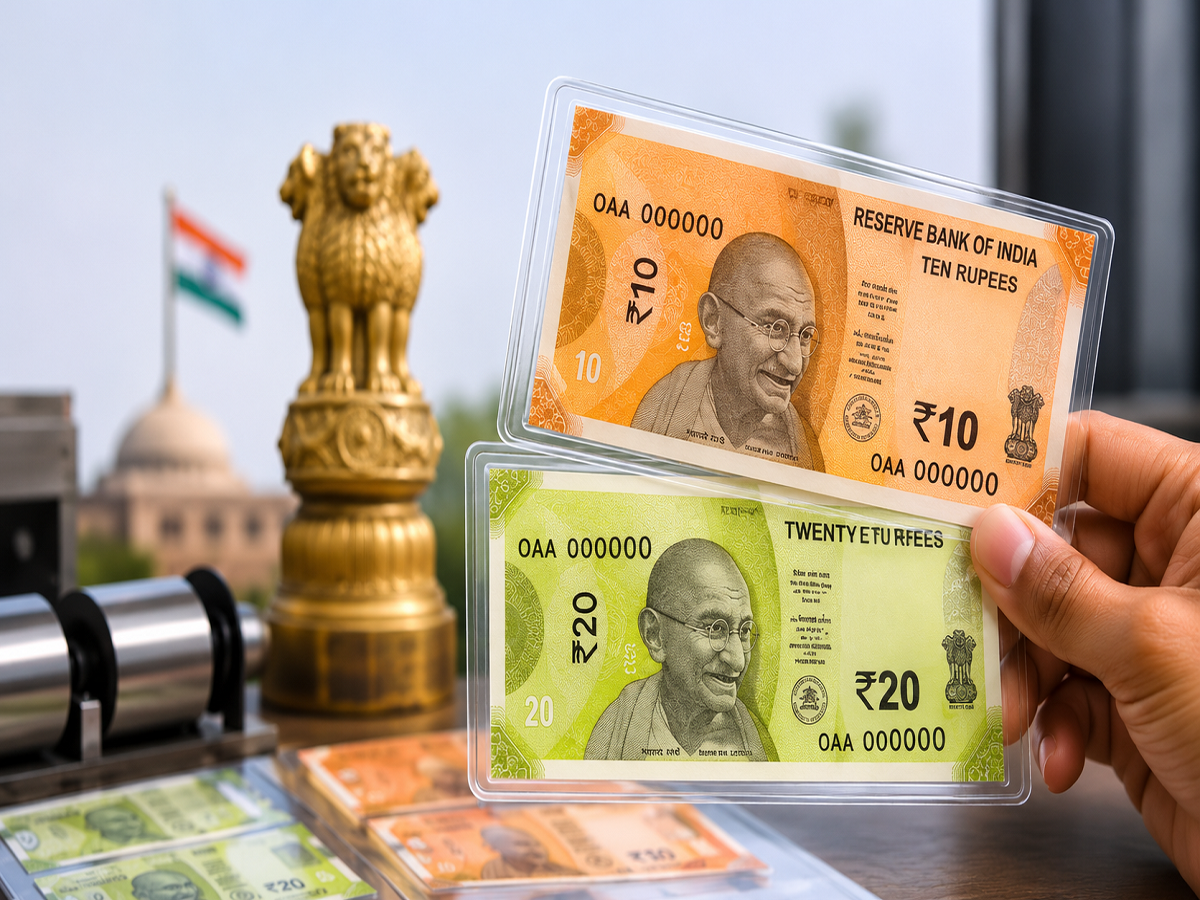
RBI Polymer Currency Update 2026: India could soon witness a major change in the way small-denomination currency notes are produced and circulated. The Reserve Bank of India (RBI) is reportedly preparing to introduce polymer-based ₹10 and ₹20 banknotes as part of a large-scale pilot programme expected to begin on April 1, 2027.
Unlike conventional paper currency, polymer banknotes are manufactured using a specialised plastic-based material designed to withstand frequent handling, moisture and everyday wear.
According to a media report published on November 3, 2026, the proposed initiative aims to examine whether polymer currency can provide a more durable and cost-effective alternative to traditional banknotes.
An important feature of the proposed notes is that their dimensions are expected to remain identical to those of existing ₹10 and ₹20 notes. This could help banks avoid additional expenses associated with modifying currency-handling equipment.
However, the reported launch schedule and trial arrangements should be treated as proposed details until confirmed through an official RBI notification.
RBI Polymer Notes: What Is Expected to Change From April 1, 2027?
The reported pilot programme is expected to begin with the new financial year on April 1, 2027.
Under the proposed arrangement, polymer banknotes in denominations of ₹10 and ₹20 would be introduced for testing alongside existing paper currency.
The objective is to evaluate their performance under normal circulation conditions, including frequent transactions, repeated folding and exposure to moisture.
The proposed notes would not automatically replace the paper currency already being used by consumers.
Instead, both types of banknotes are expected to circulate simultaneously during the testing period.
This would allow the central bank to assess the advantages and limitations of polymer currency before considering any wider rollout.
Why Is RBI Considering Plastic Currency Notes?
Polymer banknotes have already been adopted by several countries because of their durability and resistance to physical damage.
In India, lower-denomination notes are frequently exchanged in everyday transactions.
Small shops, local markets, public transport operators and other cash-based businesses regularly handle ₹10 and ₹20 notes.
As a result, these banknotes often experience considerable wear and tear.
The proposed polymer currency initiative could help address several problems associated with traditional paper notes.
1. Longer Life Compared With Paper Notes
One of the biggest potential benefits of polymer currency is its extended lifespan.
The source report refers to RBI Governor Sanjay Malhotra's observations about the longevity of polymer notes in international markets, including examples of notes remaining usable for exceptionally long periods.
However, the actual lifespan of a banknote depends on circulation frequency, environmental conditions and handling practices.
Polymer notes are generally more resistant to moisture, dirt and accidental damage than conventional paper-based currency.
If successful, the pilot could reduce the frequency with which damaged banknotes need to be replaced.
2. Trial Could Include 200 Crore Banknotes
According to the report, the proposed field trial could involve approximately 200 crore polymer banknotes.
The planned quantity reportedly includes:
- ₹10 denomination: 100 crore polymer notes.
- ₹20 denomination: 100 crore polymer notes.
- Total proposed trial volume: 200 crore banknotes.
The report states that Bharatiya Reserve Bank Note Mudran Private Limited (BRBNMPL), an RBI-owned subsidiary, has initiated an international expression-of-interest process related to the project.
A field trial of this scale would allow the authorities to assess how the notes perform across different geographical regions and transaction environments.
3. Existing Paper Currency Will Continue
Consumers should not assume that the introduction of polymer notes means the withdrawal of existing ₹10 and ₹20 paper banknotes.
According to the reported proposal, the polymer currency programme is intended to be a trial rather than an immediate nationwide replacement.
This means existing paper notes are expected to remain in circulation alongside the new polymer versions.
There is no indication in the supplied report that people would need to exchange their current ₹10 or ₹20 notes at banks.
4. No Immediate Plan for Higher-Denomination Polymer Notes
The reported initiative focuses specifically on ₹10 and ₹20 denominations.
There is currently no confirmed plan in the supplied report to introduce polymer versions of ₹100, ₹200 or ₹500 banknotes.
Any future expansion would depend on policy decisions, technical assessments and the results of the initial trial.
Therefore, consumers should avoid assuming that all Indian currency notes will soon be replaced with plastic alternatives.
5. Beware of Rumours About ₹1,000 Notes
The report also addresses social media claims suggesting that a new ₹1,000 polymer banknote could be introduced.
According to the source, PIB Fact Check has rejected such claims as false.
Consumers should rely on official RBI announcements and government fact-checking channels rather than unverified photographs or viral messages about new currency designs.
Why Keeping the Same Note Size Matters for Banks
One of the most significant aspects of the proposed polymer currency project is the decision to retain the existing dimensions of ₹10 and ₹20 banknotes.
Changes in the size of currency notes can require adjustments to cash-processing machines, counting equipment, sorting systems and other banking infrastructure.
By maintaining the same dimensions, banks may be able to reduce the cost and complexity of introducing polymer notes.
According to a senior public-sector banking official cited in the report, preserving the existing note sizes could help financial institutions avoid substantial upfront expenditure on equipment modifications.
However, the new material may still require technical testing to ensure compatibility with machines designed to handle conventional paper currency.
What Are Polymer Banknotes and How Are They Different?
Polymer banknotes are manufactured using a specialised synthetic substrate instead of traditional banknote paper.
They are designed to offer improved resistance to several forms of physical damage.
Some polymer currencies also incorporate advanced security features, including transparent windows and specialised printing elements.
The exact design and security specifications of the proposed Indian ₹10 and ₹20 polymer notes have not been established in the supplied report.
Compared with conventional paper notes, polymer currency may offer advantages in durability, cleanliness and resistance to moisture.
Nevertheless, the overall benefits depend on manufacturing costs, circulation conditions and how efficiently worn-out notes can be processed.
Will Plastic Notes Reduce RBI's Currency Printing Expenses?
A major reason for examining polymer currency is the possibility of reducing long-term replacement costs.
Although polymer banknotes can be more expensive to manufacture initially, their longer usable lifespan may reduce the need for frequent printing.
For example, if a polymer note remains usable significantly longer than a comparable paper note, fewer replacements may be required over time.
This could potentially lower expenses associated with printing, transporting, sorting and replacing damaged currency.
However, actual savings can only be determined after evaluating the results of the proposed trial.
What Should People Do With Their Existing ₹10 and ₹20 Notes?
For now, consumers do not need to take any special action.
Existing ₹10 and ₹20 banknotes remain usable, and the reported polymer currency initiative does not require people to deposit or exchange their paper notes.
If the RBI formally introduces the new notes, it is expected to provide details about their appearance, security features, circulation arrangements and validity.
People should follow announcements published through the RBI's official communication channels for reliable updates.
Conclusion
The reported introduction of ₹10 and ₹20 polymer banknotes from April 1, 2027, could mark an important development in India's currency management system.
With a proposed trial involving 200 crore notes, the initiative aims to assess whether plastic-based currency can offer greater durability and reduce long-term replacement expenses.
The decision to maintain existing note dimensions could also make the transition easier for banks and cash-handling businesses.
Most importantly, the proposed programme does not mean that existing paper currency will be discontinued.
The April 1, 2027 date and proposed trial volume remain media-reported details and should not be presented as officially confirmed without an RBI announcement.