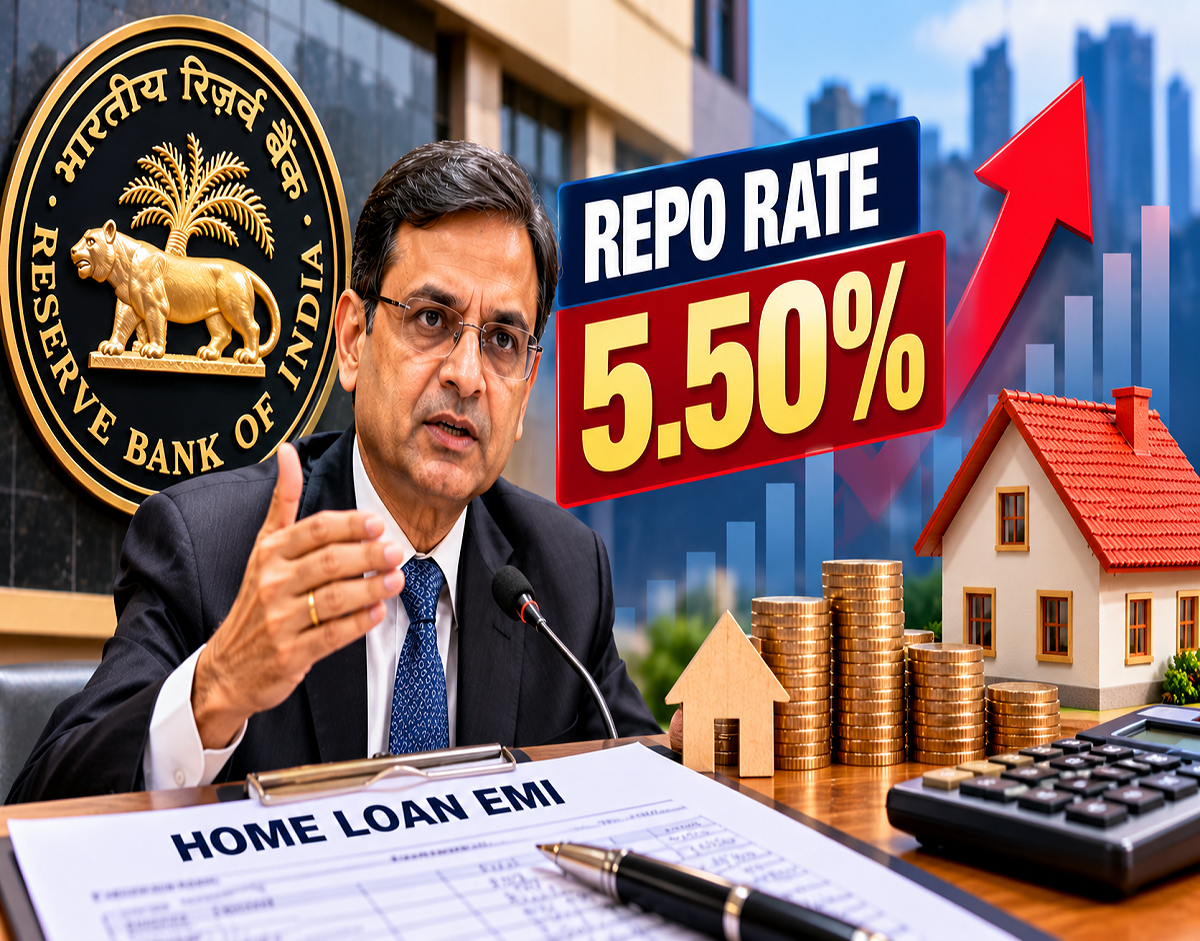
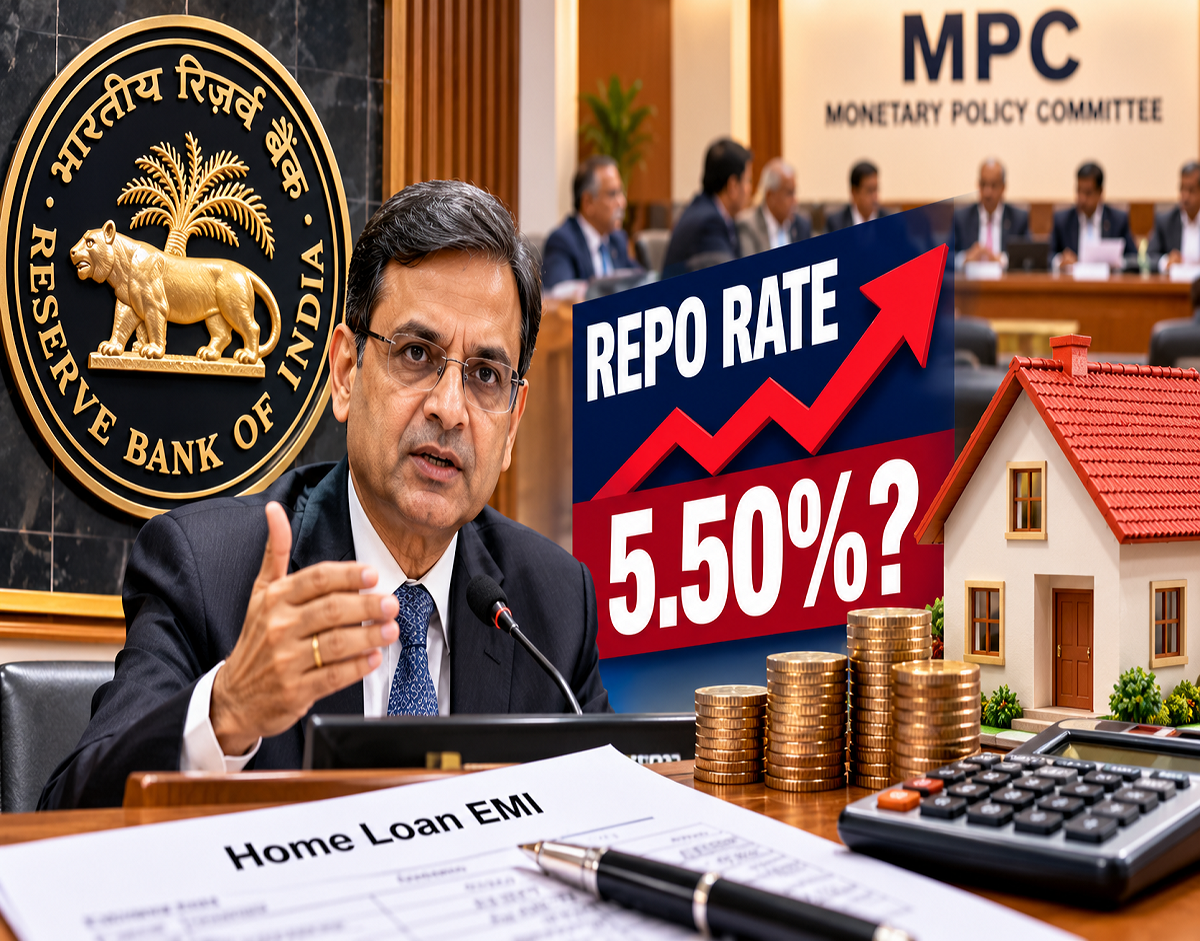
RBI Monetary Policy October 2026: Borrowers, investors and financial markets are closely watching the Reserve Bank of India today as the Monetary Policy Committee (MPC) prepares to announce its latest interest-rate decision. The outcome could have a direct bearing on borrowing costs, including home, auto and other floating-rate loans.
The three-day MPC meeting concludes on Wednesday, October 7, 2026, with RBI Governor Sanjay Malhotra scheduled to announce the committee's decisions at 10 AM.
One of the biggest questions is whether the central bank will increase the repo rate by 25 basis points (bps).
If such an increase is approved, the repo rate would move from the current 5.25% to 5.50%. However, this was only a market expectation at the time of the source report. The actual rate decision will become clear only after the RBI's official announcement.
Some economists expect an immediate increase, while others believe the central bank may keep rates unchanged in October and wait until December before beginning a fresh tightening cycle.
Will RBI Increase the Repo Rate to 5.50%?
Several forecasts cited in the report point to the possibility of a 25-basis-point rate hike.
One basis point is equal to 0.01 percentage point. Therefore, a 25-bps increase would mean a rise of 0.25 percentage point, taking the repo rate from 5.25% to 5.50%.
The repo rate is the rate at which the RBI lends short-term funds to eligible commercial banks against securities. Changes in this benchmark can influence lending and deposit rates across the banking system.
A repo-rate hike does not necessarily mean that every borrower's EMI will rise immediately. The impact depends on the loan's benchmark, reset schedule, remaining tenure and the individual lender's transmission of the policy change.
Could Your Home Loan EMI Increase?
If the RBI raises the repo rate and banks subsequently pass on the increase, borrowers with eligible floating-rate loans could see their borrowing costs rise.
Banks may respond differently depending on the benchmark to which a particular loan is linked.
For some borrowers, the lender may increase the EMI. In other cases, the loan tenure could be extended while the EMI remains unchanged, depending on the loan agreement and applicable rules.
Fixed-rate borrowers may not experience the same immediate impact because their interest rates are generally governed by the terms agreed with the lender.
Therefore, borrowers should not assume that a 25-bps RBI hike automatically translates into an identical immediate increase in every loan rate.
Inflation Is Back in Focus
Inflation is one of the major factors expected to influence the MPC's assessment.
According to the figures cited in the source report, retail inflation increased to 4.82% in August, compared with 4.45% in July.
The upward movement in inflation adds to the challenge facing policymakers as they balance price stability against economic growth.
The report also highlights other pressures, including elevated crude oil prices, weakness in the rupee and rising global bond yields.
According to the information provided, Brent crude had moved above $107 per barrel, while the rupee had crossed 96 against the US dollar.
Higher crude oil prices can be particularly important for India because of the country's dependence on imported energy. Currency depreciation can also make dollar-denominated imports more expensive.
Experts Divided Over October Rate Hike
Although several market estimates favour a 25-bps increase, there is no unanimous view.
Bank of Baroda Chief Economist Madan Sabnavis, according to the report, expects the RBI to keep rates unchanged at the October meeting and potentially begin raising rates from December.
His argument is that waiting for another meeting would give policymakers additional information on inflation during September and October, the kharif crop and festive-season demand.
This would allow the MPC to assess whether recent inflationary pressures are temporary or require a stronger monetary-policy response.
Could RBI Start Raising Rates From December?
Sabnavis has reportedly outlined a scenario in which the RBI could begin its next phase of rate increases in December.
Under his projection, there could be three increases of 25 basis points each—one in December, another in February and a third at the beginning of the next financial year.
If that scenario materialises, the cumulative increase would be 75 basis points, potentially taking the repo rate to around 6%.
However, borrowers should treat this strictly as an economist's projection and not as an announced RBI roadmap.
Future policy decisions will depend on economic data and the MPC's assessment at each meeting.
Banking-System Liquidity Is Another Key Factor
Liquidity conditions in the banking system are also likely to be considered by policymakers.
According to Sabnavis, surplus liquidity in the banking system has declined from approximately ₹12 lakh crore to ₹5-6 lakh crore, although it could increase again.
Liquidity matters because it can influence how quickly monetary-policy changes are transmitted through the financial system.
Even if the RBI changes its policy rate, the impact on deposit and lending rates may not always be immediate or uniform across banks.
RBI's Guidance Could Be as Important as the Repo Rate
Financial markets will not be looking only at whether the RBI chooses 5.25% or 5.50%.
Governor Sanjay Malhotra's comments on inflation, economic growth, liquidity, crude oil, the rupee and the future direction of monetary policy could be equally important.
If a 25-bps hike has already been largely anticipated by markets, the RBI's guidance on what could happen at future meetings may have a bigger influence on bond yields, banking stocks and interest-rate expectations.
On the other hand, keeping the repo rate unchanged could shift attention toward whether the central bank signals a possible hike in December.
What Should Loan Borrowers Watch Today?
Home-loan and other borrowers should first wait for the official RBI policy announcement rather than making decisions based solely on forecasts.
If the repo rate is increased, borrowers with floating-rate loans can subsequently check whether their lender revises the applicable benchmark and how that change affects their loan.
The impact may appear as a higher EMI, a longer repayment period or a combination of the two, depending on the lender and loan structure.
Borrowers should also check their current interest rate, remaining principal, outstanding tenure and the benchmark linked to their loan before considering refinancing or prepayment.
Repo Rate Hike Is Not Confirmed Yet
The most important point ahead of the October 7 announcement is that a move from 5.25% to 5.50% remains an expectation, not a confirmed RBI decision, based on the information available before the policy announcement.
The MPC essentially faces two possibilities highlighted in the report: raise the repo rate by 25 basis points now to address inflationary pressures, or hold rates steady for another meeting and potentially consider tightening from December.
For borrowers, the final answer on whether interest-rate pressure could increase will come from the RBI's official monetary-policy decision. Until then, predictions of a 5.50% repo rate should be treated as forecasts rather than an announced policy change.