Business
RBI Floating Rate Bonds 2026: How Much Can You Earn by Investing ₹5 Lakh? Check Interest and Rules
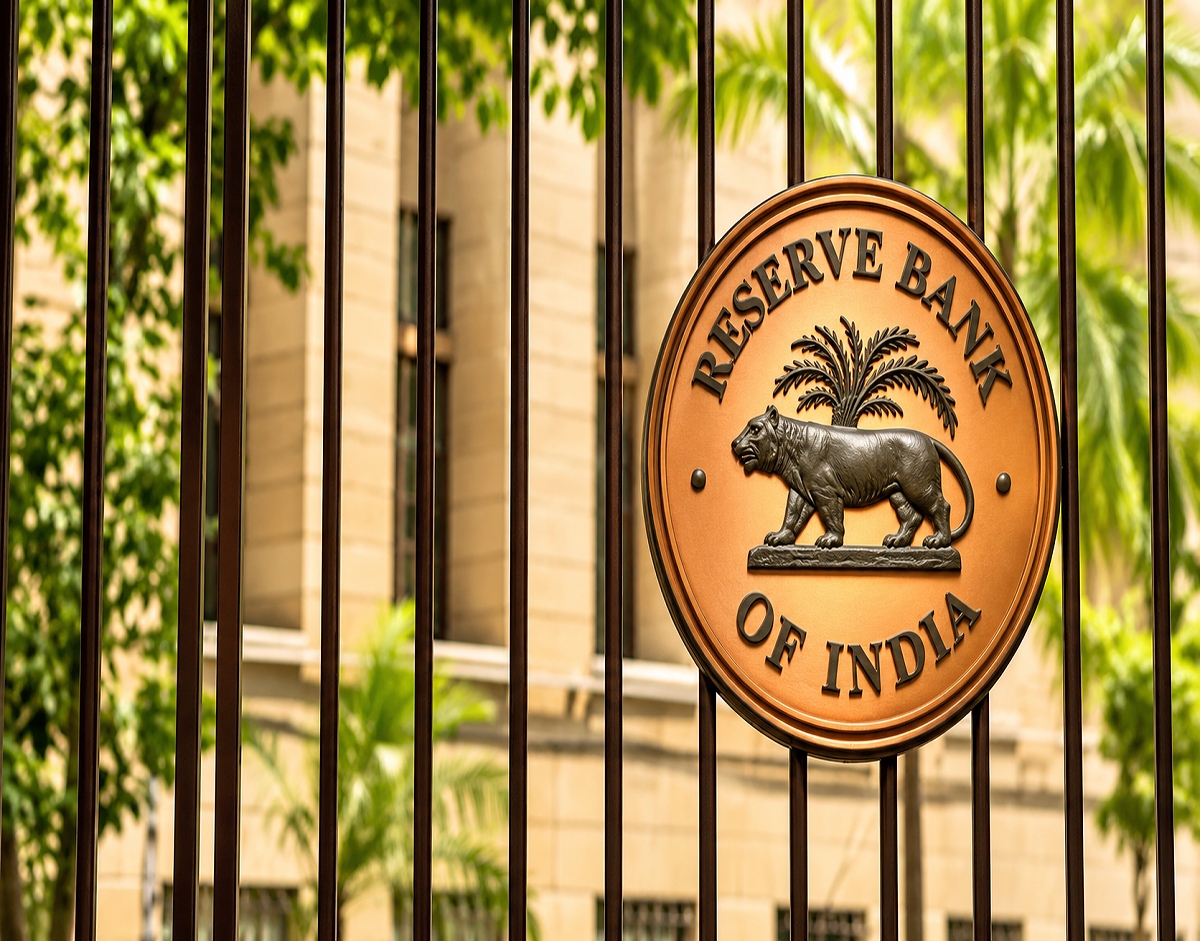
RBI Floating Rate Savings Bonds 2026: Investors looking for a government-backed savings option with regular interest payments may consider Floating Rate Savings Bonds (FRSB). These bonds are issued by the Reserve Bank of India (RBI) on behalf of the Government of India and offer an alternative to traditional bank fixed deposits.
Unlike fixed deposits that generally offer a predetermined interest rate for the selected tenure, Floating Rate Savings Bonds have an interest rate that changes periodically. This means investors can benefit when the applicable benchmark rate increases, although their earnings may also decline when interest rates fall.
According to a report published on November 3, 2026, the applicable annual interest rate is 8.05%. At this rate, an investment of ₹5 lakh could generate approximately ₹40,250 in annual interest before tax.
However, investors should understand the seven-year maturity period, taxation rules and withdrawal restrictions before committing their savings.
What Are RBI Floating Rate Savings Bonds?
Floating Rate Savings Bonds, 2020 (Taxable), are government securities designed for individuals seeking sovereign-backed investments and periodic interest income.
The bonds carry the credit backing of the Government of India, making their credit risk substantially lower than that of many private-sector investment products.
One important difference between these bonds and conventional fixed deposits is that the interest rate is not locked for the entire investment period.
Instead, the rate is linked to the National Savings Certificate (NSC), a government-supported small savings scheme.
The bonds have a maturity period of seven years, and interest is generally paid directly into the investor's registered bank account twice a year.
RBI Floating Rate Savings Bonds Interest Rate in November 2026
According to the source report, Floating Rate Savings Bonds currently offer an annual interest rate of 8.05%.
The applicable rate is determined by adding 0.35 percentage points to the prevailing NSC interest rate.
For example:
| Interest Rate Component | Rate |
|---|---|
| National Savings Certificate (NSC) | 7.70% |
| Additional FRSB interest | 0.35% |
| Illustrative FRSB annual interest | 8.05% |
The interest rate is reset every six months, with revisions taking effect on January 1 and July 1.
Therefore, the 8.05% rate should not be interpreted as a guaranteed return for the entire seven-year investment period.
If the benchmark NSC rate changes, the interest payable on these bonds can also change at the next reset.
₹5 Lakh Investment in RBI Floating Rate Bonds: Complete Return Calculation
Suppose an investor purchases Floating Rate Savings Bonds worth ₹5,00,000 at an annual interest rate of 8.05%.
The estimated earnings would be calculated as follows.
Illustrative investment returns at 8.05% annually
Investment amount
₹5,00,000
Annual interest
₹40,250
Six-month interest
₹20,125
Seven-year interest
₹2,81,750
Total principal and interest
Across seven years, before tax
₹7,81,750
This illustration assumes the interest rate remains at 8.05% for all seven years. Interest is paid separately every six months and is not automatically compounded.
The investor would receive ₹20,125 every six months if the annual rate remained unchanged.
Over seven years, 14 half-yearly payments would produce a total interest income of ₹2,81,750.
At maturity, the original ₹5 lakh principal would be repaid separately.
The combined amount of principal and interest over the investment period would therefore be ₹7,81,750 before applicable taxes.
Actual returns may differ because the interest rate is revised periodically.
Calculate Your Estimated Floating Rate Bond Returns
Investment amount (₹)
Assumed annual interest rate
8.05%
Half-yearly interest
₹20,125
Annual interest
₹40,250
7-year total interest
₹2,81,750
Principal + interest
₹7,81,750
Estimates assume a constant interest rate and exclude tax. Actual payments depend on future rate resets and the investment date.
Who Can Invest in RBI Floating Rate Savings Bonds?
These bonds are available to eligible resident Indian investors.
Individuals can invest either independently or jointly, subject to the scheme's applicable conditions.
Hindu Undivided Families (HUFs) are also eligible to invest.
Non-Resident Indians (NRIs), however, are not eligible to make fresh investments under the scheme.
The minimum investment amount is ₹1,000, and investments must be made in multiples of ₹1,000.
There is no prescribed maximum investment limit, making the scheme accessible to both small savers and individuals with larger investment amounts.
What Is the Lock-In Period for Floating Rate Bonds?
One of the most important conditions is the seven-year maturity period.
Unlike certain bank fixed deposits, these bonds generally cannot be redeemed whenever an investor needs money.
Premature redemption is permitted only for eligible senior citizens, subject to specific conditions.
| Investor's Age | Minimum Period Before Eligible Redemption |
|---|---|
| 60 to below 70 years | 6 years |
| 70 to below 80 years | 5 years |
| 80 years and above | 4 years |
Premature redemption is subject to the applicable rules, including interest-payment dates and a penalty.
Investors should therefore avoid placing money needed for emergencies or short-term expenses into these bonds.
How Is Interest From RBI Floating Rate Bonds Taxed?
Interest earned from Floating Rate Savings Bonds is taxable according to the investor's applicable income tax slab.
For example, if an investor receives ₹40,250 in annual interest, that amount generally forms part of their taxable income.
Tax Deducted at Source (TDS) may also apply according to prevailing income tax provisions and thresholds.
Eligible investors may be able to submit the prescribed declaration to avoid TDS where their tax liability permits. However, avoiding TDS does not automatically make the interest tax-free.
Investors should verify the latest declaration requirements and tax provisions applicable in the financial year of payment.
Can These Bonds Be Sold or Used to Obtain a Loan?
Floating Rate Savings Bonds have several restrictions that investors should understand.
They cannot be freely traded on stock exchanges or sold in the secondary market.
The bonds also cannot ordinarily be pledged as collateral for obtaining loans from banks or other financial institutions.
Transferability is restricted, although transmission to a nominee or legal heir is permitted under the applicable rules following the bondholder's death.
These conditions make the bonds more suitable for investors who can comfortably keep their principal invested until maturity.
How to Invest in RBI Floating Rate Savings Bonds
Eligible investors can purchase these bonds through authorised receiving offices and banks.
The application process generally involves completing the required investment form, providing identity and bank account details, and transferring the investment amount through an accepted payment method.
Major banks such as SBI, Punjab National Bank, Bank of Baroda, HDFC Bank, ICICI Bank and Axis Bank may provide access through authorised channels.
Investors should confirm the availability of the specific bond product before applying.
The RBI Retail Direct platform is another official channel for accessing eligible government securities. However, investors should verify whether Floating Rate Savings Bonds are available through that platform rather than assuming that every RBI-backed product can be purchased there.
RBI Floating Rate Bonds vs Bank FD: Which Is Better?
Both bank fixed deposits and government-backed floating rate bonds can serve different financial goals.
| Feature | RBI Floating Rate Bonds | Bank Fixed Deposits |
|---|---|---|
| Interest rate | Reset every six months | Usually fixed for selected tenure |
| Investment period | 7 years | Multiple tenure options |
| Credit protection | Sovereign-backed | Deposit insurance up to applicable limits |
| Interest payment | Half-yearly | Depends on FD option |
| Premature withdrawal | Highly restricted | Often available with conditions |
| Tax treatment | Interest taxable | Interest taxable |
Bank deposits generally provide greater flexibility in selecting investment tenures.
Floating Rate Savings Bonds may appeal to investors seeking government-backed credit protection and regular interest payments.
However, their floating interest rate means that future income is not guaranteed at today's rate.
Should You Invest ₹5 Lakh in RBI Floating Rate Bonds?
Floating Rate Savings Bonds may be worth considering for investors who prioritise credit safety and can remain invested for a longer period.
At an assumed annual rate of 8.05%, a ₹5 lakh investment could generate approximately ₹40,250 in yearly interest before tax.
If the rate remained unchanged throughout seven years, total interest payments would amount to ₹2,81,750, with the original ₹5 lakh returned at maturity.
However, investors should remember that the interest rate can rise or fall every six months.
The seven-year lock-in, limited liquidity and taxable interest income are important factors to evaluate before investing.
Disclaimer: This article is intended for general financial information and does not constitute personalised investment advice. The 8.05% interest rate is based on the supplied November 3, 2026 report and has not been independently verified against a current official rate notification. Readers should confirm the latest terms with RBI or an authorised bank and consult a qualified financial adviser where necessary.